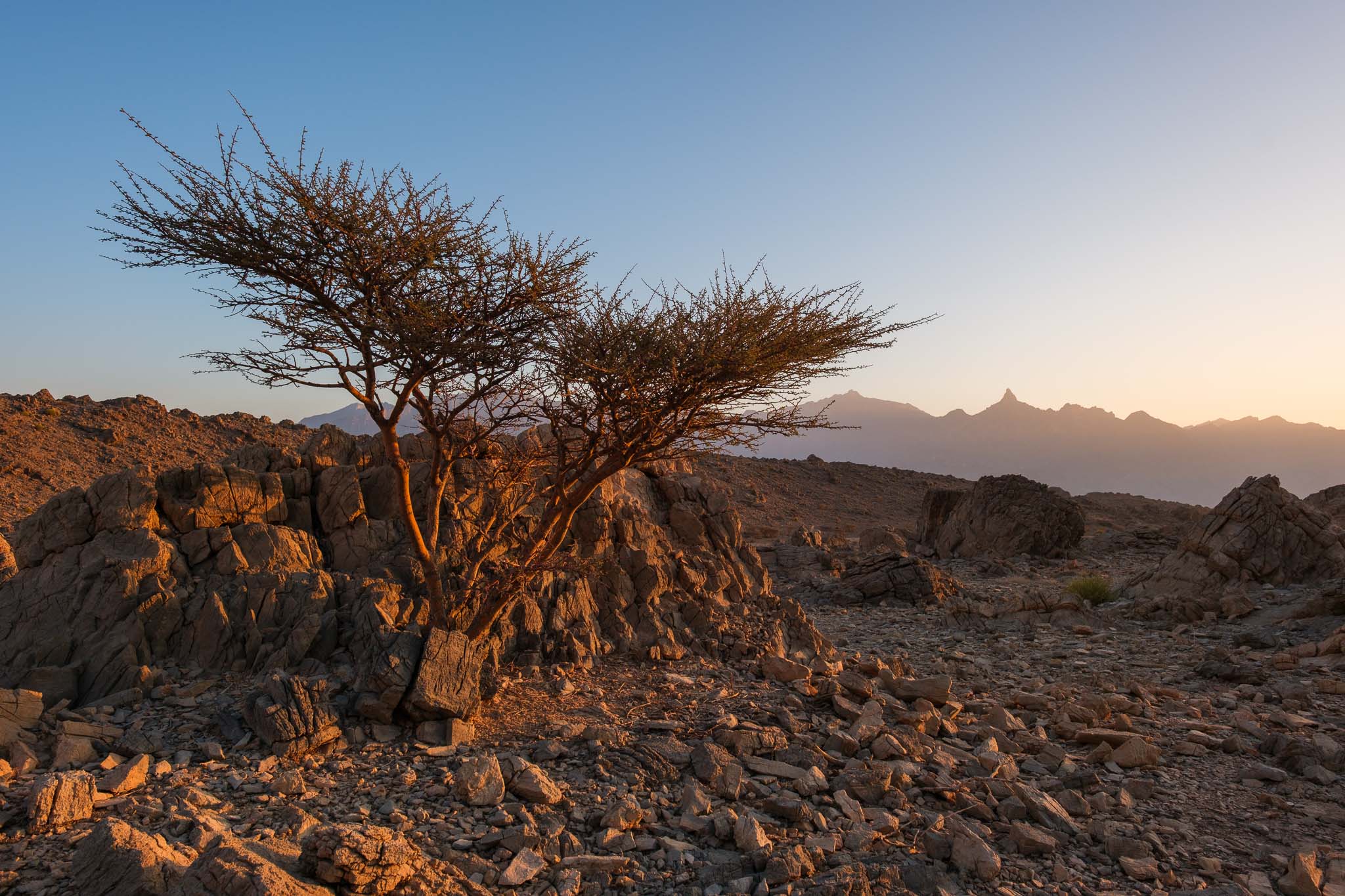
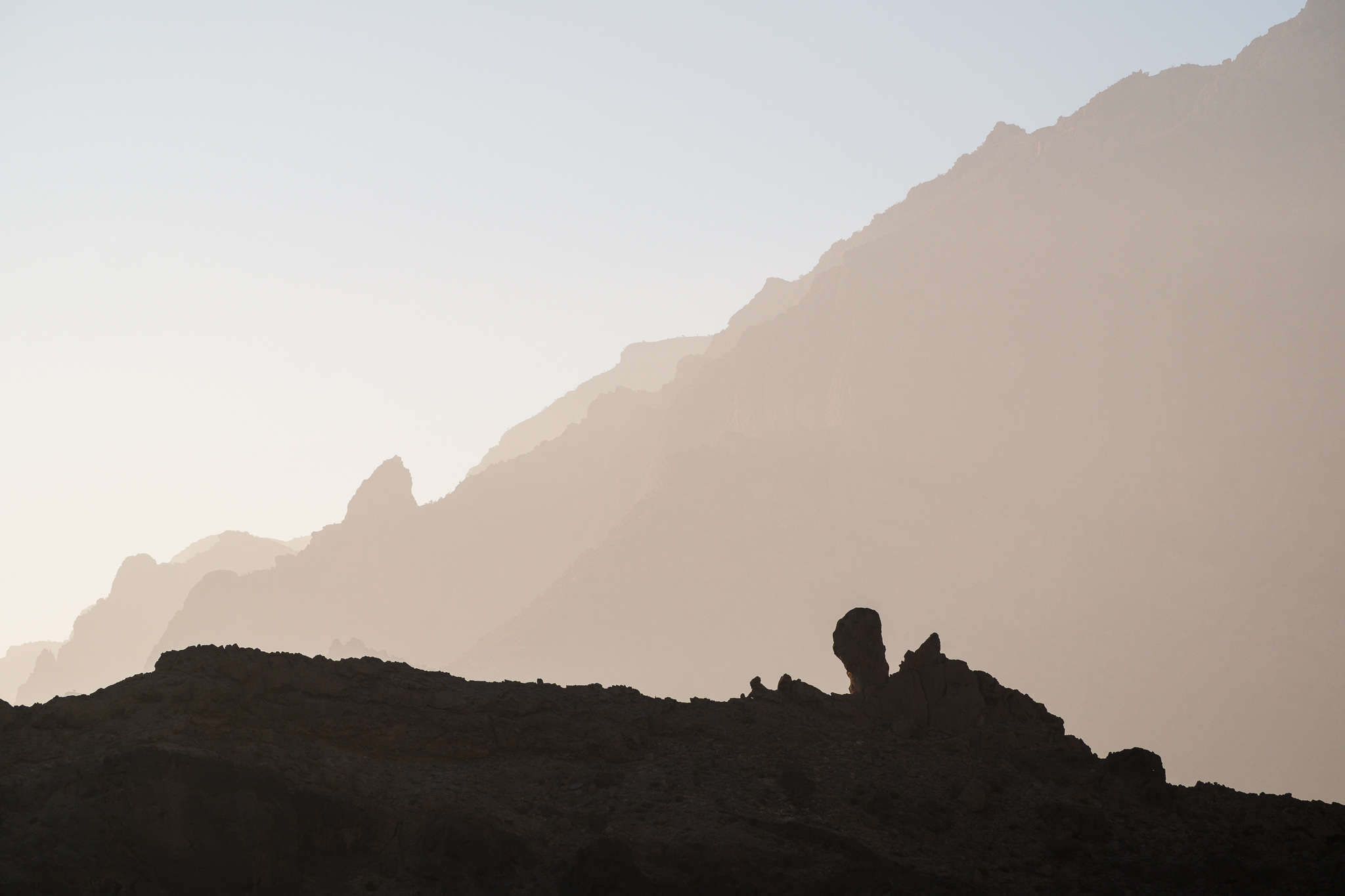
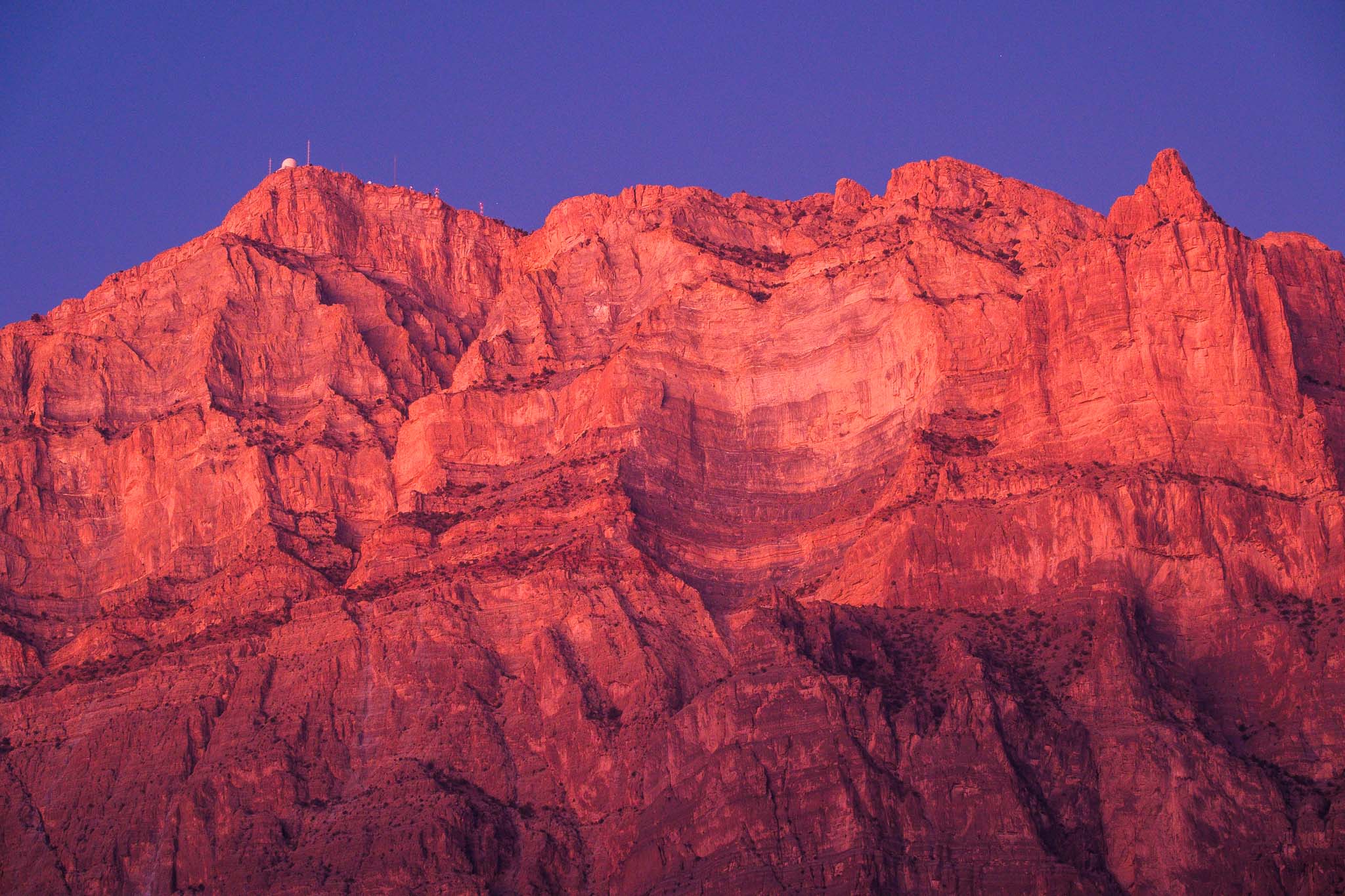
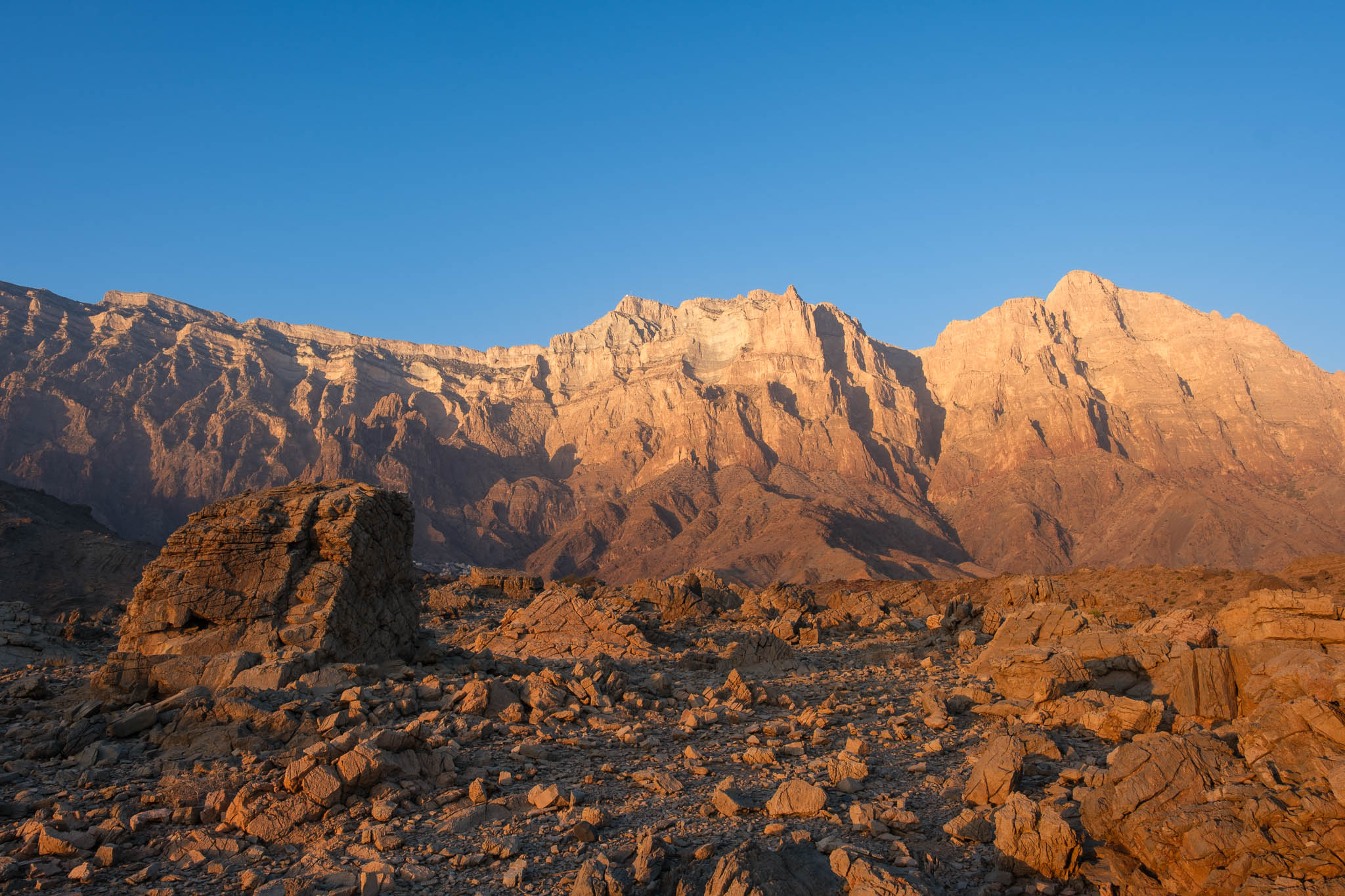
These photos were taken during a recent astronomy trip to Wadi Sahtan, near Rustaq. This is a good dark site for sky observation, but besides that, it is also located at the foot of the northern face of Jebel Shams, the highest mountain in Oman. This face is a sheer vertical wall of around 2,000 m height, which is really impressive. In February the temperature is still on the cold side at night, with the crisp air providing excellent visibility.
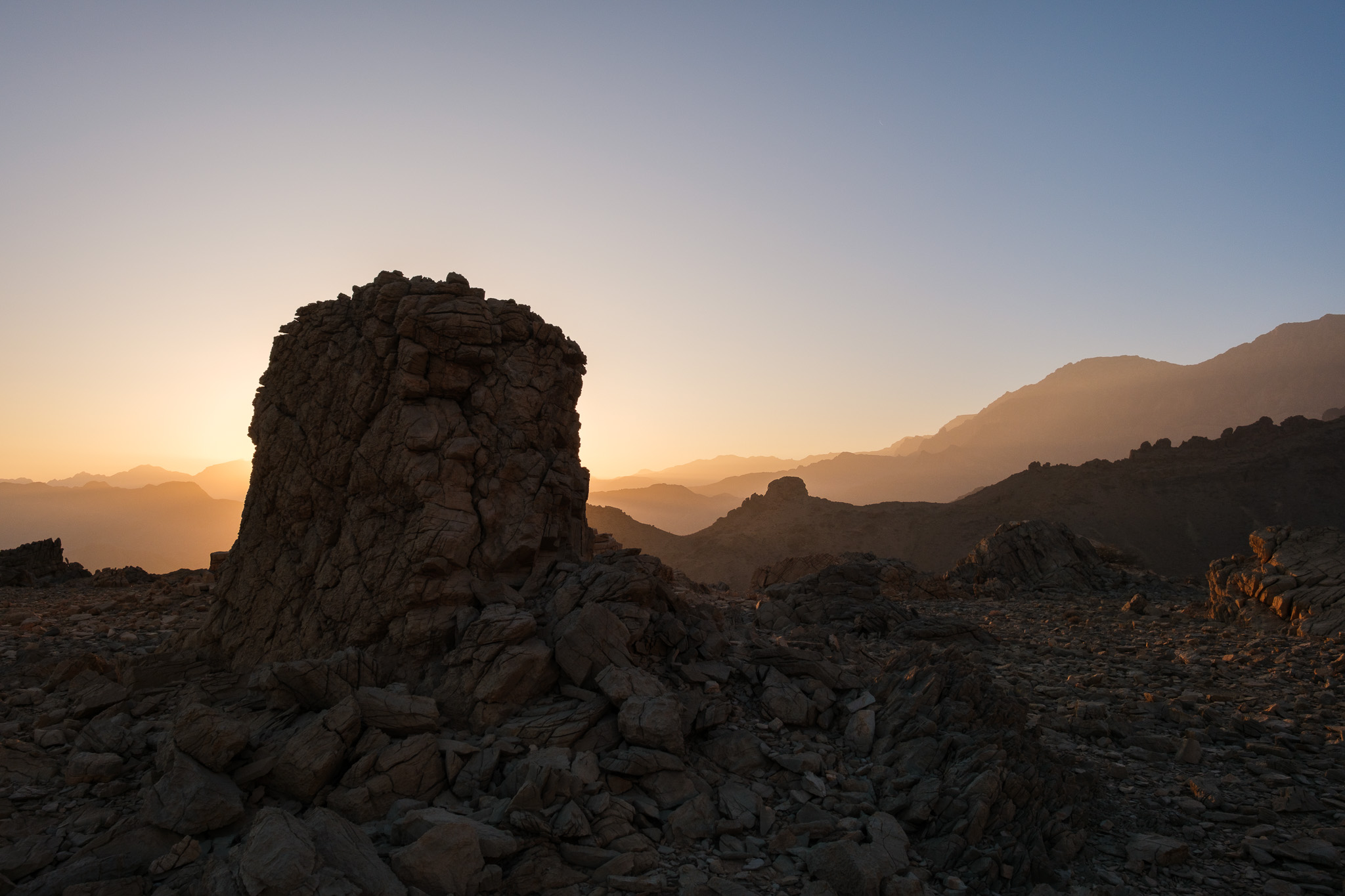
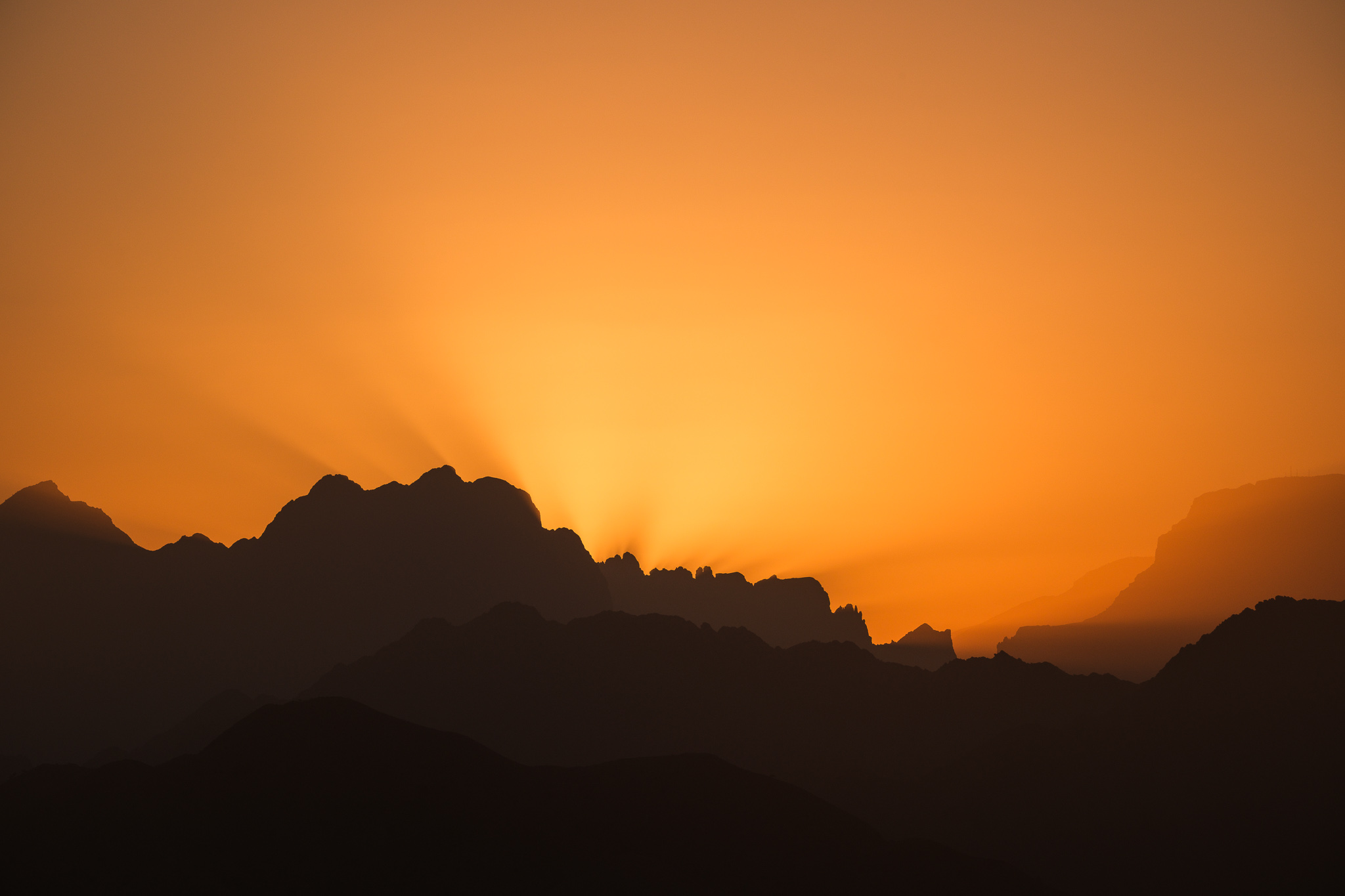
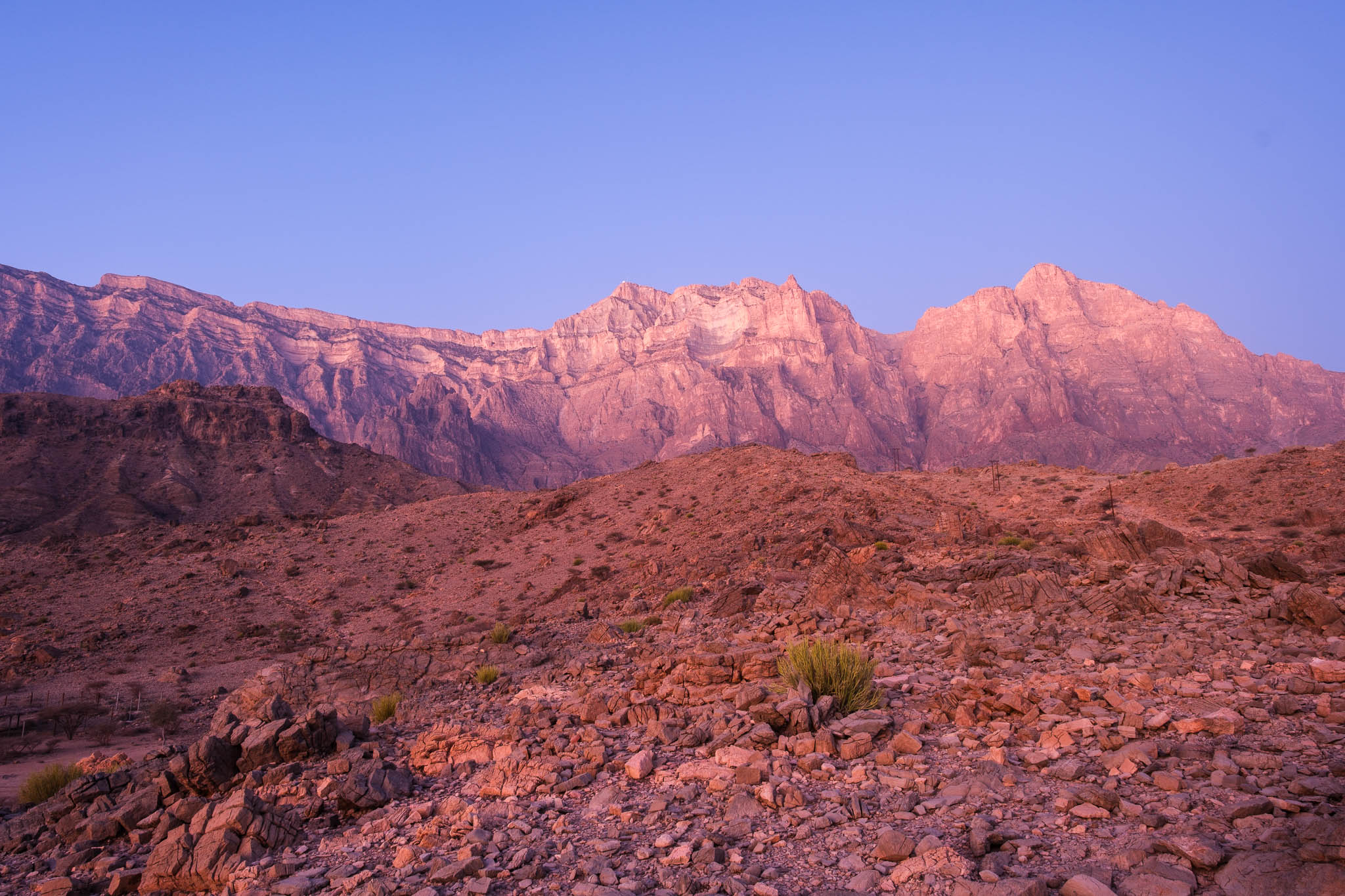
After a 2 hour drive from Muscat, our group arrived at the site and set up camp. As the sunset was approaching, I walked around for a while, scouting potential locations for a sunrise shoot. At sunrise, that wall of rock would be illuminated by the early morning light. Sunset itself provided a good show, with the light being dispersed by the edge of the mountain.
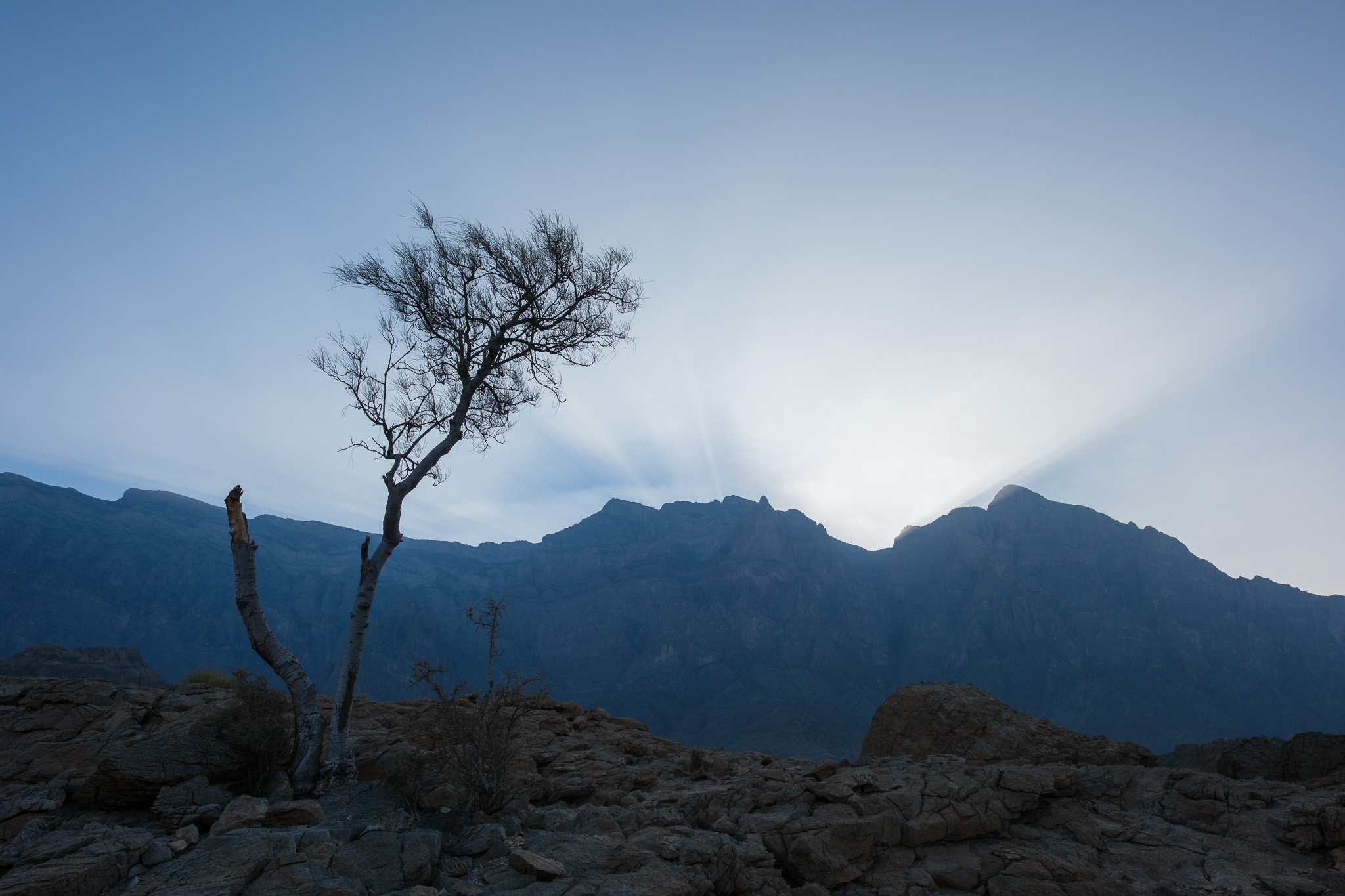
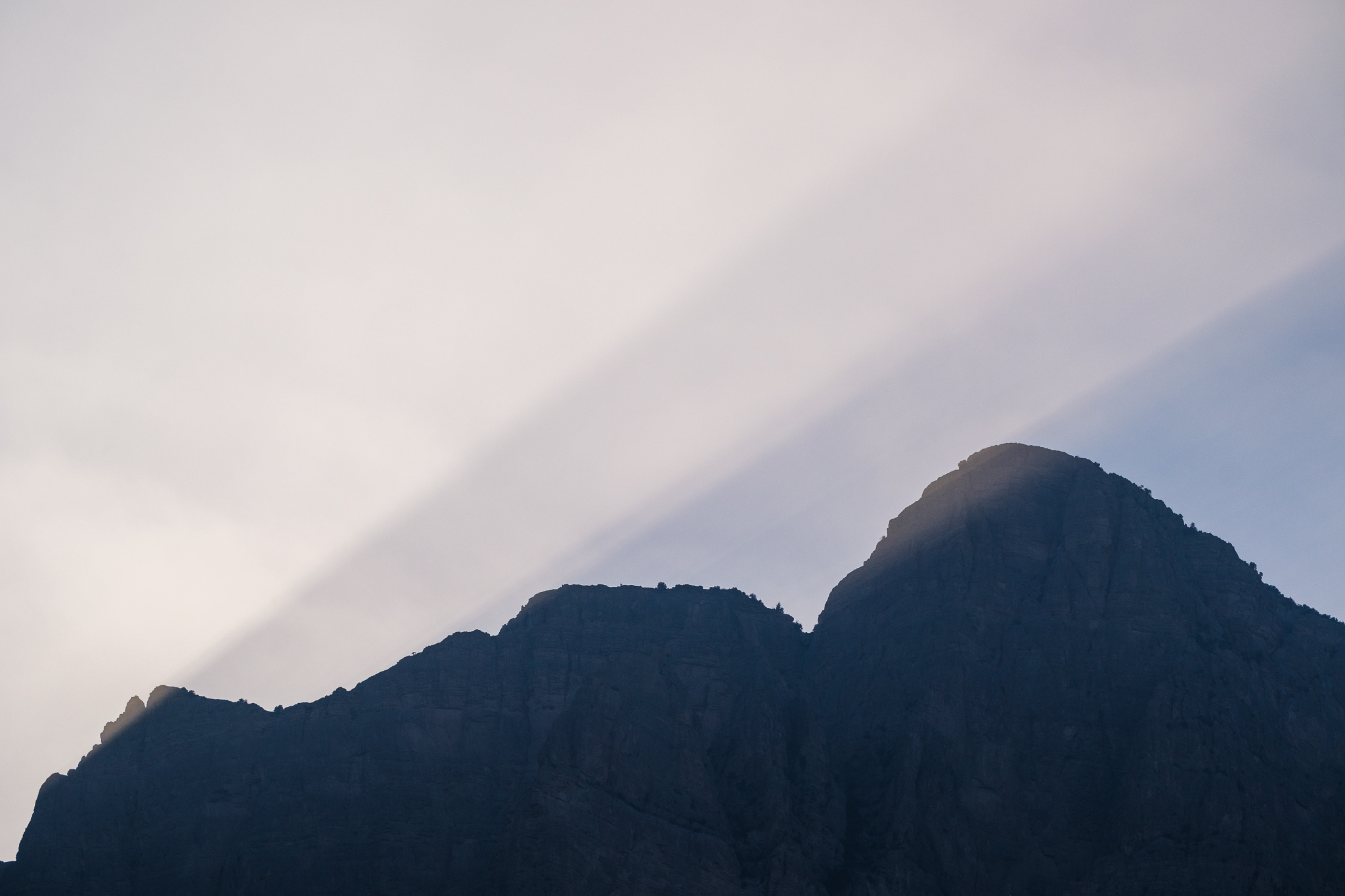
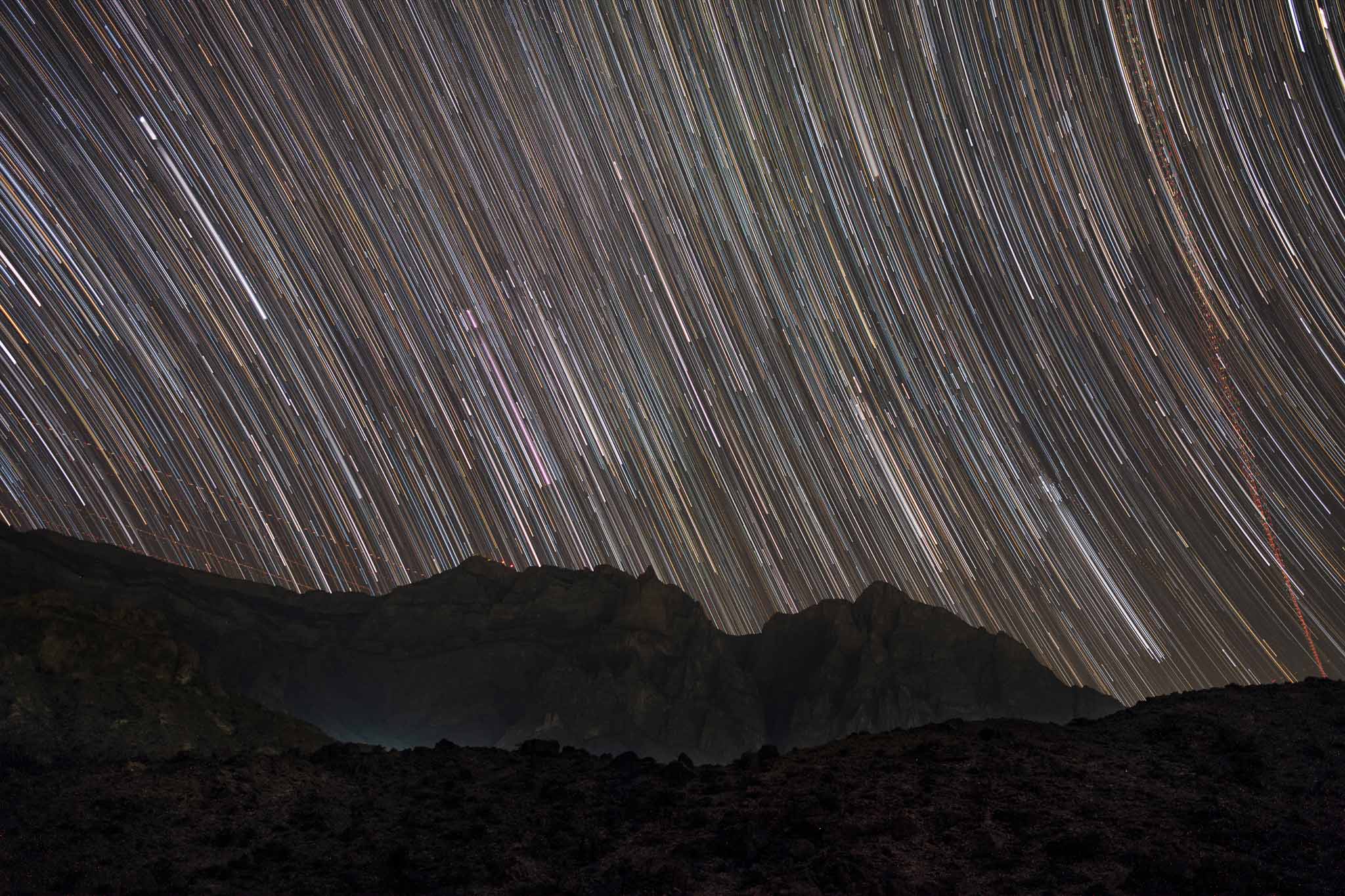
With the approach of darkness I returned to camp to have dinner and prepare for some observation. Our group managed to had a good look at several planets (Saturn, Neptune, Uranus and Jupiter), plus a few star clusters and nebulae. Before I went to sleep, I set up my camera on the tripod to shoot a few hundred images for later assembly as star trail. The result was the image below, with a total time o 100 minutes (200 photos of 30 seconds each).
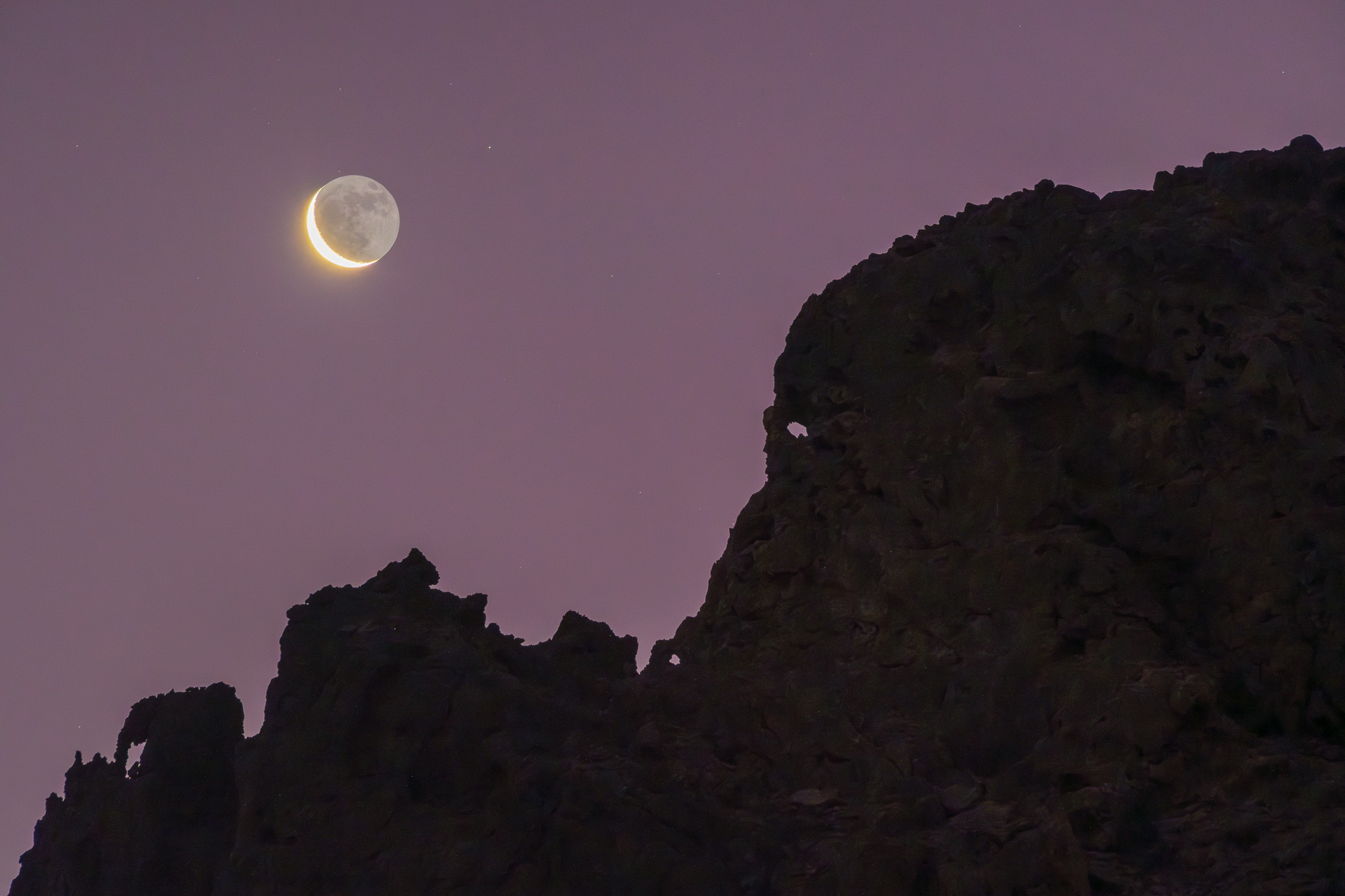
The following morning, as planned, I woke up before dawn, to be greeted by the crescent moon.
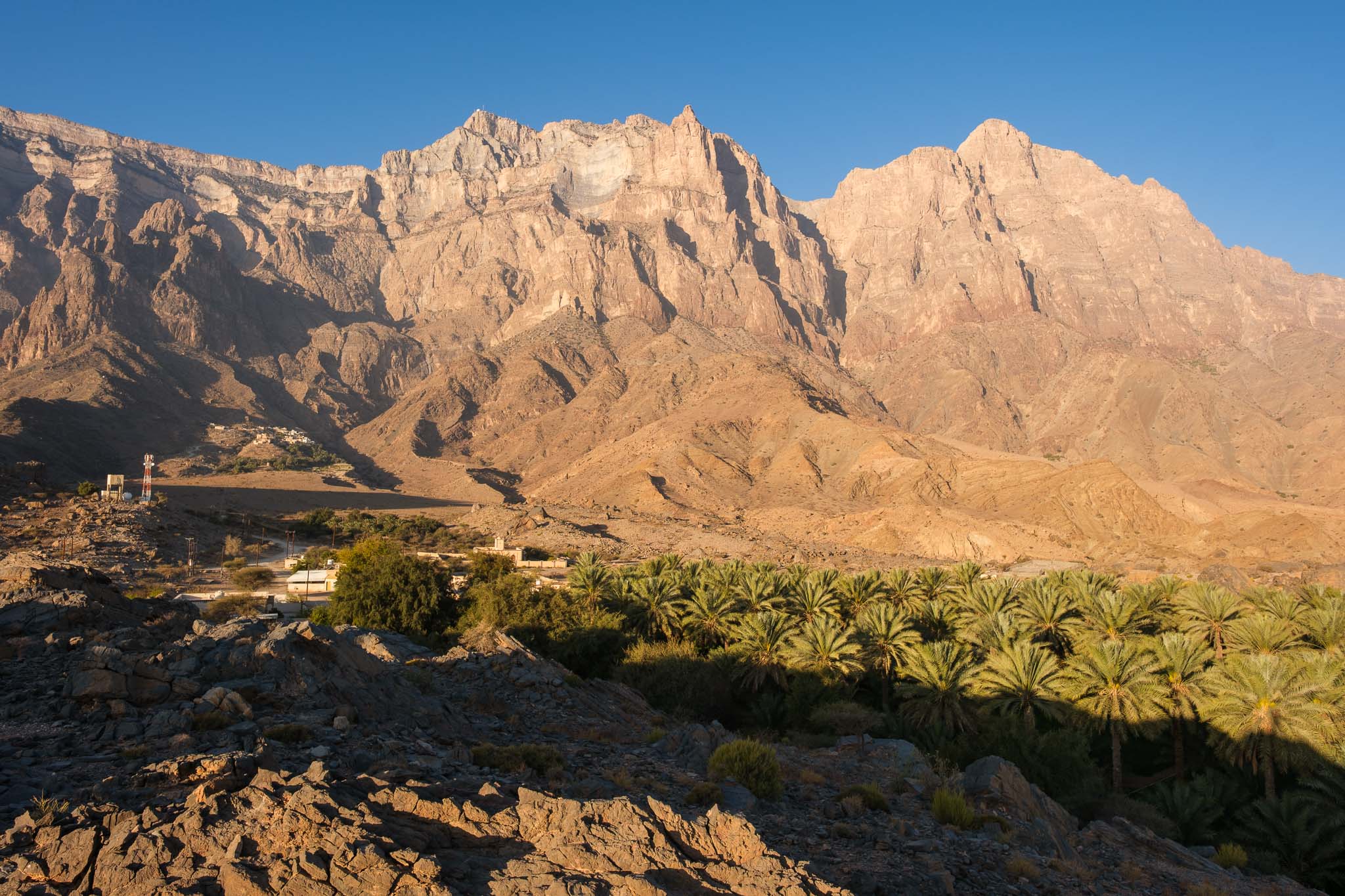
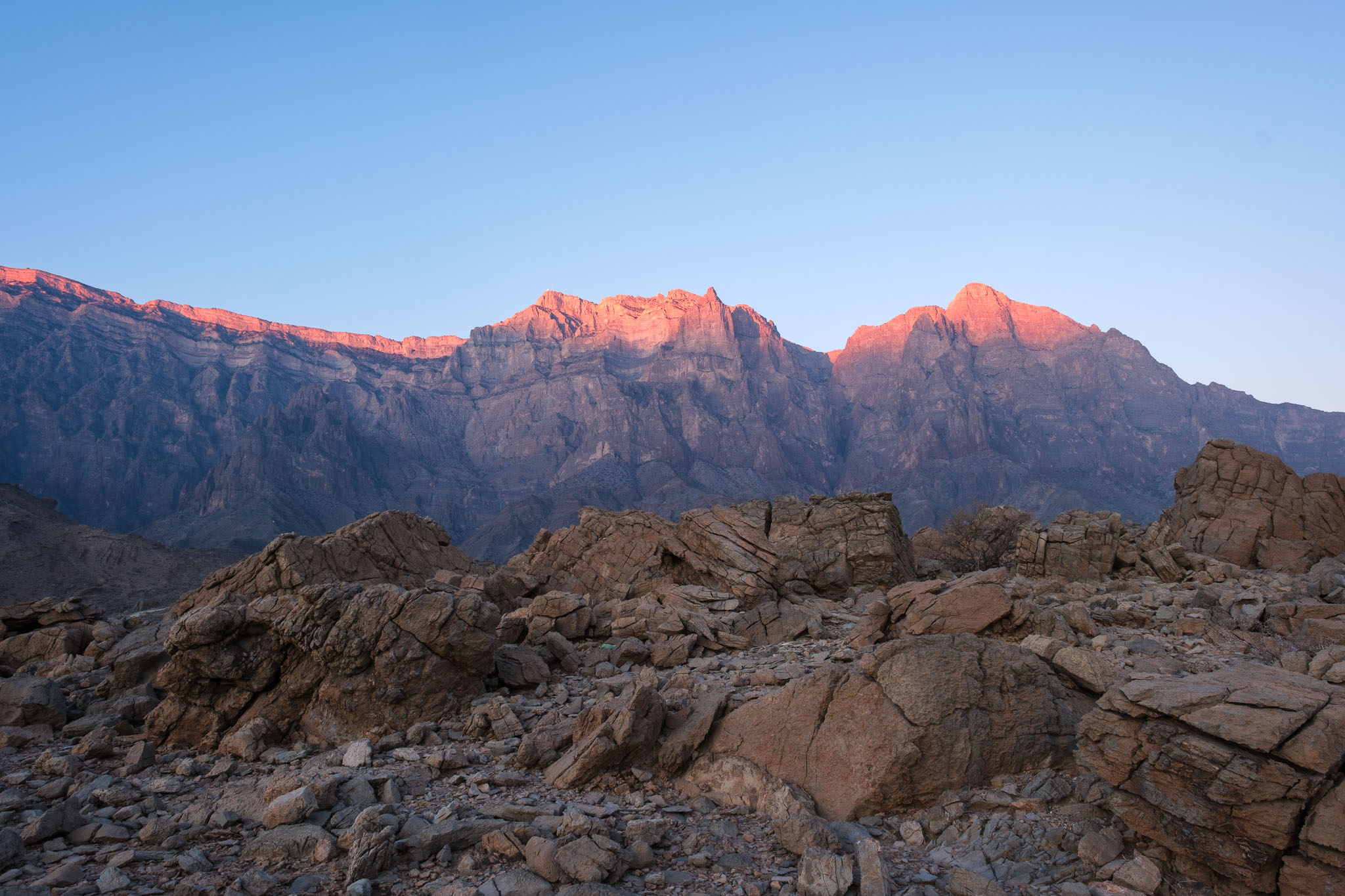
After that, I walked up a nearby hill and started to shoot as the early morning light slowly bathed the mountain in a wonderful light. It was an incredible experience just watching the progression of the light over the landscape.

Of course on my back the sun was rising, which presented further opportunities for interesting photos too. Like the nearby village of Wahjma, at the foot of the mountain, with its oasis of palm trees.