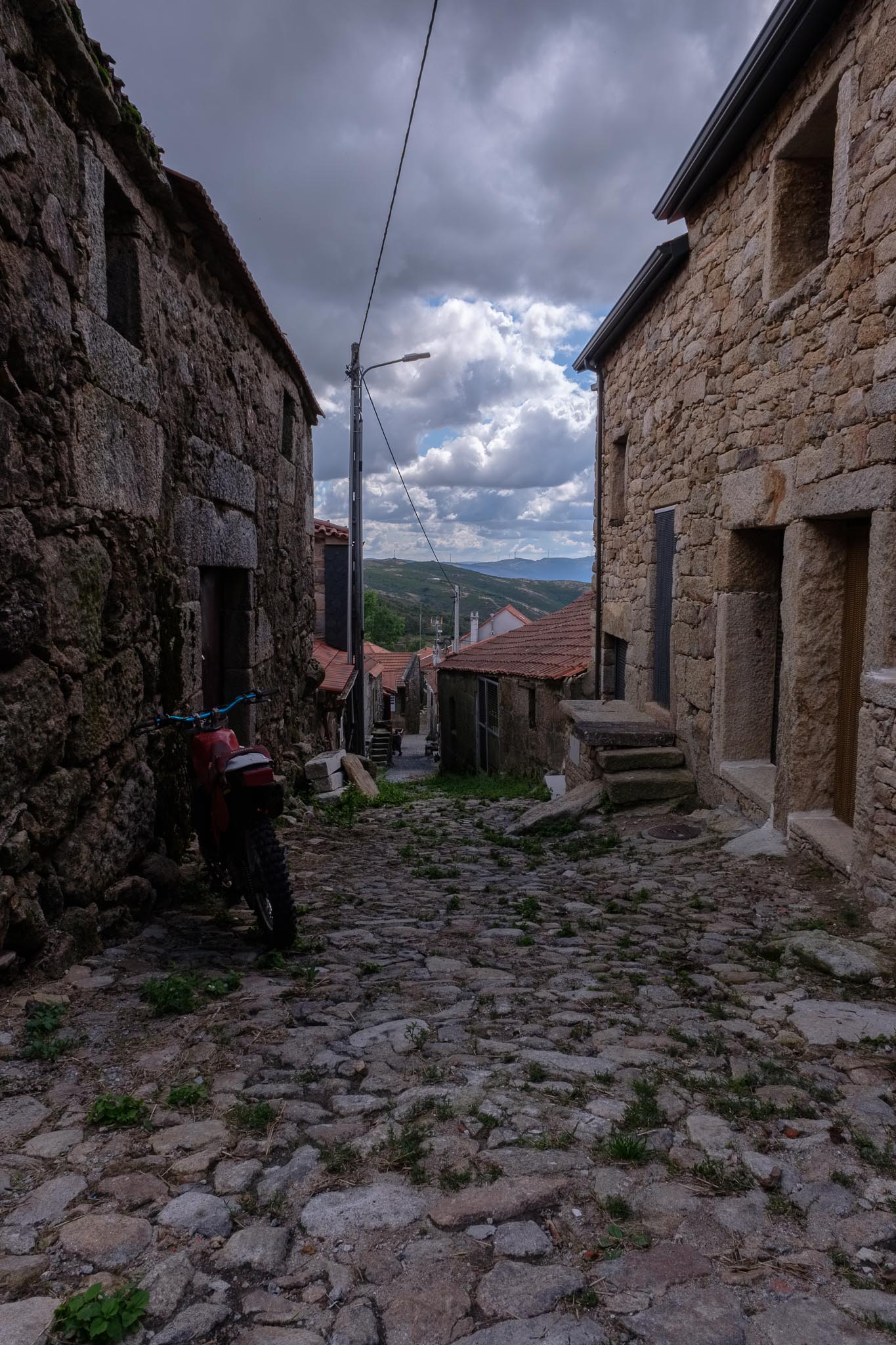
The Parque Nacional da Peneda-Gerês, Portugal: part 1.

Given the uniqueness of its geography, geology, fauna, flora, and cultural heritage, the Parque Nacional da Peneda-Gerês (PNPG), located in northern Portugal, was created in 1971. It is the only National Park in the country, and occupies an area of 69,595 ha bordering Spain and extending through the provinces of Minho and Trás-os-Montes. It is a mountainous region, reaching an altitude of 1,600 m, where the landscape is dominated by rugged granite formations, and where the effects of the latest glaciation can be seen. Deeply cut valleys in the mountains of Peneda, Soajo, Amarela and Gerês support a dense hydrographic network, .

The Park has a remarkable botanical diversity – woods, forests, riparian vegetation and peatlands in addition to wet meadows – with rare and endemic species. It is home to some of the most important oak forests in Portugal, a diversity of animal species including endemic (gold-striped salamander) and endangered (Iberian wolf, Iberian wild goat). In the agricultural areas the prairies and “prados de lima” (semi natural humid meadows) are worth mentioning. The region has been inhabited since pre-historic times, so there is a rich historical and cultural heritage. Attesting to this, there are important to megalithic monuments, Roman constructions, medieval castles, and the famous espigueiros (traditional granaries to store corn).

I had been planning to visit this area for a long time, and finally, in the end of September, we organized a 7 day trip. It is not easy to select what to visit in such a vast region, but after a few hours, a draft plan started to emerge. Roughly, we travelled from the east (Montalegre) to the west (Sistelo), as indicated in the map below. We decided to spend the night in different places, as the trip evolved.
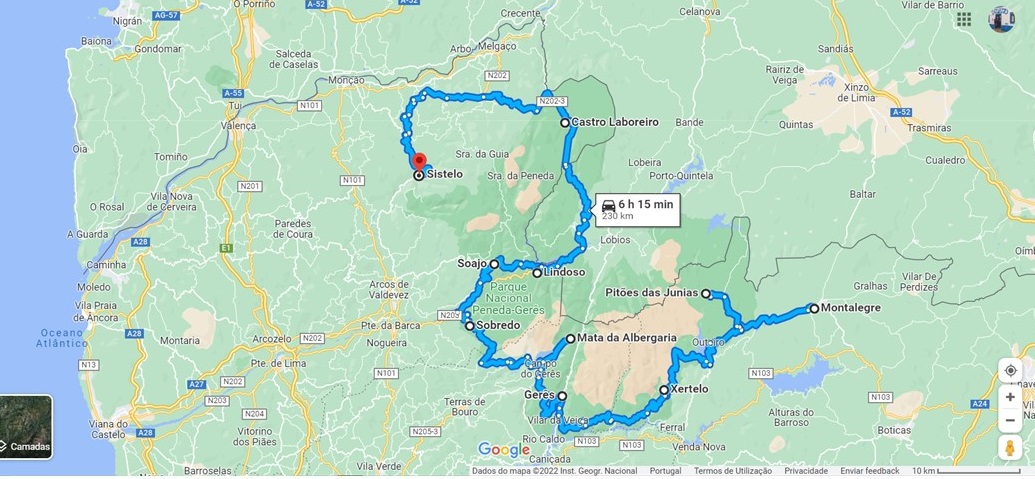
The PNPG (in darker green) with the broad travel route taken during the trip.

In this first part I will cover some of the most interesting locations in the regions of Montalegre and Gerês, but of course this is only my view. We visited many waterfalls (some in hard-to-reach places), historical monuments, isolated villages, but mostly, it is the mountainous landscape and the constant presence of green vegetation that impresses travelers.

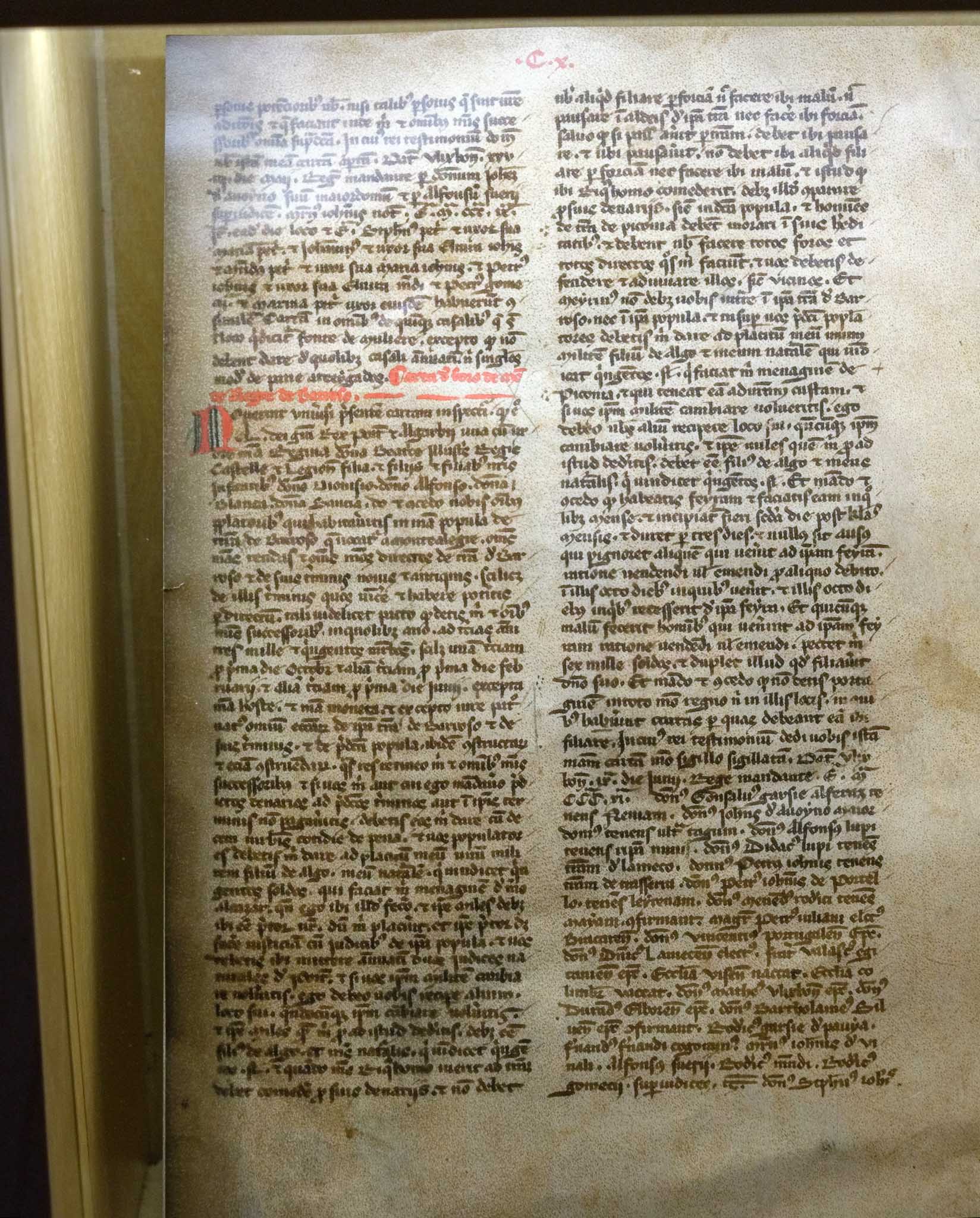
Montalegre was the start of the journey, with its important castle near the serra do Larouco. It was given a “foral” in 1273 – that is, elevated to village status, with permission to hold its own fair – by King Afonso III. Walking along the ramparts and the medieval part of the town feels like going back in time.
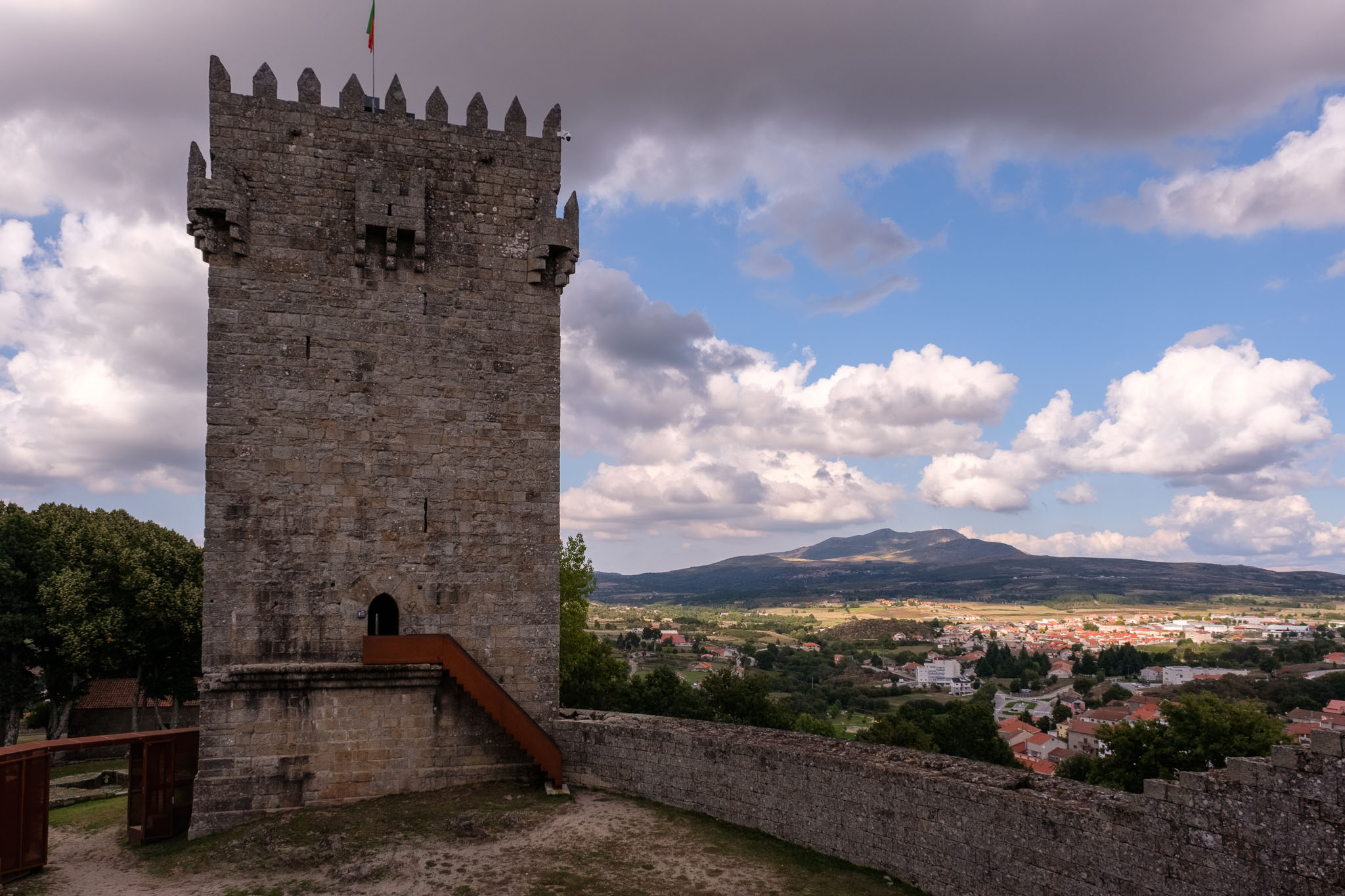
The castle in Montalegre, with the serra do Larouco in the background.
Copy of the “foral” document granting Montalegre the status of village by king Afonso III in the 13th century.
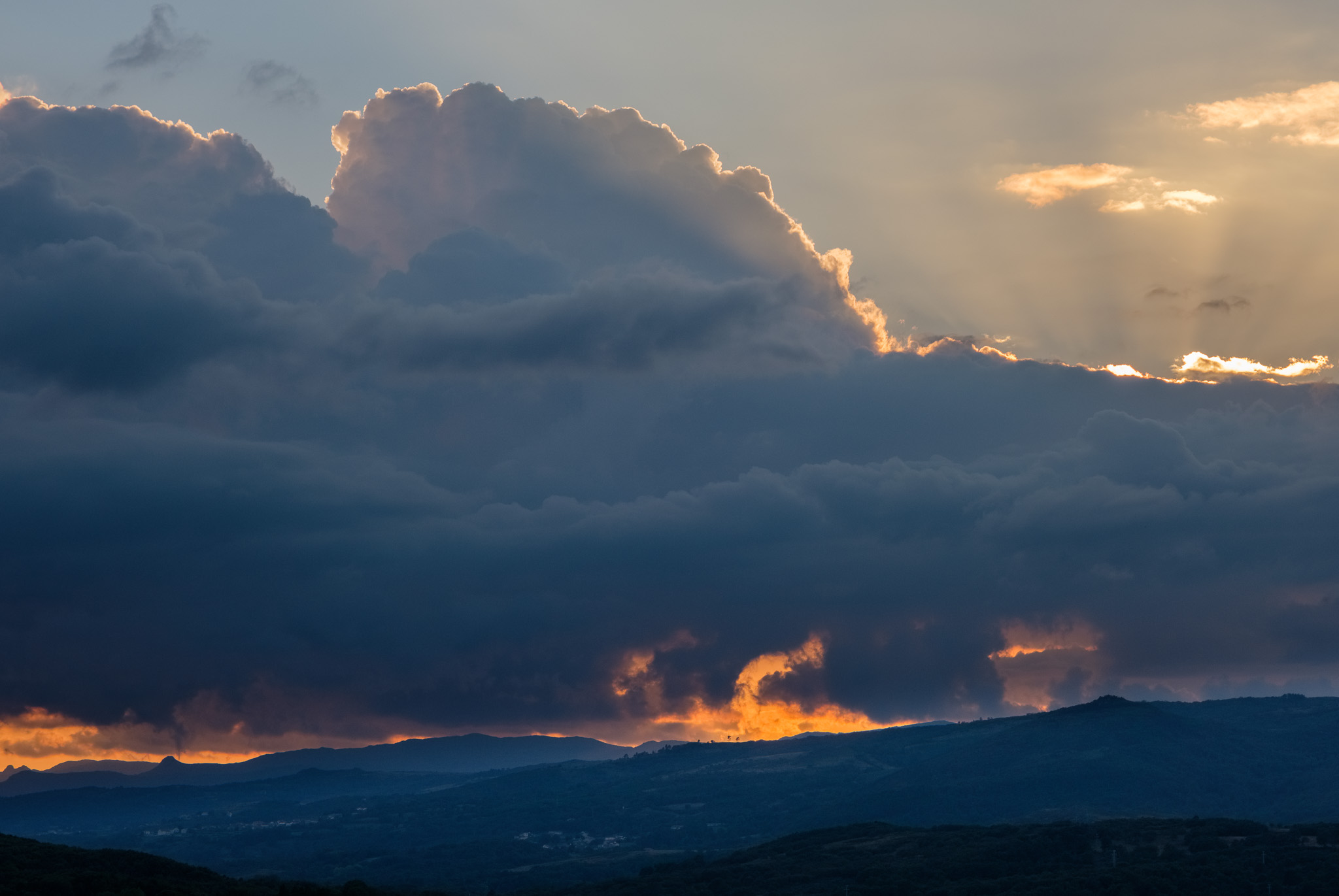
Sunset in the distance over the serra do Gerês.

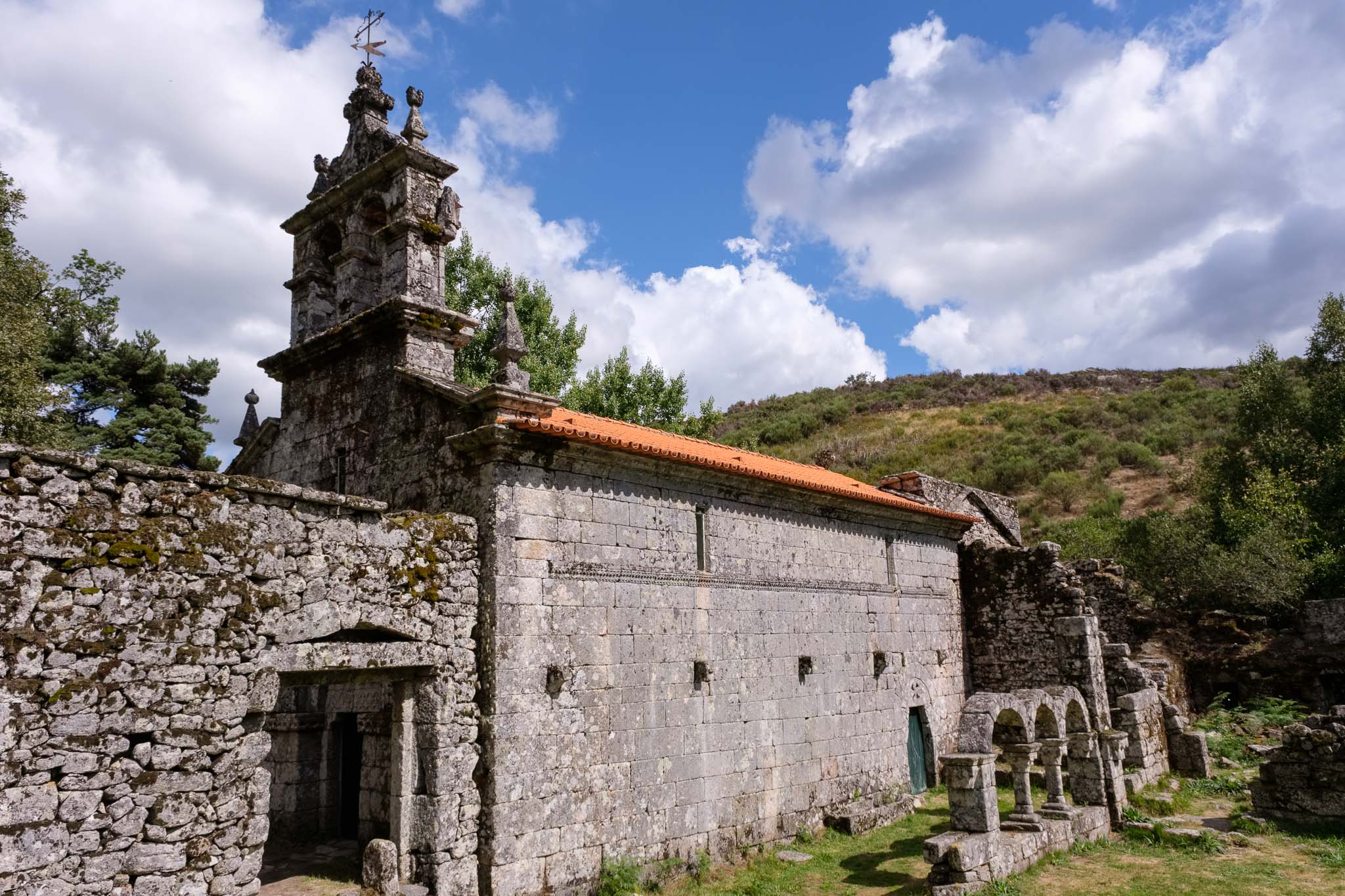
One can not be in the region without visiting the famous monastery of Santa Maria das Júnias, close to the village of Pitões das Júnias. The monastery is located in a narrow valley, surrounded by lush vegetation and a nearby creek. Its origin dates back to the middle of the XIII century, when a pre-existing occupation was taken over by monks. What impressed me the most was the complete sense of isolation and the tranquility of the place.
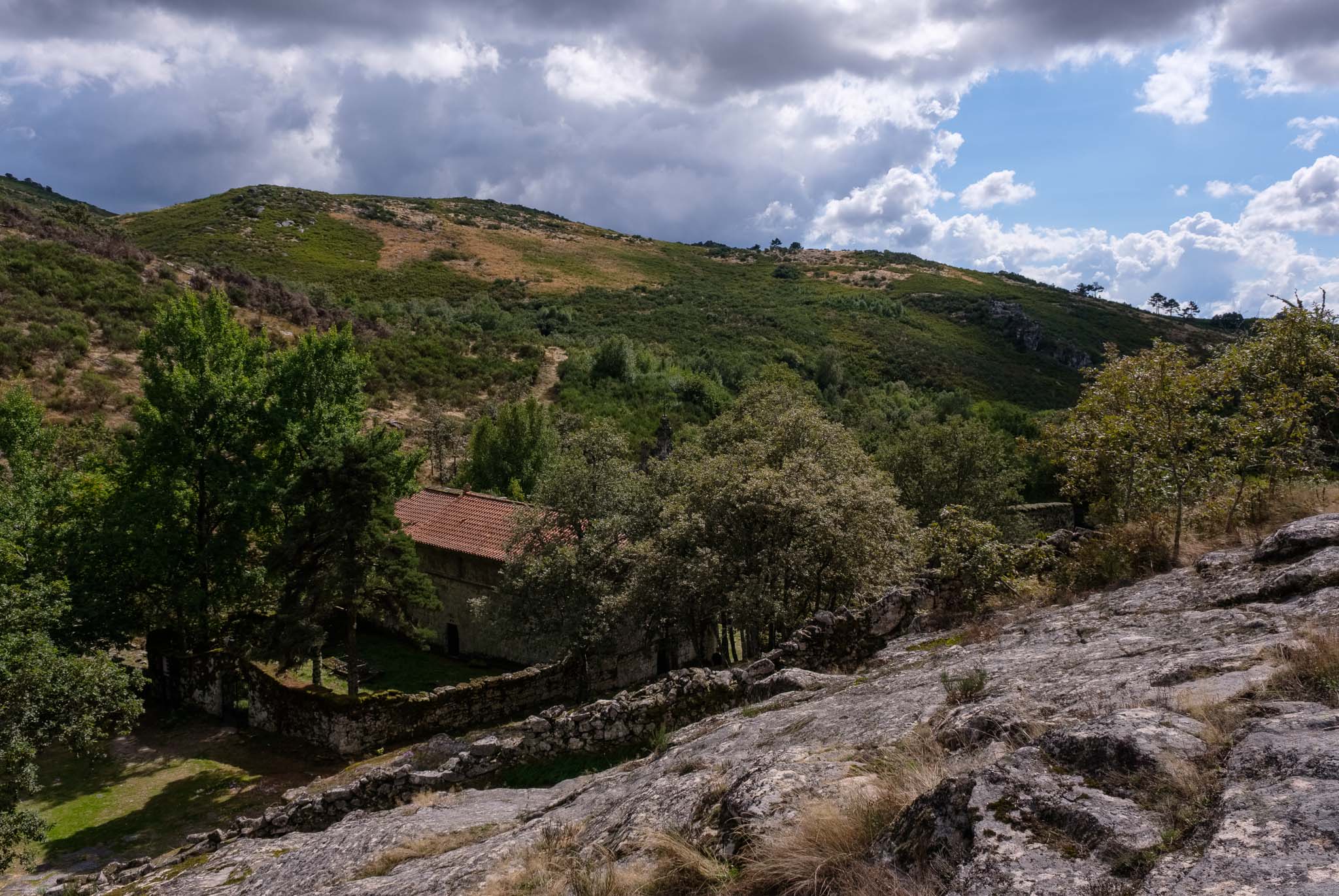
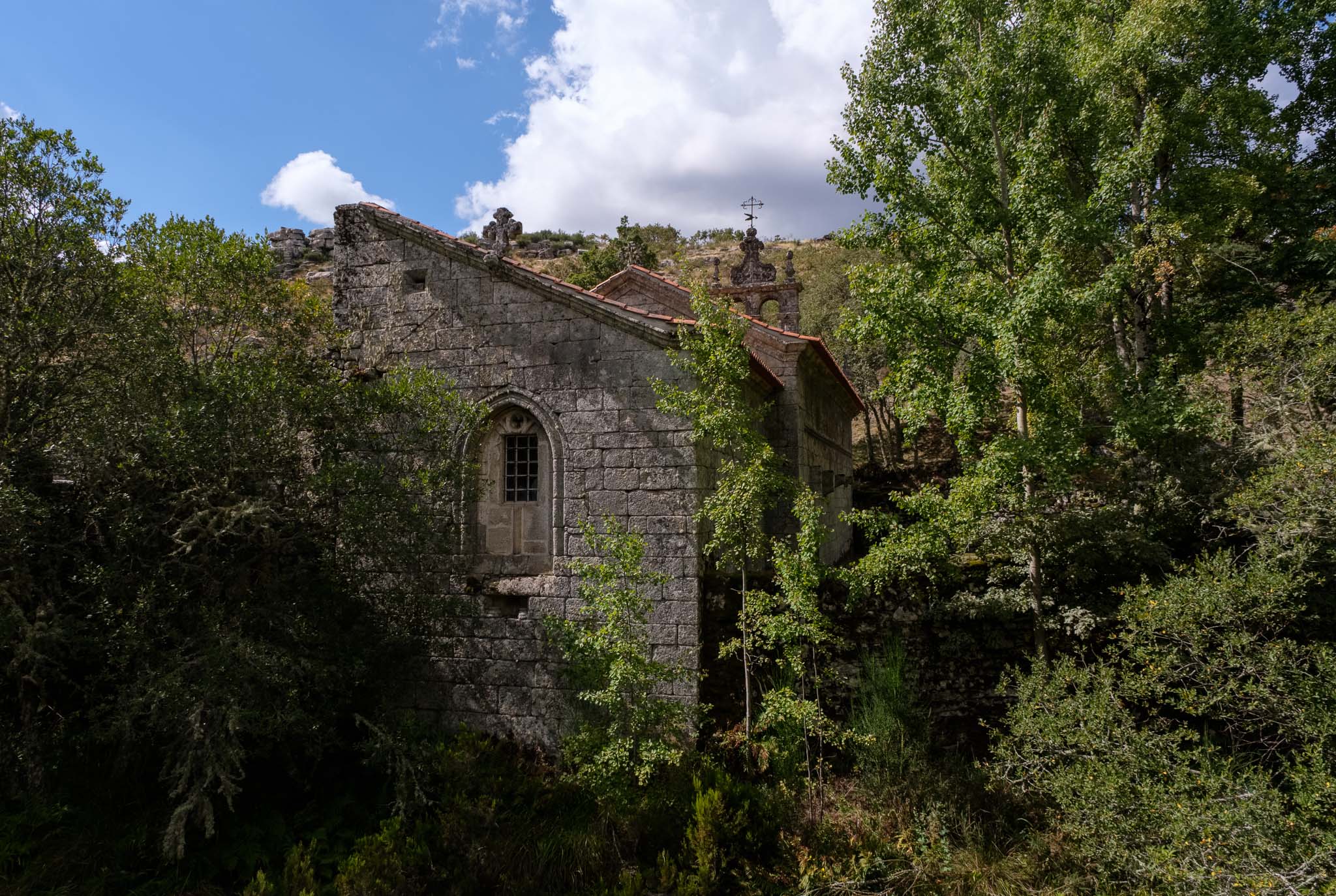
Monastery of Santa Maria das Júnias.
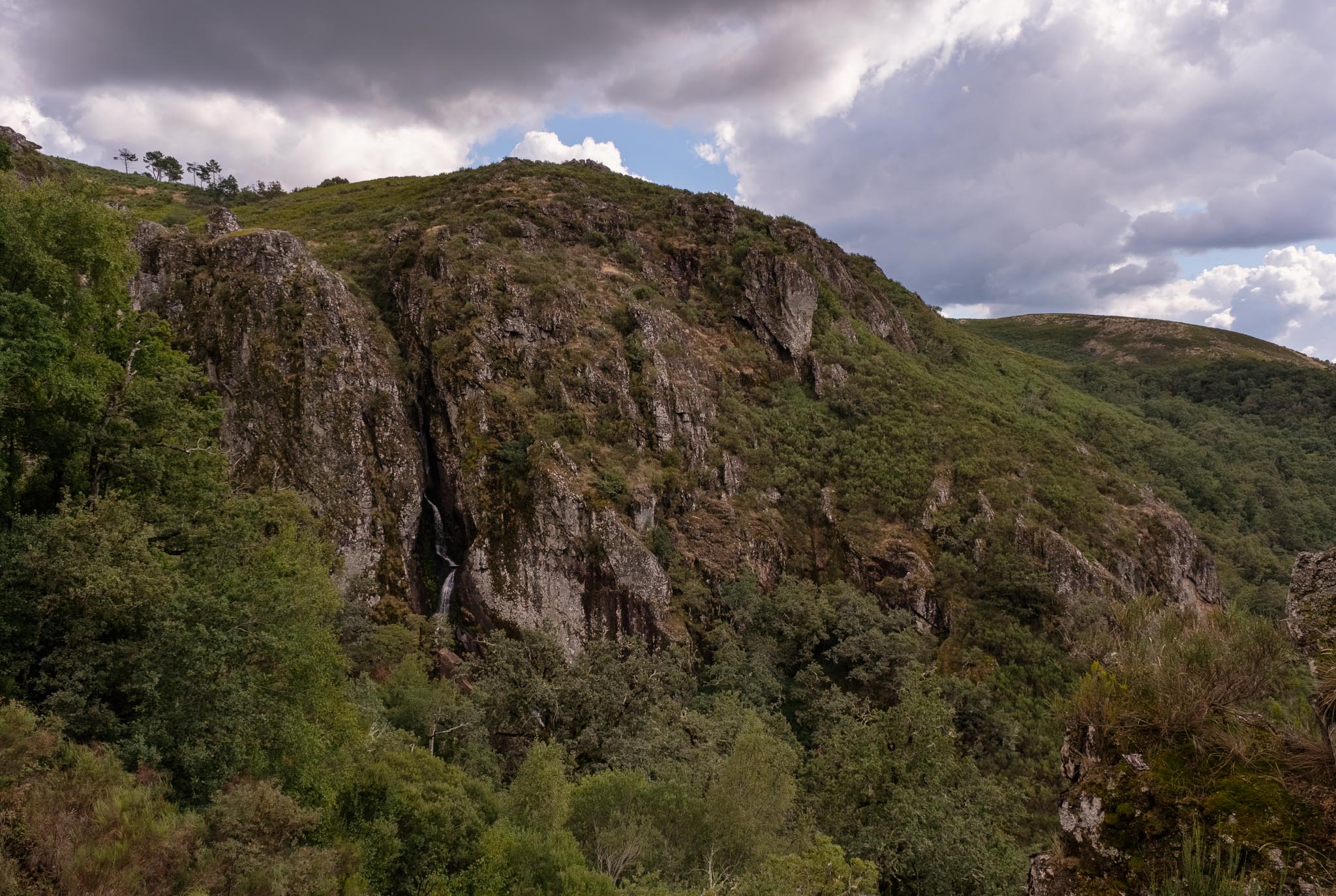
Waterfall in Pitões das Júnias.
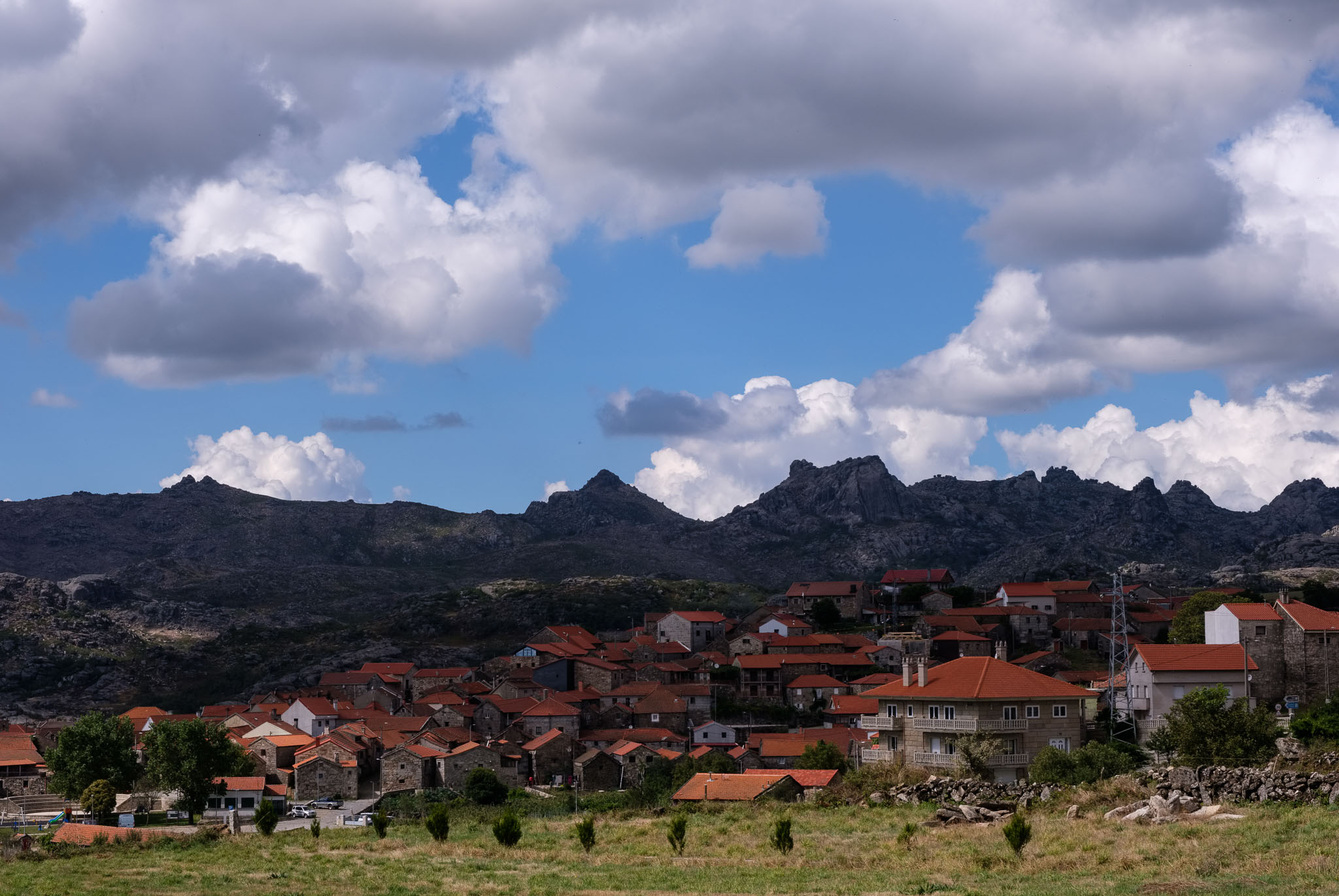
Pitões das Júnias.
Pitões das Júnias, where the granite dominates.
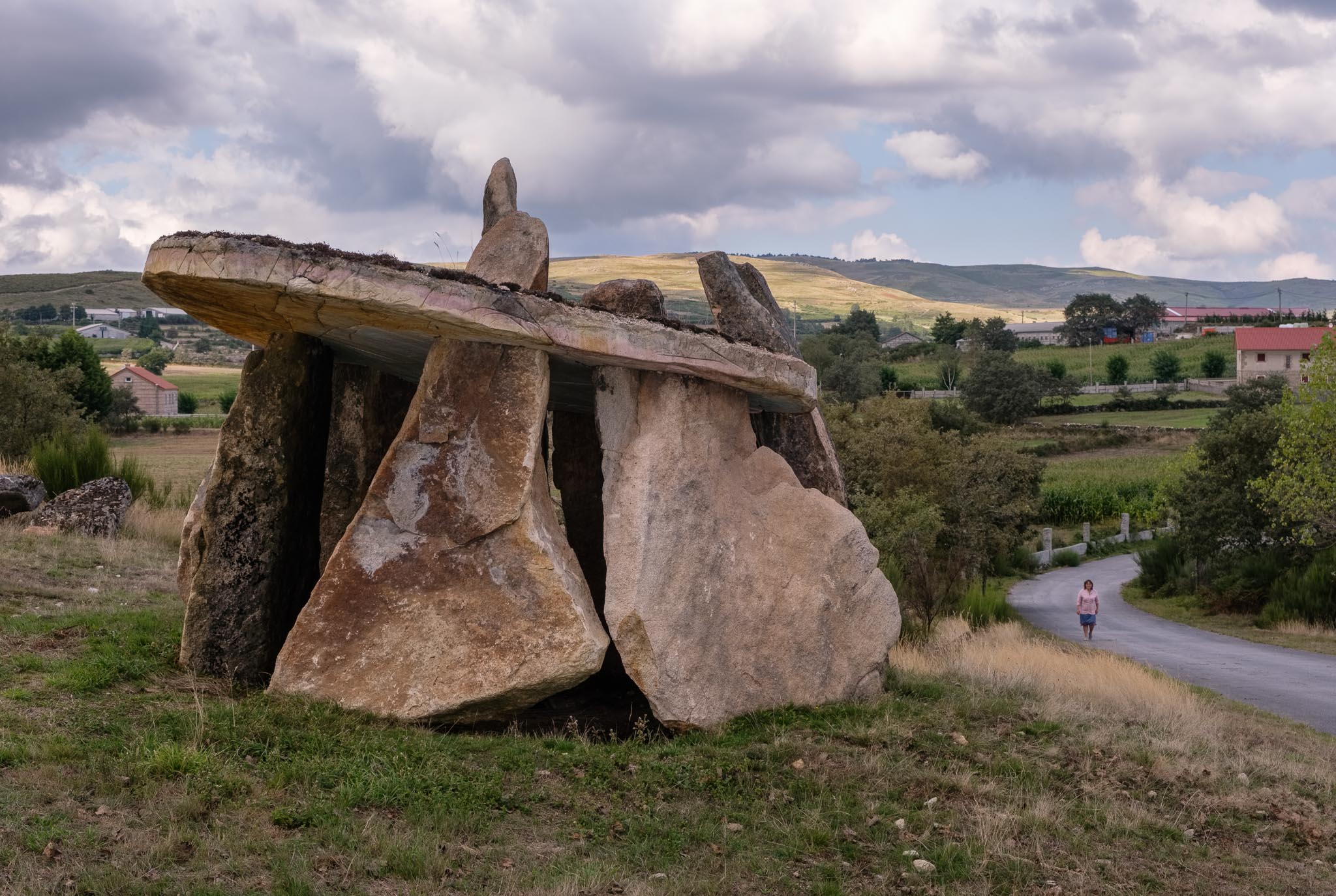
Prehistoric monument in Pitões das Júnias.

We ended our first day in a nice tourist house in the small village of Gralhas, a few km outside Montalegre. The building itself, an old seminary, was quite interesting.
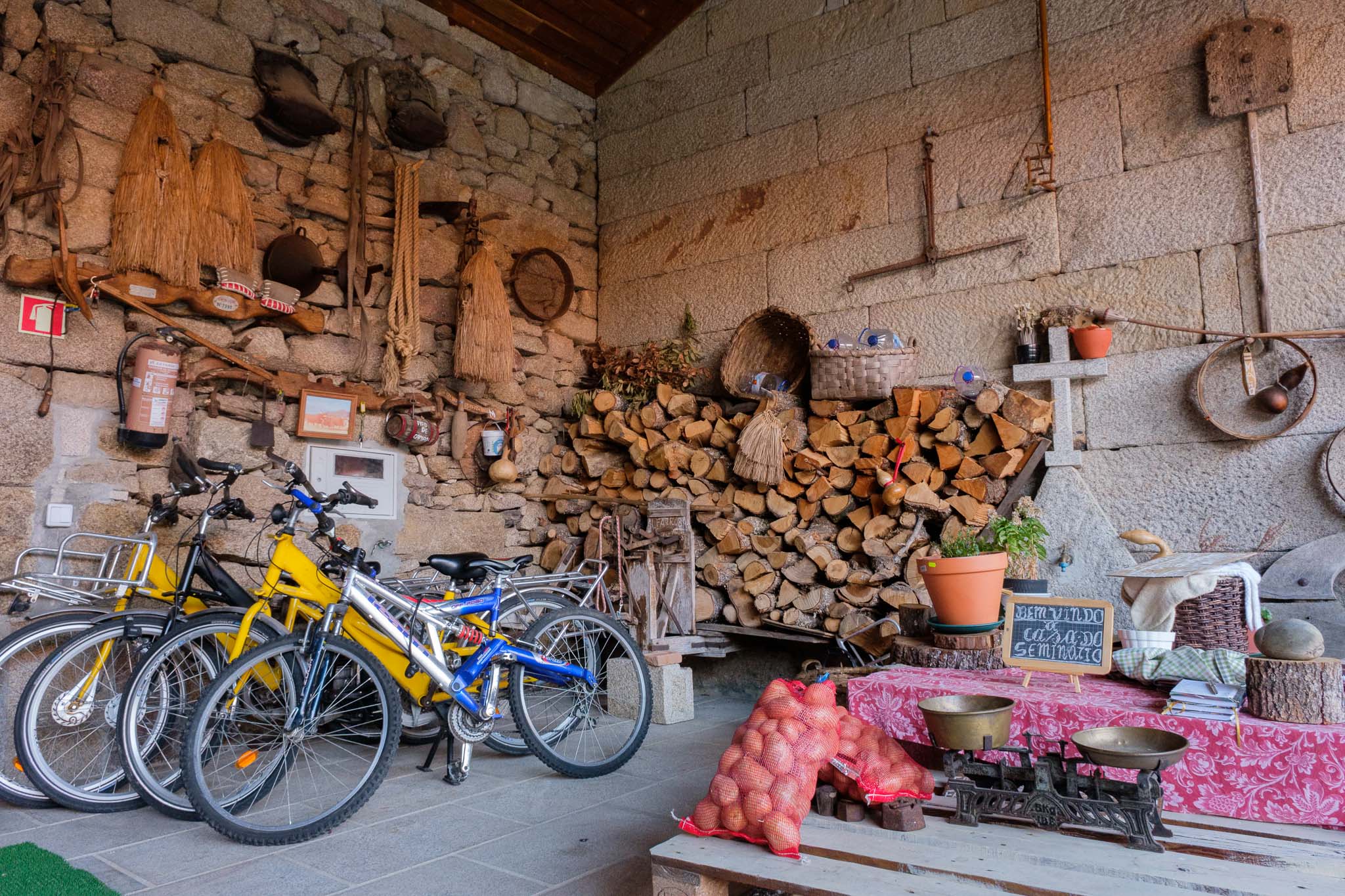
At the entrance of Casa do Seminário, a tourist accommodation.

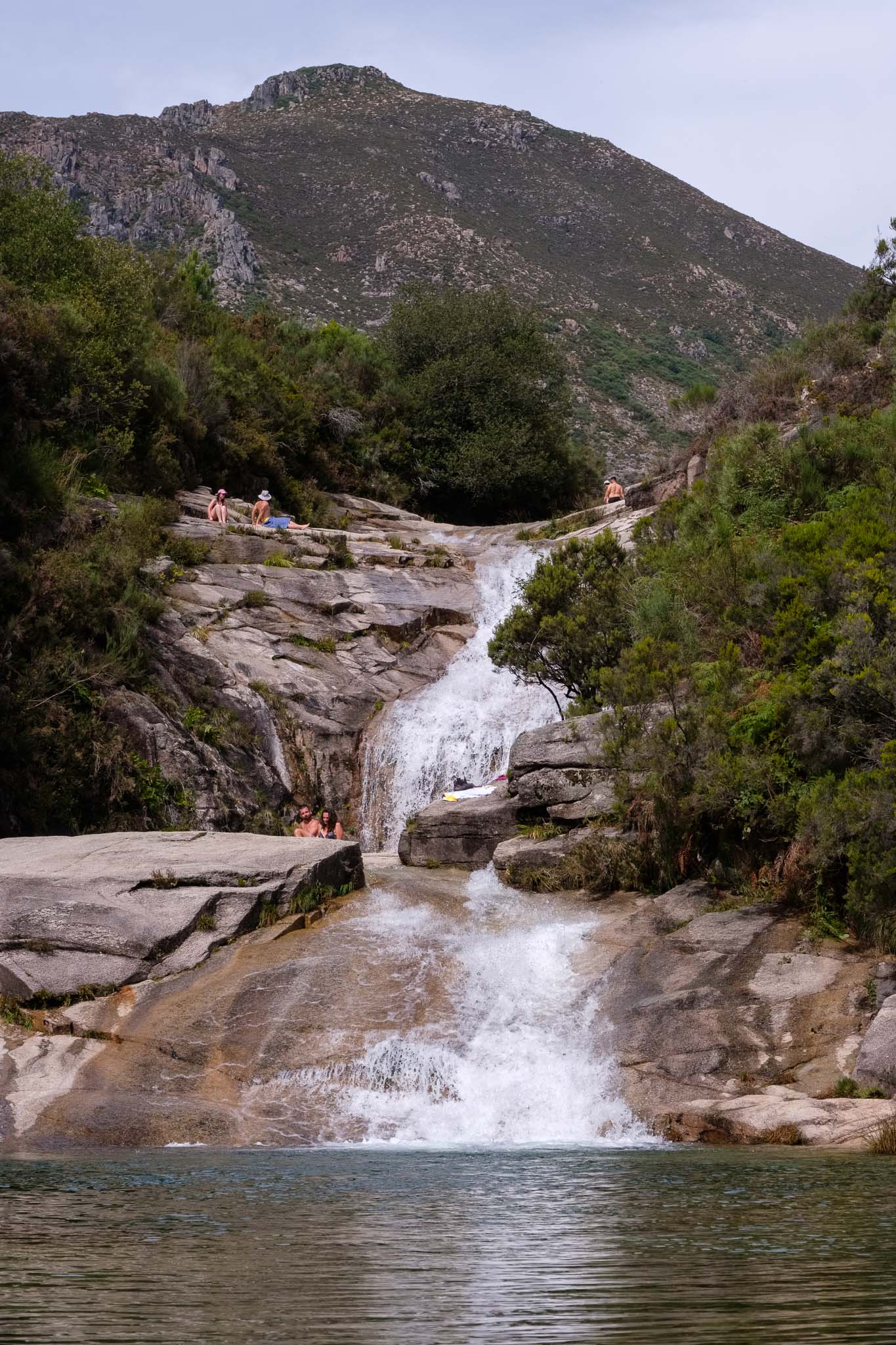
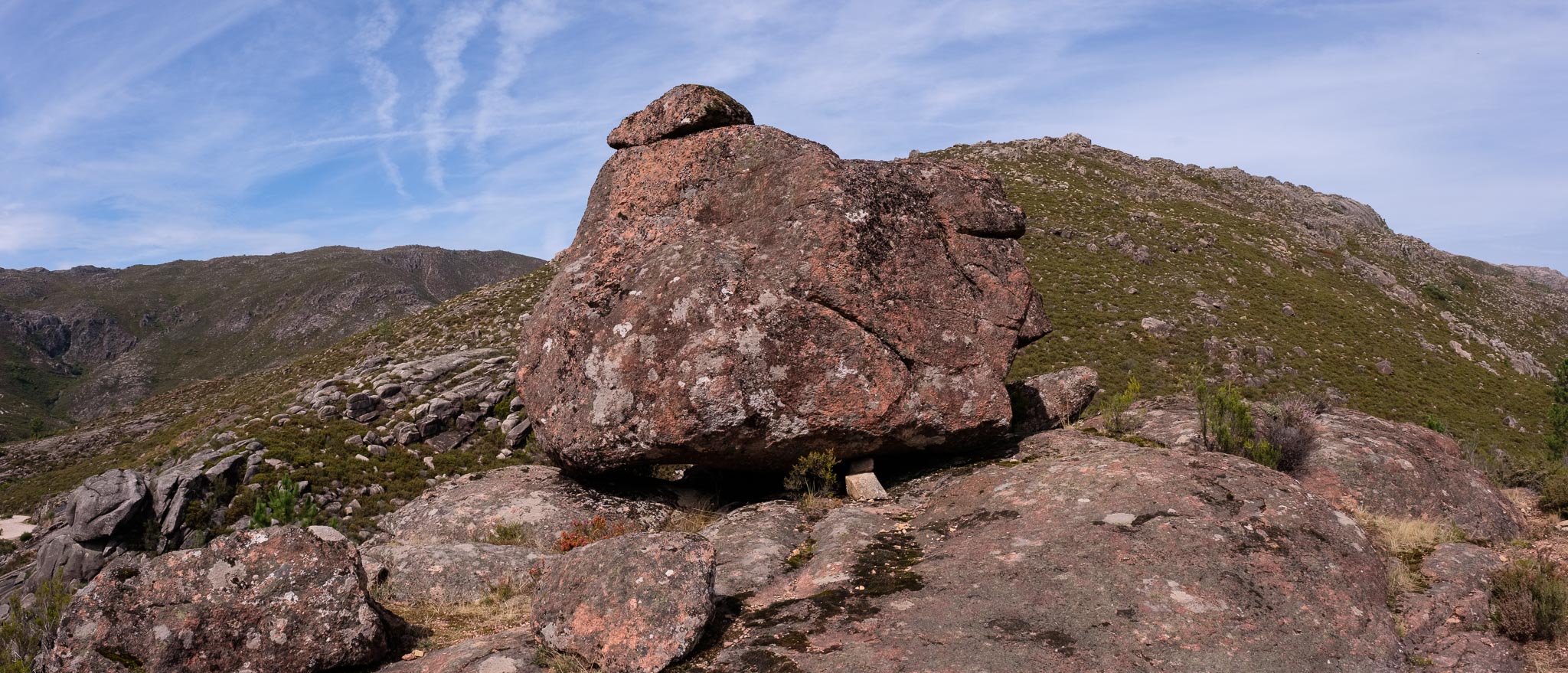
For the second day of the trip, the plan was to visit a couple of famous waterfalls, not far from Xertelo, still in Montalegre municipality. While driving around, its better to take your time and not hurry; the roads are often narrow and twisty, so averages of about 30km/hour are not uncommon. The advice is to go slow and admire the majestic landscape. The first waterfall, Sete Lagoas (or seven lakes) lies at the end of a 10km trail that takes you from Xertelo along the flanks of the mountain. The landscape is dominated by large granite boulder formations and at around 1,000m altitude, there are only a few trees and the heather dominates. You hear the water rushing before seeing the lakes, which encourages you to keep going. The day is hot, so the view of the emerald-green water from above is a revelation.
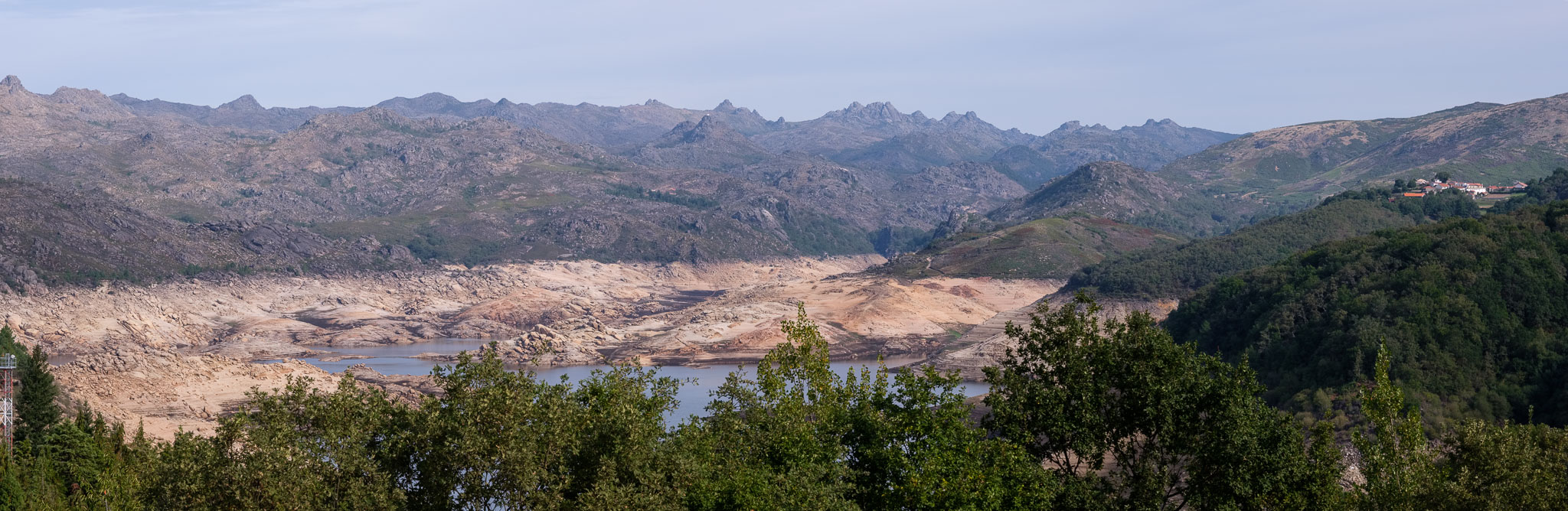
Panorama of showing the Paradela damn, south of Pitões das Júnias. It is clear that the rain has been scarce.
Panorama near Xertelo.
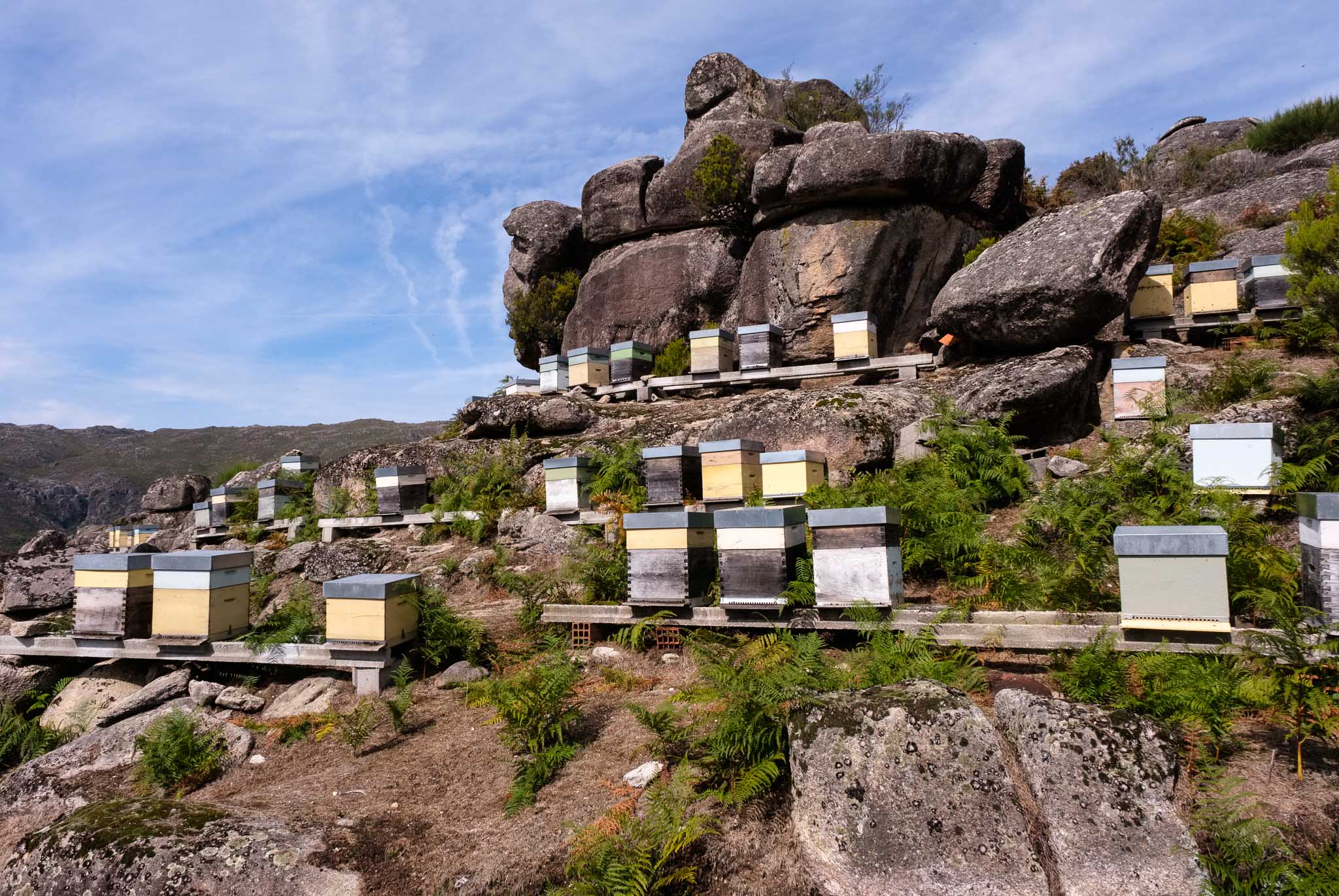
Honey production near Xertelo.
One of the waterfalls in the Sete Lagoas.
Sun bathing.

Don’t forget to visit the unique “fojo do lobo” near Xertelo, a typical and old construction of stones that served to entrap wolves. In the older days, the wolf was considered as a threat, as it could decimate a flock of animals, thus risking the livelihood of a family.
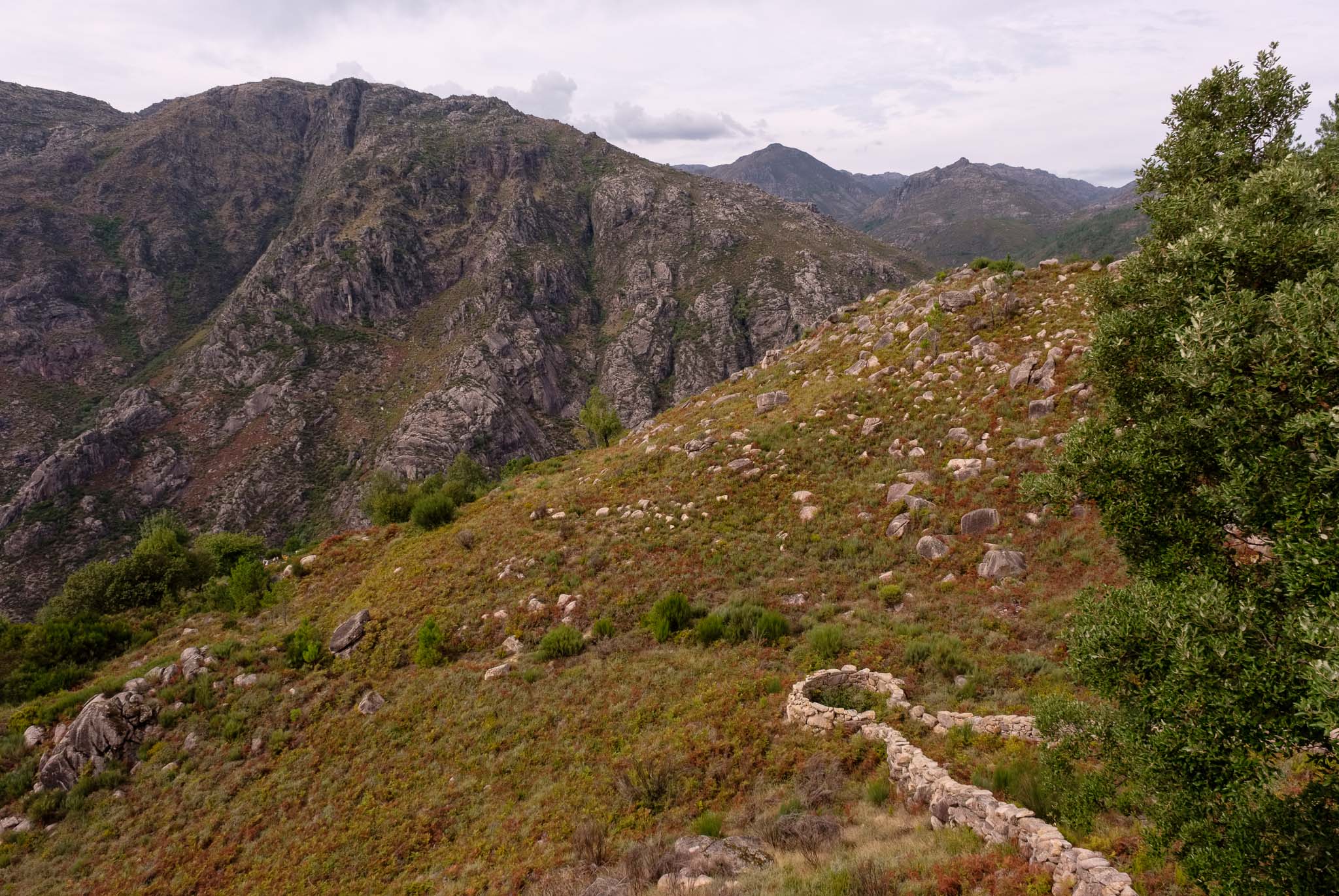
The mountains and the the tip of the “fojo do lobo” near Xertelo.

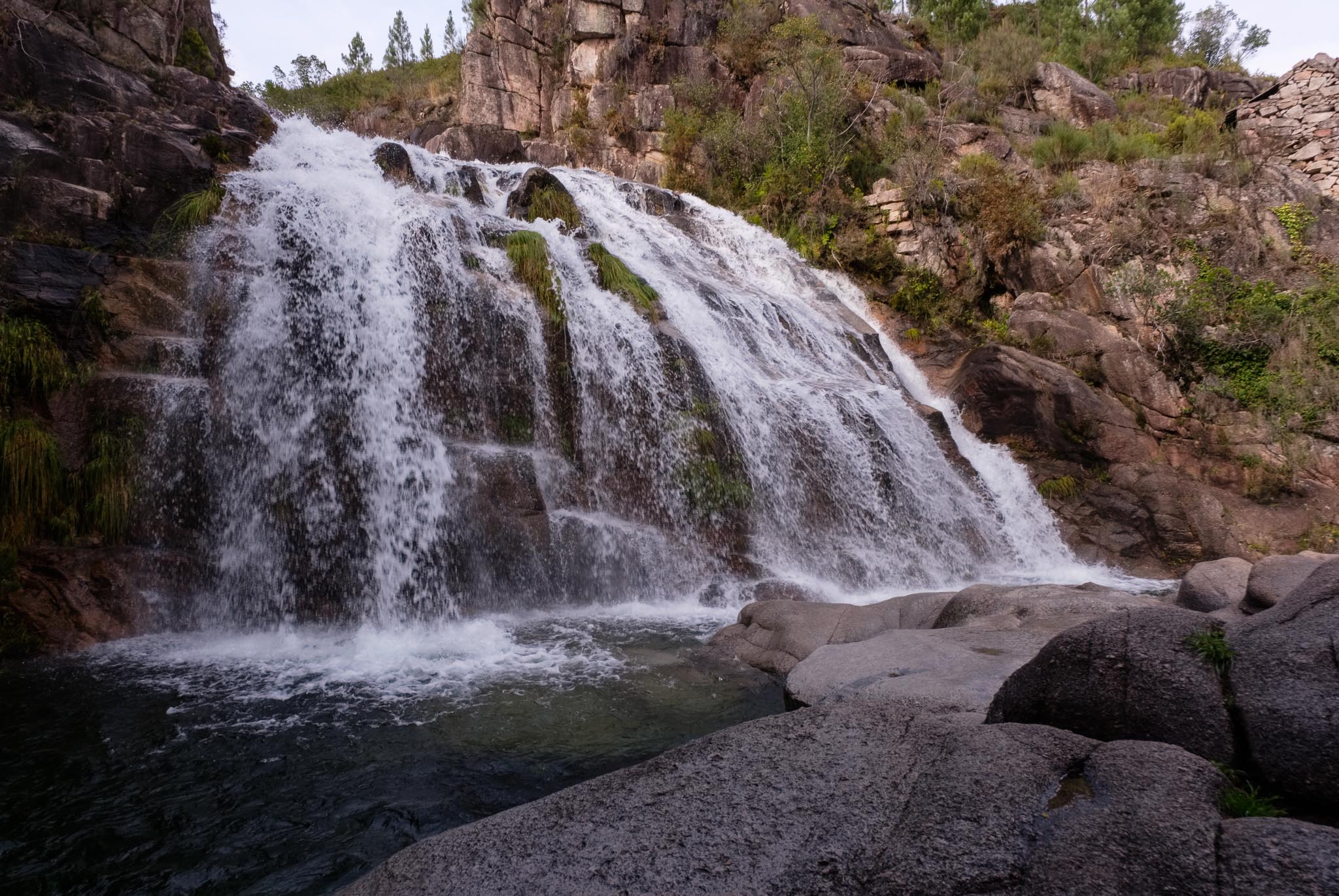
During the afternoon, we trekked to the Cela Cavalos waterfall, which is very different from the previous one. Again, it lies in a deeply cut valley, and it can be heard before being seen. Amidst a dense patch of vegetation, the water falls with tremendous force from higher up, smoothing the nearby granite blocks. It was a perfect place to relax and have an afternoon snack. The way back up the hill was the price to pay for this visit, but it was well worth it. Once back in the car, we drove to the village of Gerês, where we spend the night. The waterfalls of the PNPG are really wonderful, wild, and refreshing.
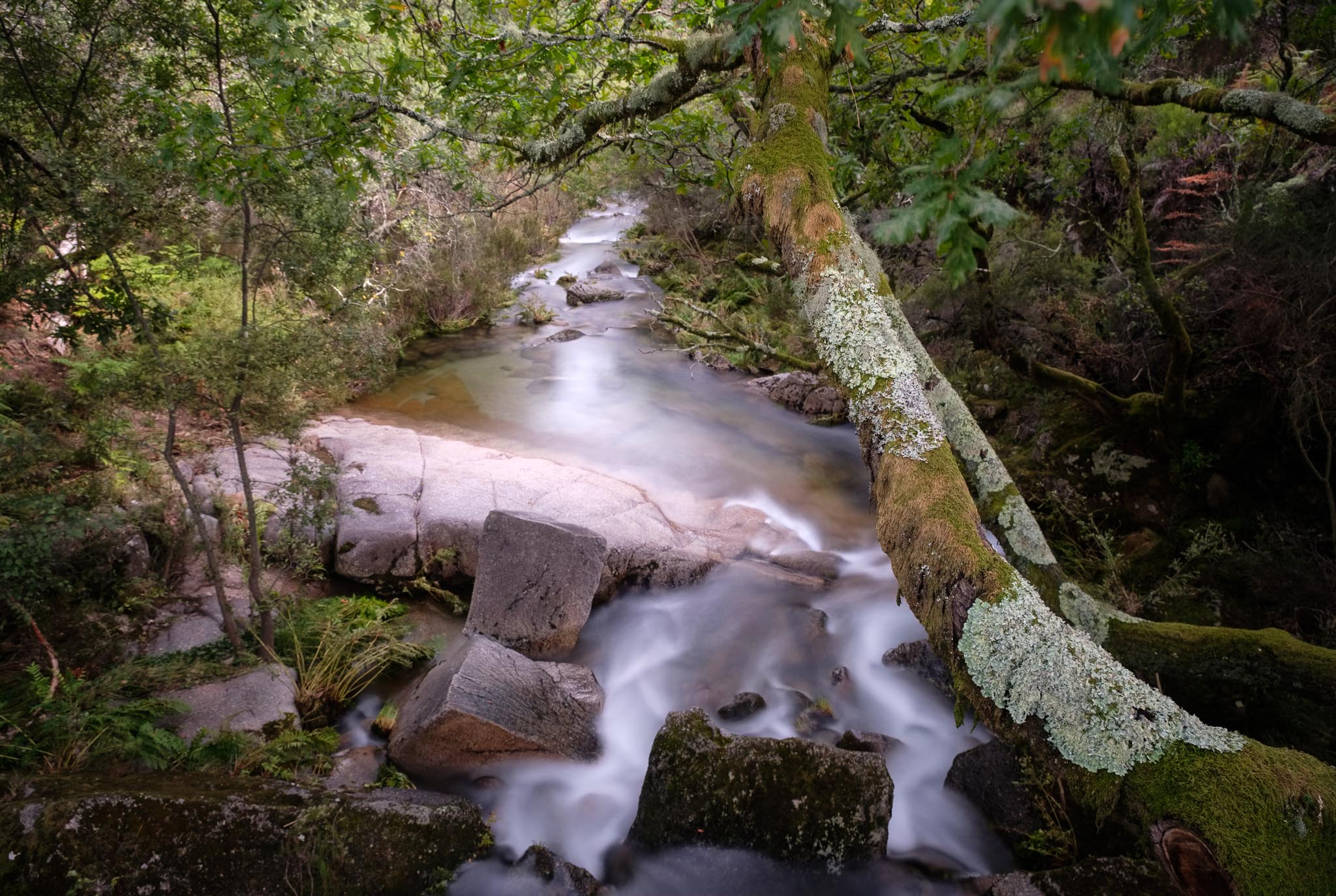
In the waterfall of Cela Cavalos.
The waterfall of Cela Cavalos.
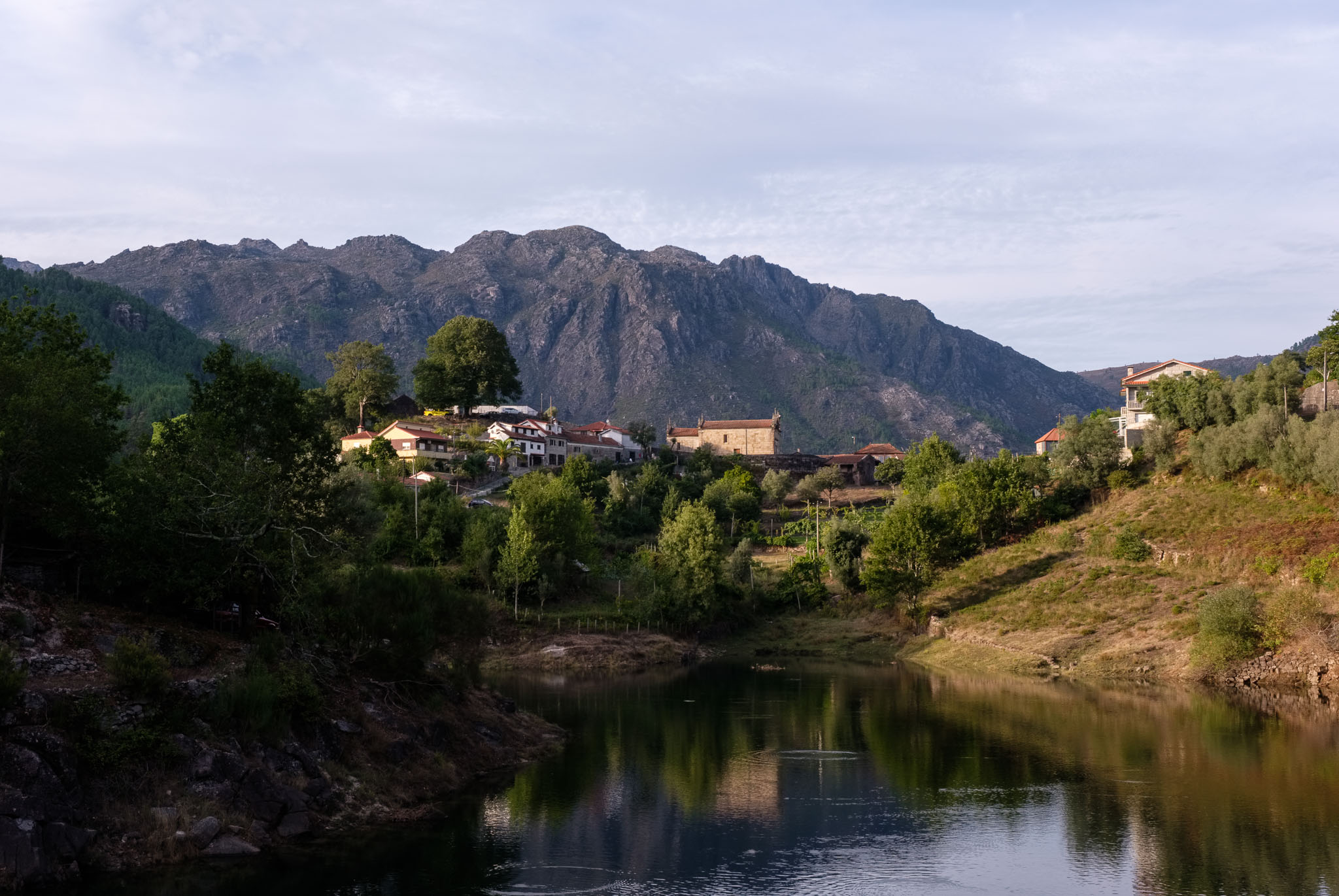
The quiet village of Cabril, on the road to Gerês.

An afternoon in Sabóia, Odemira

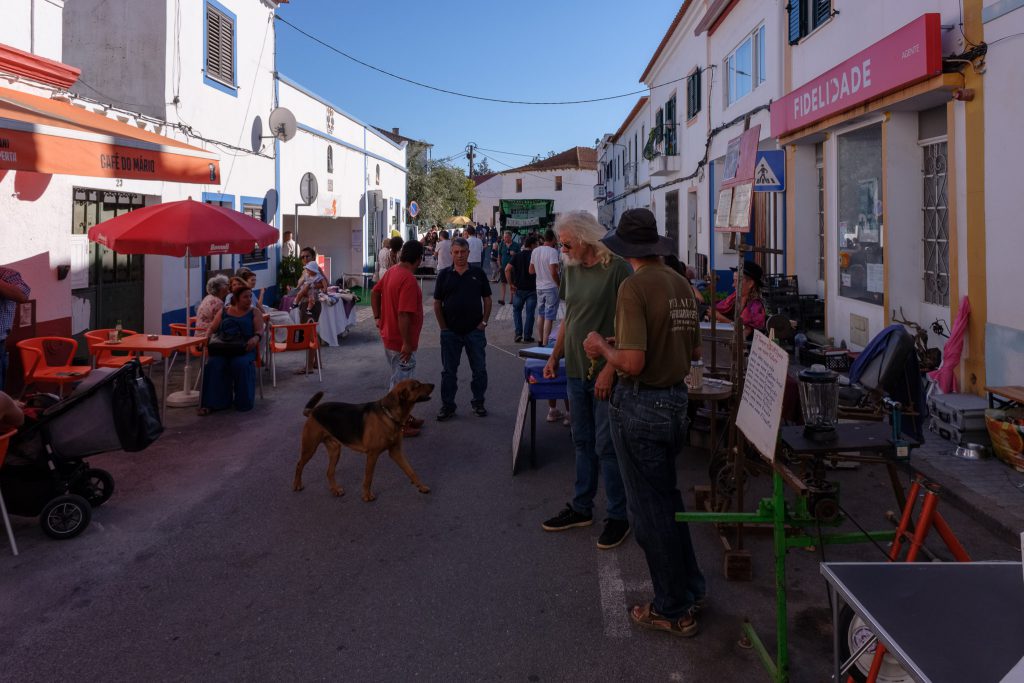
A few days ago I had the chance to visit a local fair in Sabóia, a village that belongs to the Odemira county. The occasion was the 6th Arbutus Festival, which attracted many people from near and far. This region is best known for its wonderful beaches, but there are also many reasons to spend some time visiting the interior, where small villages with ancestral traditions can be found. This is a rural area, with rolling hills, a few farms, and plenty of tranquility. As part of the effort to preserve ancient traditions, some associations organize regular events, such as fairs where people can show the local products, typical foods and craftmanship.

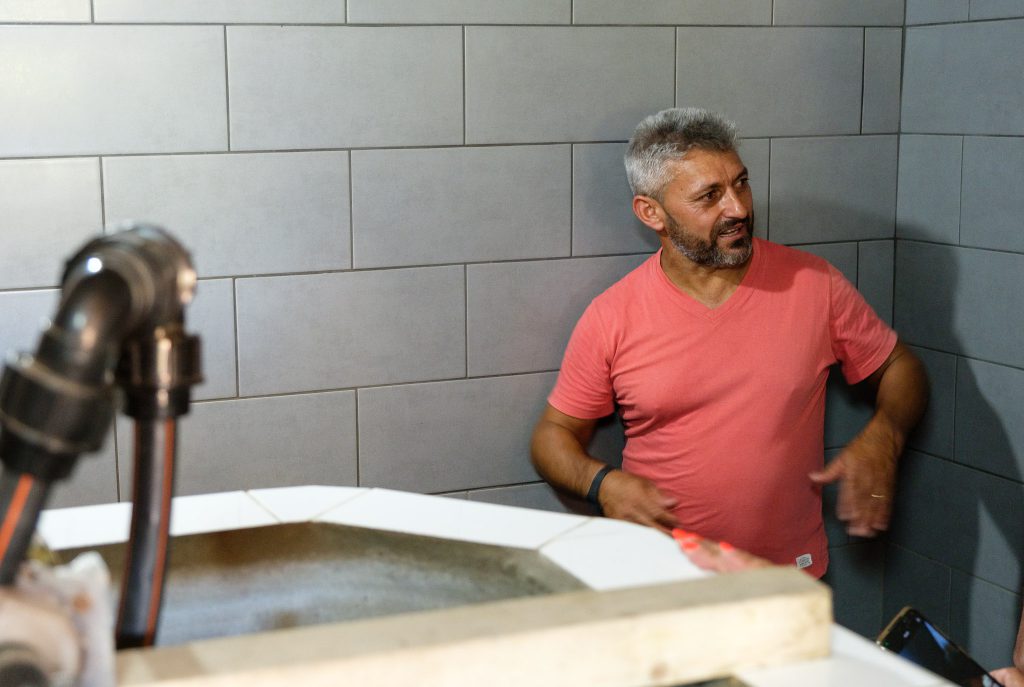
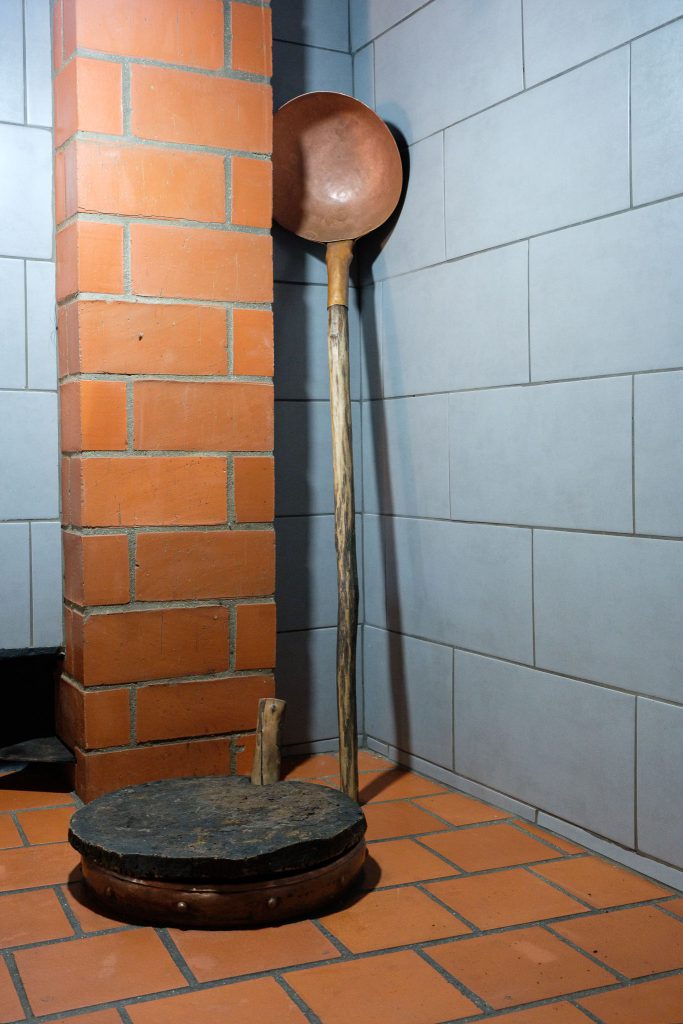
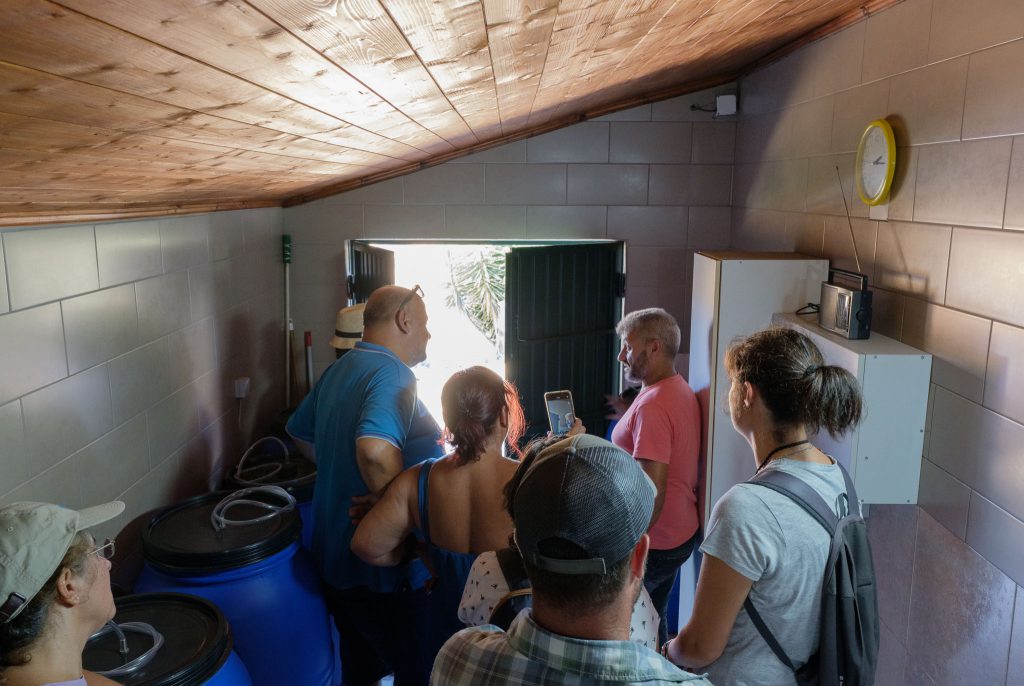
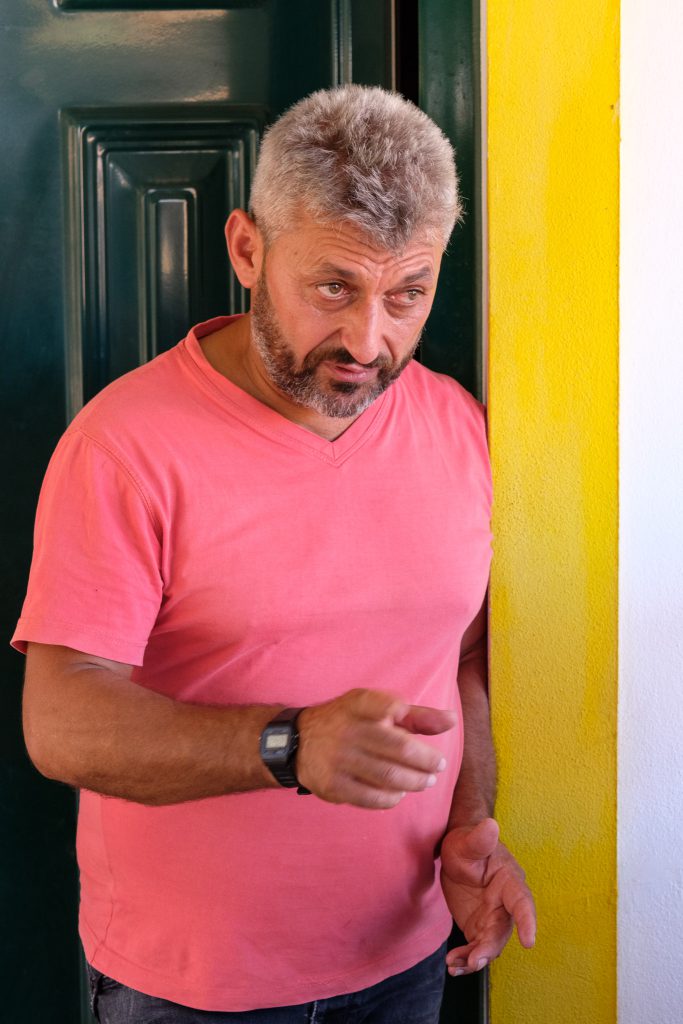
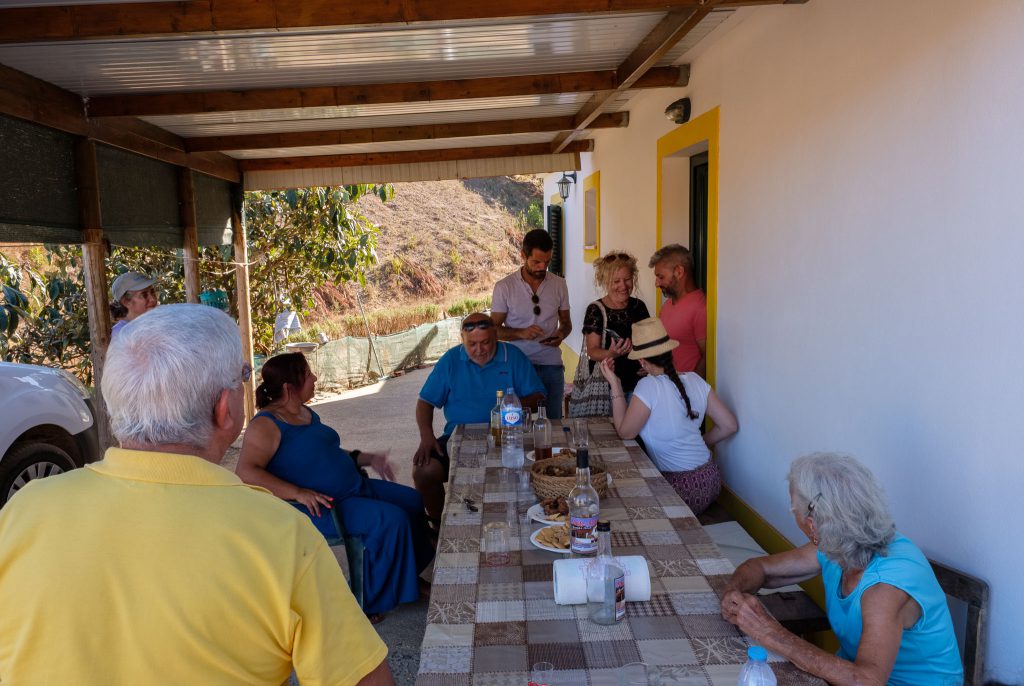
The arbutus (or medronho, in Portuguese), is a typical fruit from this southern region of the country, and several products are made from it. The most famous is brandy, which has been distilled for hundreds of years. As part of the festival, there was a visit to a local distillery in Vale Doja, to appreciate how this spirited drink is produced. I took the opportunity to make a few photos, but the best part was to be able to spend some time with the nice people. These are honest and hard working folks, who are going through some challenging times due to a severe draught. As part of the visit, we had the chance to try the brandy, of course, accompanied by other typical fare, such as dried figs and cakes. It was a wonderful experience. The arbutus brandy from Vale Doja, under the experienced hand of senhor Joel, was recently awarded first place in a regional competition.

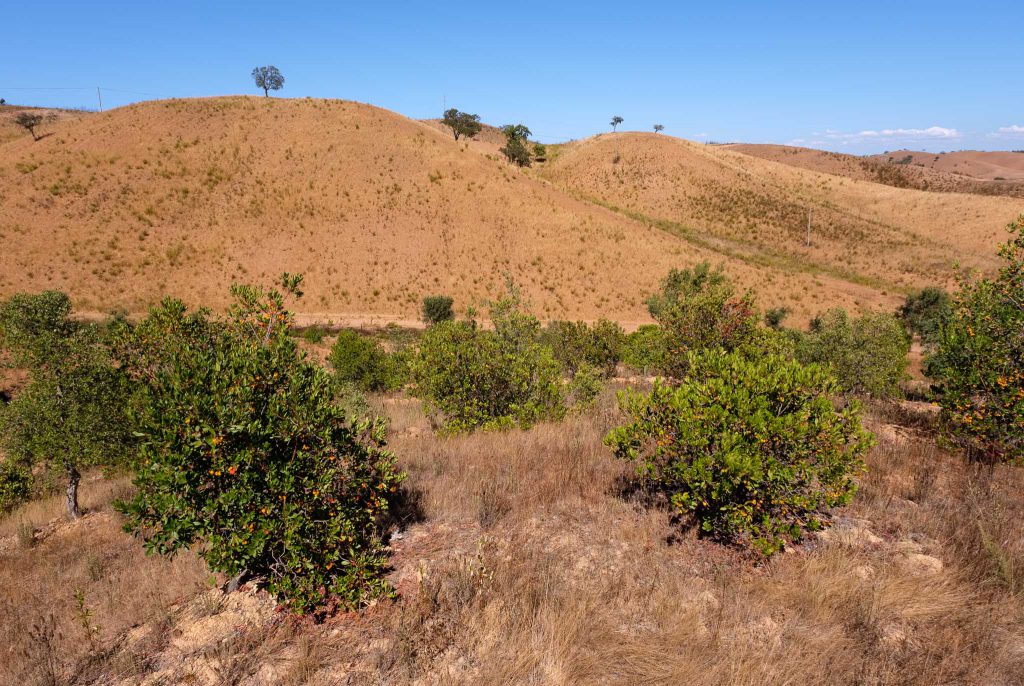
Arbutus orchard, Vale Doja, Sabóia.
Vale Doja, Sabóia.
Senhor Joel in his distillery.
Distillery.
Inside the distillery.
Senhor Joel.
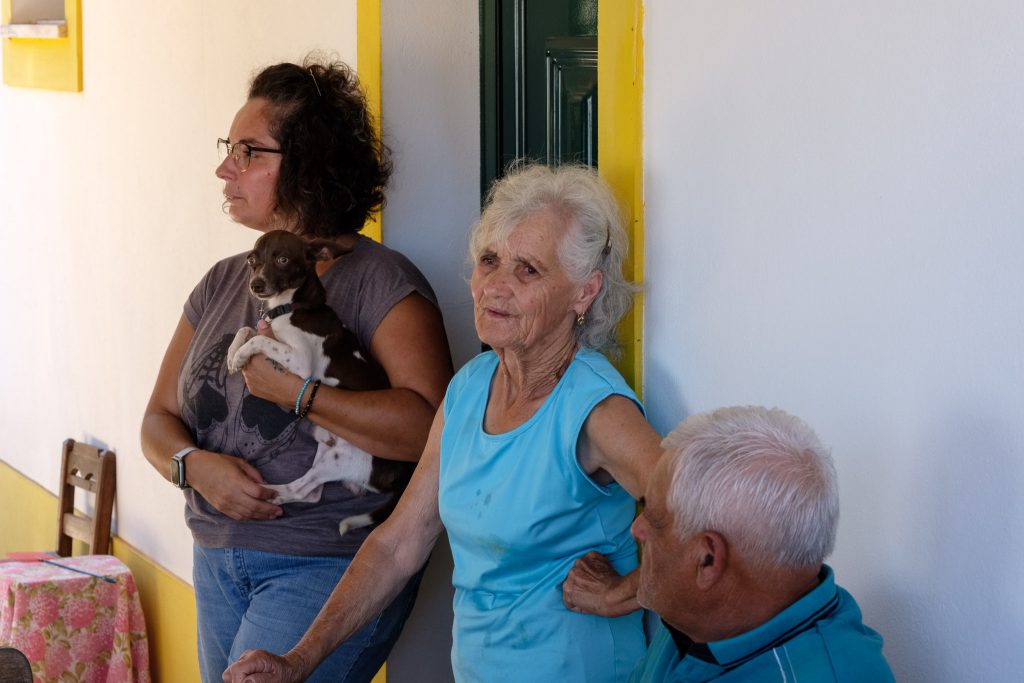
Time for tasting, Vale Doja, Sabóia.

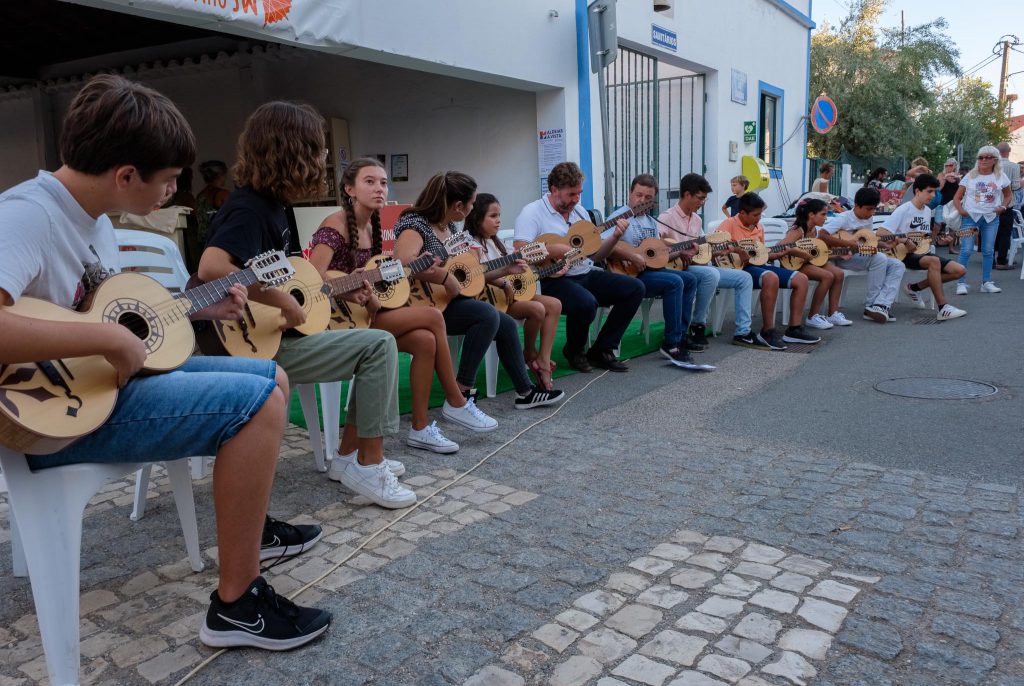
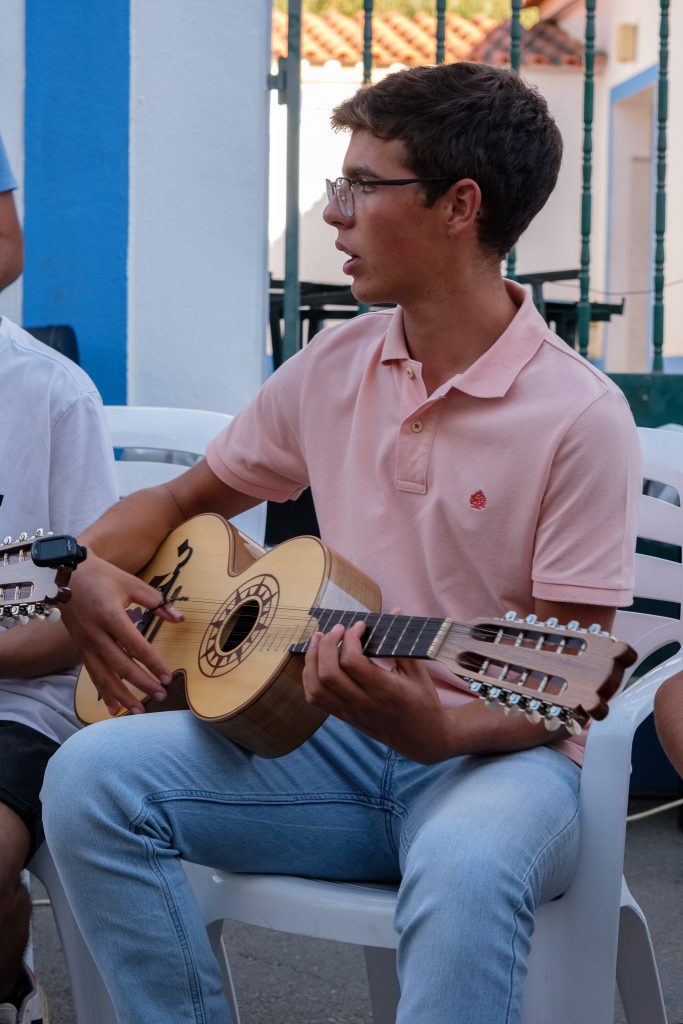
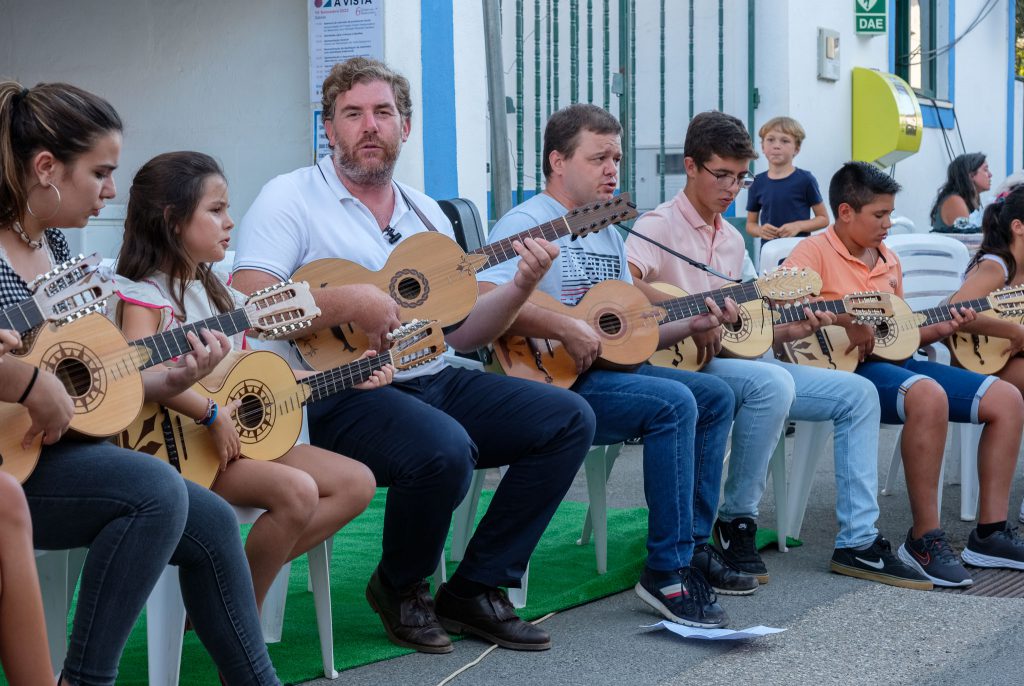
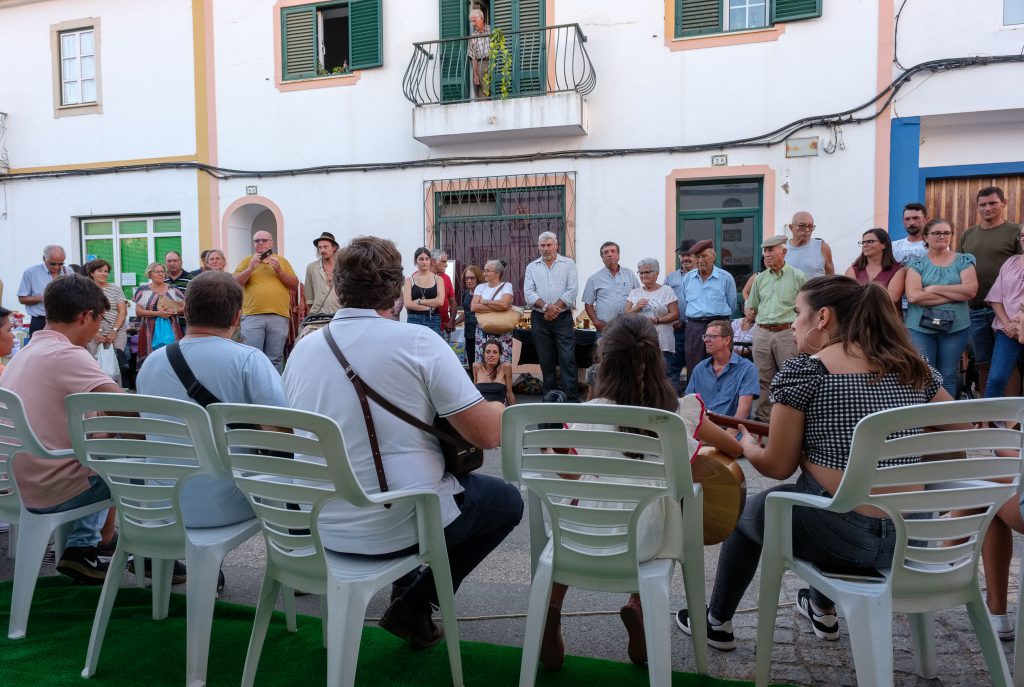
After the visit to the distillery, we returned to Sabóia, where a performance from a group of musicians that plays the Viola Campaniça, a traditional viola from the south of Portugal, was next on the programme. The group is coordinated by Pedro Mestre, a musician who created a school for students who want to learn how to play this instrument. I always like to listen these traditional groups, and it is not the first time I attended one of these performances. I made a few photos, of course, but mostly I wanted to listen to these traditional songs.

Street fair, Sabóia.
Pedro Mestre and his students.
Young player with his viola campaniça.
Performing.
The artists and the audience.

I am glad that the Covid-19 is now behind us, and these events are again taking place after a couple of years.

Coastal landscapes with the Fujinon 14mm f/2.8 lens

I recently took some time out with the family in my house in Longueira, in the Alentejo coast. During a couple of weeks, we relaxed in the beaches of the region (Almograve, Odeceixe, and Arrifana), enjoying the sun and the ocean. Granted, August is not my favorite month to spend time there, due to the crowds of vacationers that arrive during the summer season. Still, the beauty and pristine character of these beaches and the isolated interior hills, remain relatively unaffected by the many visitors.

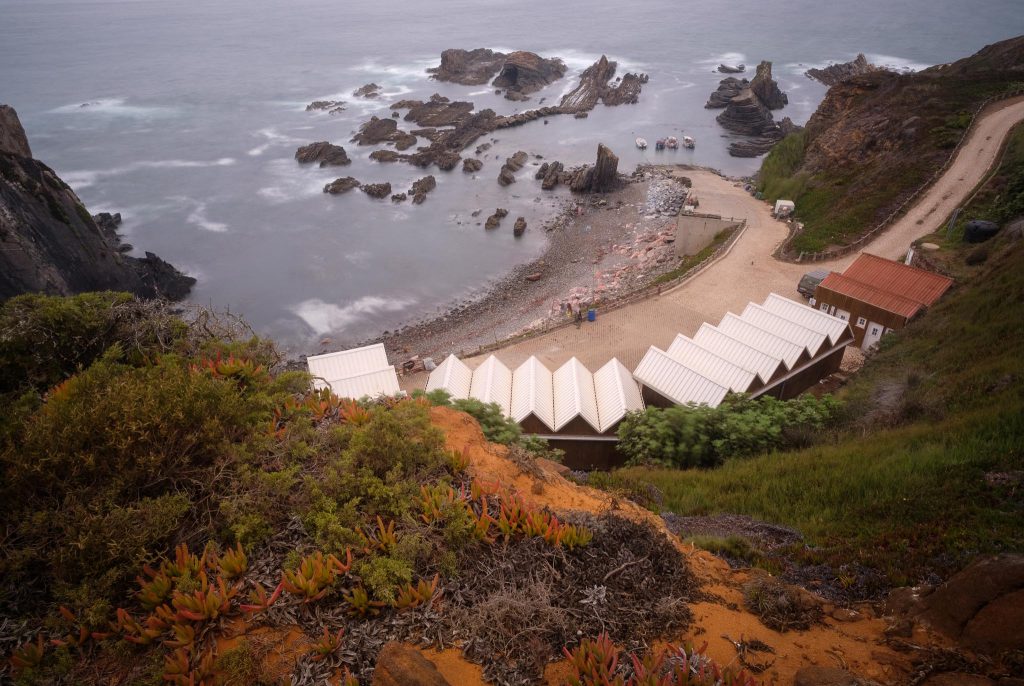
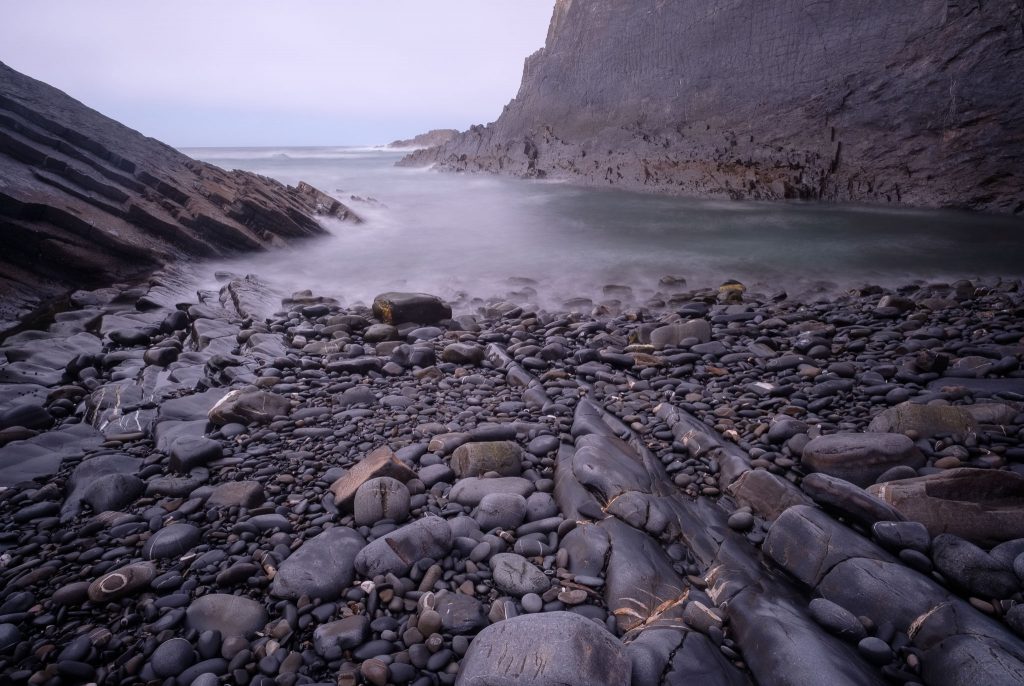
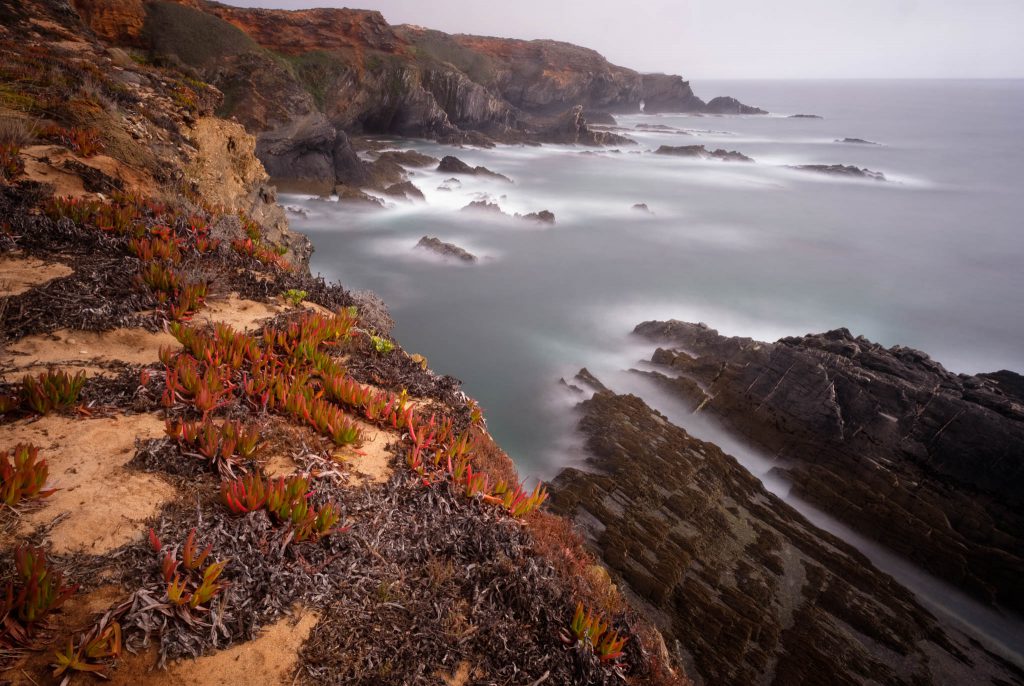
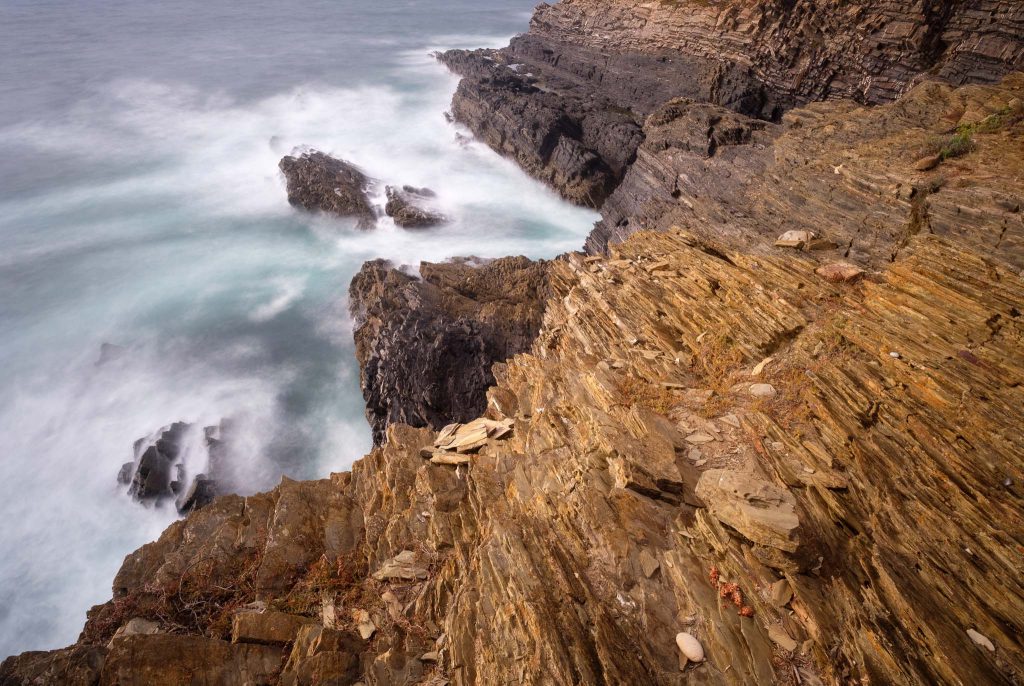
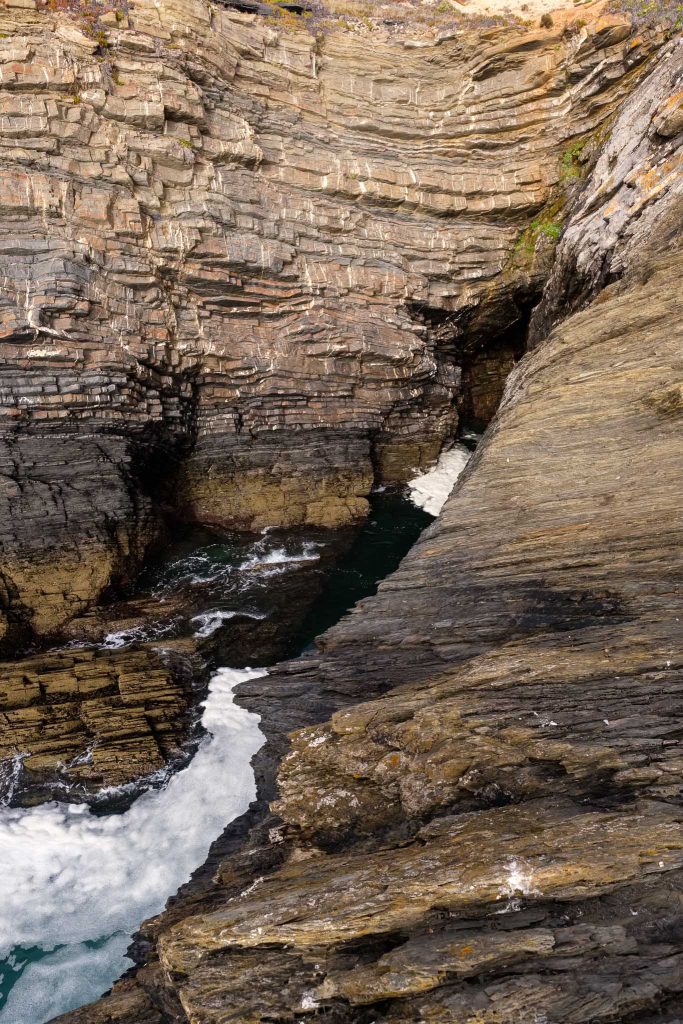
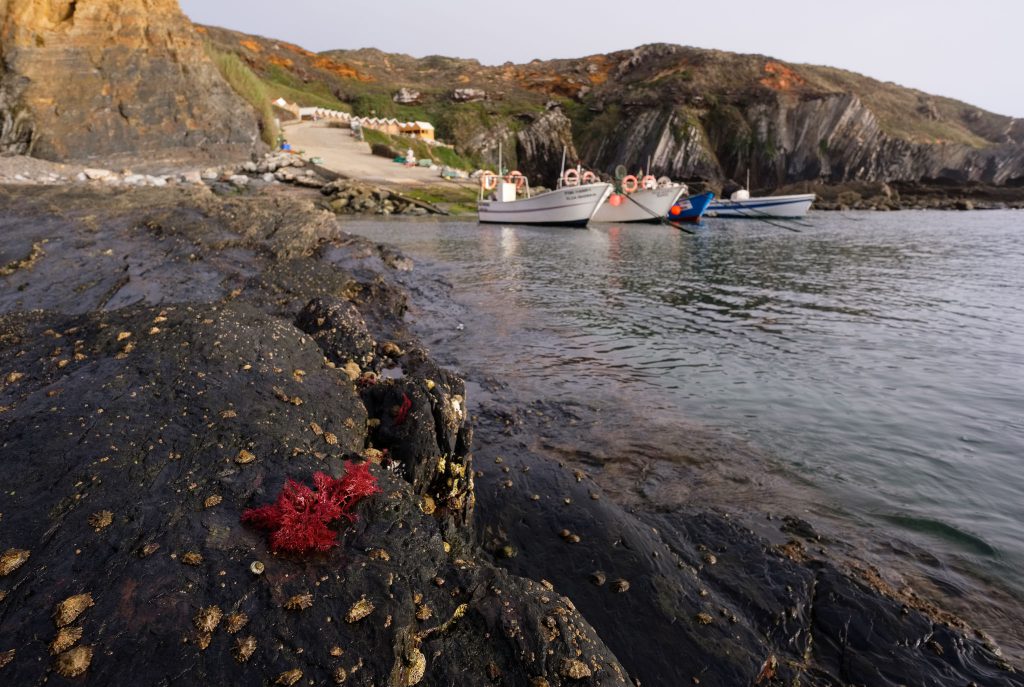
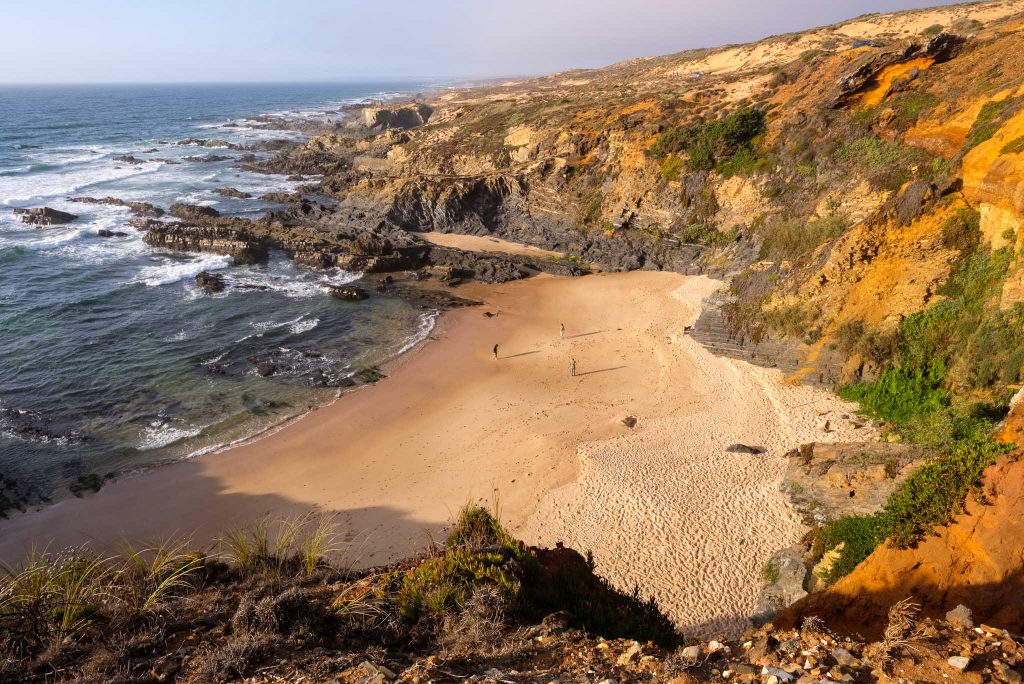
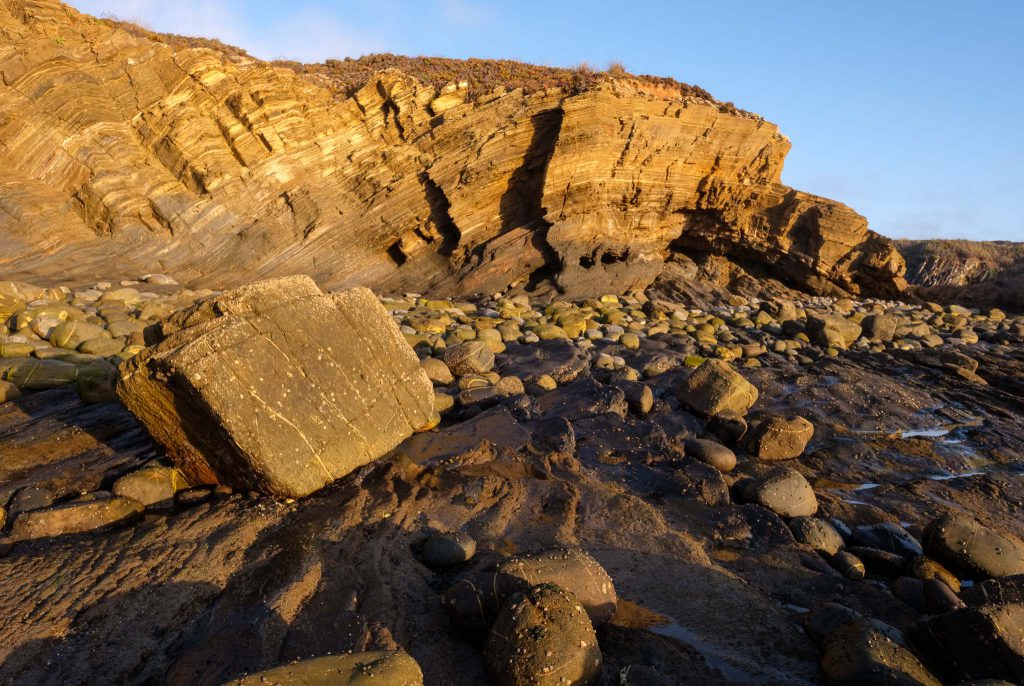
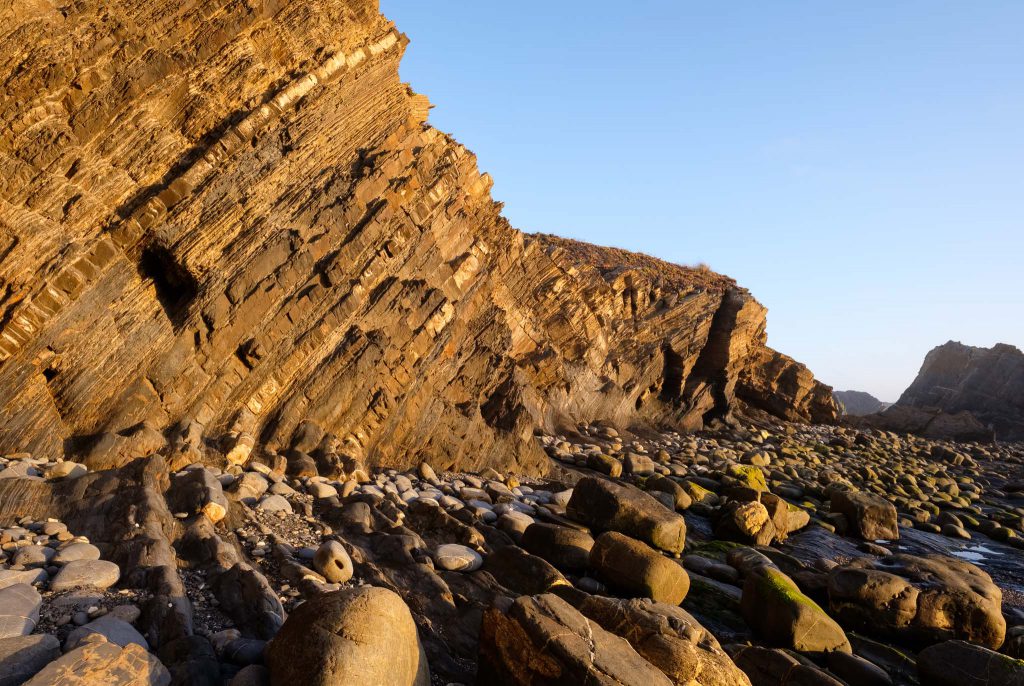
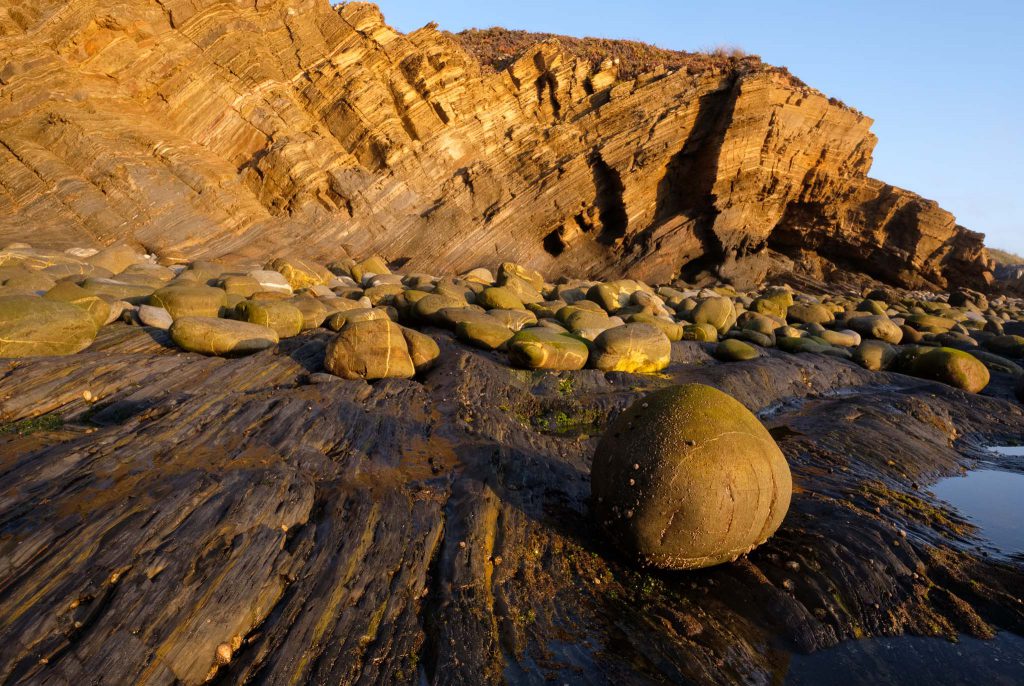
Of course I had to make some time for my photography, walking along some of the coastal paths, and visiting the numerous secluded small bays and inlets, where hardly anybody goes. On one of such occasions, I decided to walk the couple of km between Almograve beach and the small fishing harbor of Lapa de Pombas. Within such a small distance, there is an amazing variety of isolated beaches, most of them framed by the rocky cliffs and covered with pebbles. I like to visit during low tide in the late afternoon, close to sunset time. This gives me about 2 hours of photography when the interesting light is falling on the colorful and folded rock formations.

I usually do not write much about gear, but this is a good opportunity to mention one of my favorite lenses, the Fujinon 14mm f/2.8. This wide angle lens is essential to me, because I find it ideal for my photography, including the seascapes of this area. So, all the photos that follow were made with this lens. The weather was overcast, with some fog banks coming and going, which can be both positive and negative. It is positive, because the fog acts like a giant light diffuser, softening the light that falls over the cliffs and the sea; but is also negative, because it results in bland and uninteresting skies. As such, in most of the photos I have chosen to exclude the sky. I have also used a 10 stop neutral density filter to add an extra dimension of softness to the water, which complements nicely the overall mood of this quiet afternoon stroll.

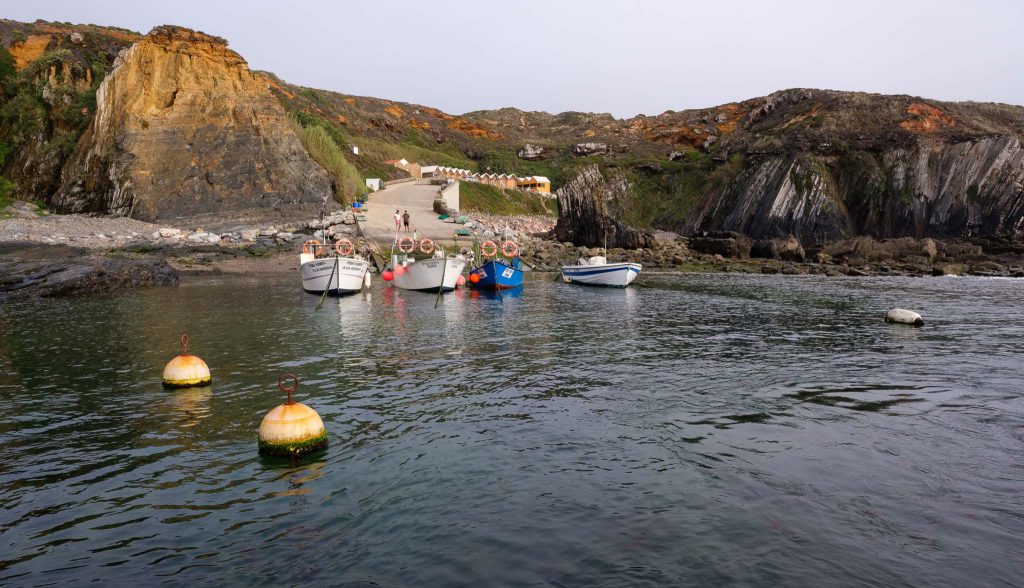
Lapa das Pombas harbor. Fishing is still an important economic activity in the area.
Dark rock layers have been smoothed out by water erosion. Same rocks above the water line are still sharp and edgy.
Coastline.

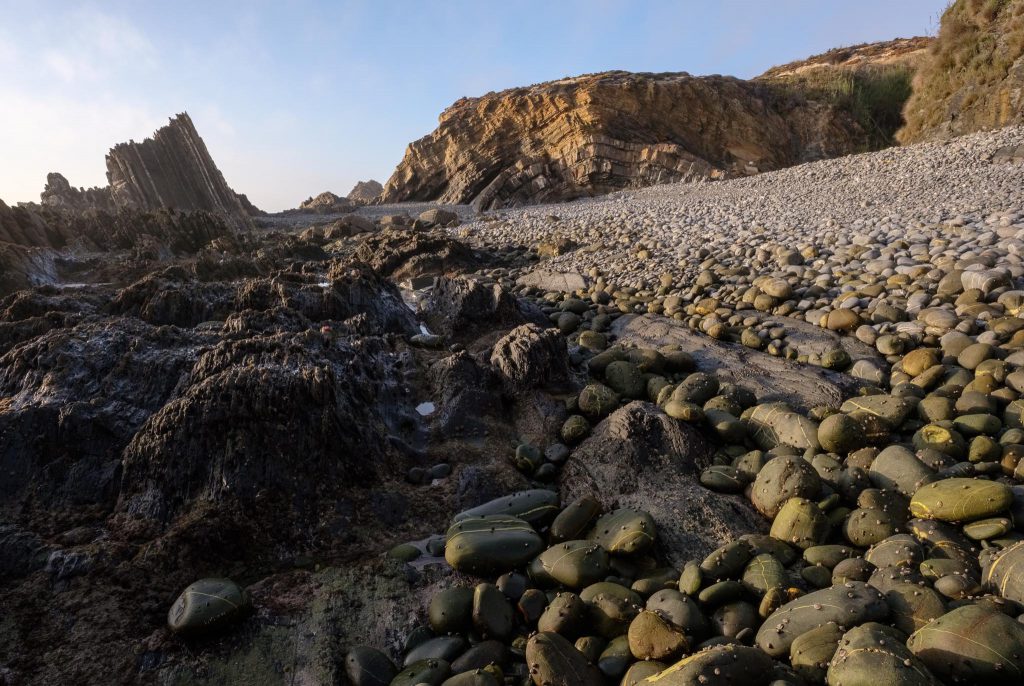
During low tide, it is possible to walk down from the top of the cliffs to the beaches, where there are many tidal pools, eroded rock formations, and folded geologic layers. A few minutes before sunset, the fog lifted for a while, and a warm light descended over the area, adding an almost otherworldly dimension to these scenes.

Rocks and ocean.
Gap.
Lapa de Pombas harbor.
Lapa de Pombas at low tide.
One of the beaches at low tide.
Pebbles and folds.
Rocky world.
Pointing at the sky.
Rounded.

While walking around in these beaches, it is important to be careful, because the smooth rock surfaces are sometimes slippery due to an algal cover. Plus, pay attention to avoid twisting an ankle while walking over the pebbles. Other than that, if you visit these places, you will have a wonderful time. I know I did.

Night sky photography in the countryside

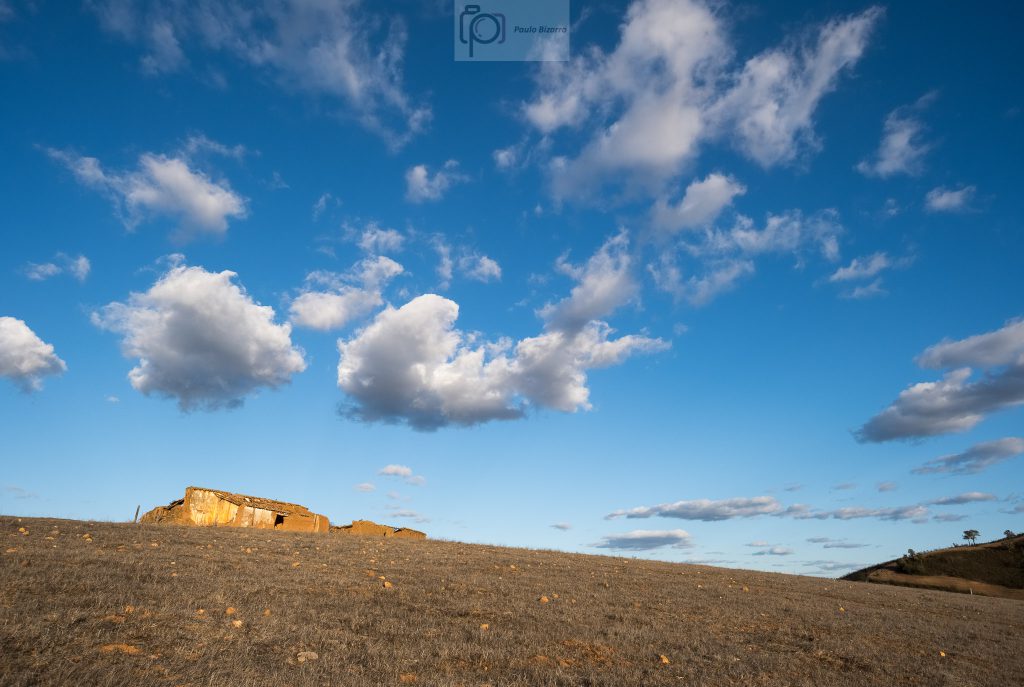
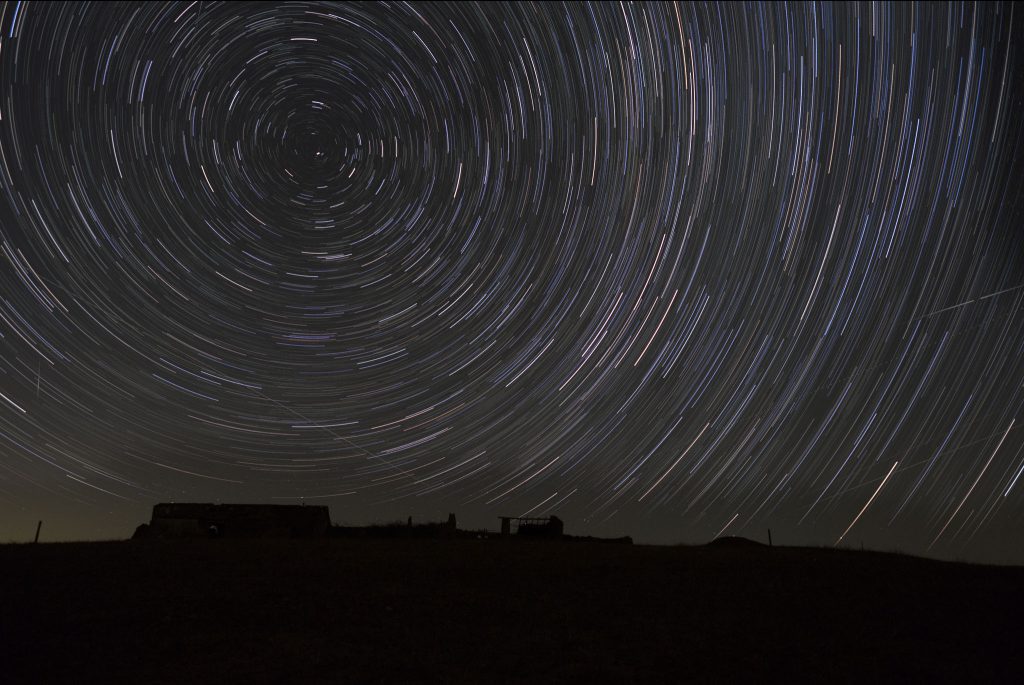
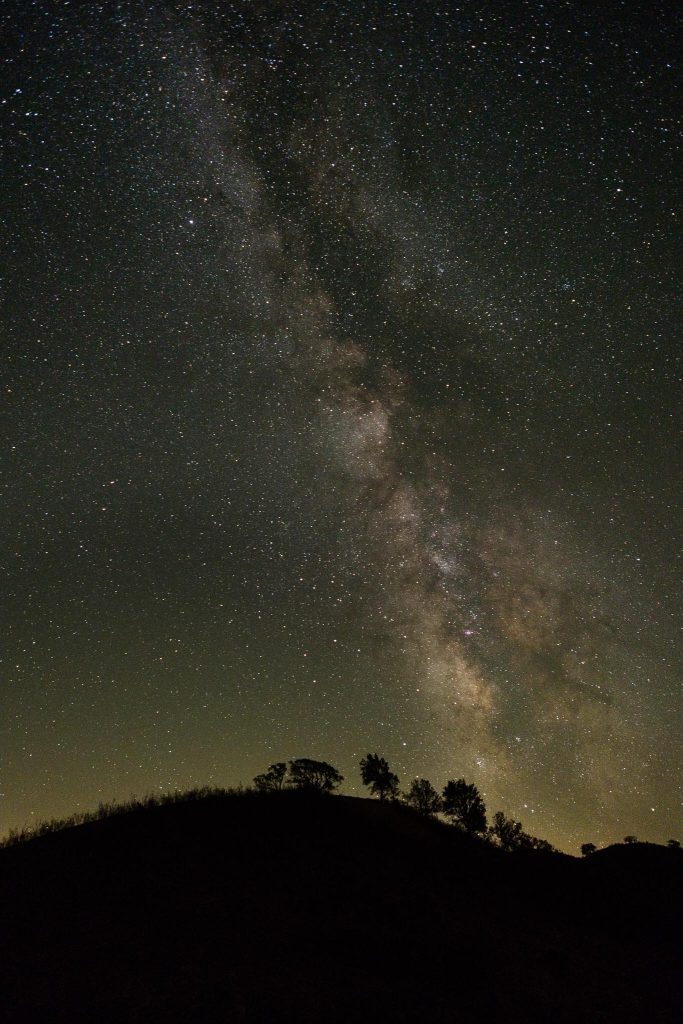
Summer is an excellent time to be out in the field photographing the night sky. At a dark site location during the new Moon, and with clear skies, conditions are good to make some interesting photos such as star trails and the Milky Way. It is better to choose a place as far from light pollution as possible, so you have a clear and detailed view of the stars. In the region of Odemira, I like to go to the rural interior, far away from the coastal villages. I like to go to an area between Odemira and Sabóia that I know from past experience to be quite dark. There is a small hill with a ruined farmhouse that faces south, so it provides an interesting foreground for a star trail. Below is a photo that I made a few months ago.

Farmhouse on the hill.

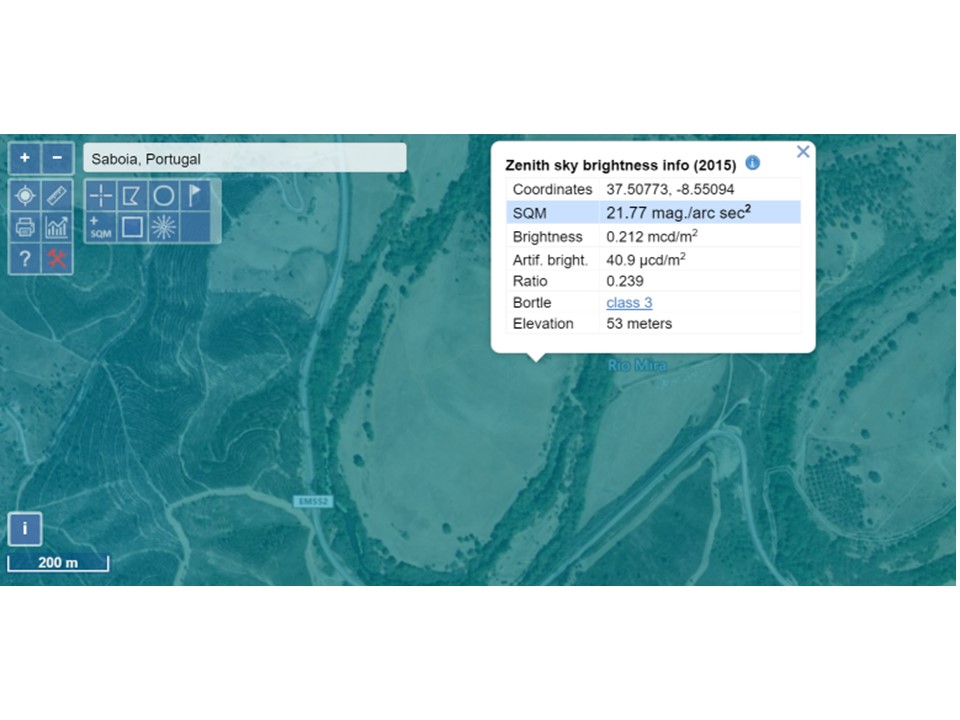
According to light pollution maps, this location has a classification of 3 on the Bortle scale (rural sky), which means that there is some light pollution in the horizon and the Milky Way’s complex structure is visible. Below you can see the map with the classification.

Map with Bortle classification.

I arrived at the location with enough time to set up my tripod and camera, selecting a composition featuring the farmhouse in the foreground. My 14mm wide-angle lens is only f/2.8, which is not ideal for night sky photography. Still, with some careful workflow, the results can be good. My camera has an intervalometer, so it is easy to set it up for shooting a series of consecutive frames to be assembled later in Sequator, the software that I use for building the star trails and stacks. I normally shoot Raw, f/2.8, 30 seconds, and ISO 1600. This works fine with Fuji X cameras.

For star trails, it is important to turn off the long exposure noise reduction, as that would take an extra 30 seconds dark frame after each shot, doubling exposure time and introducing gaps in the trail. Then, you just select how many frames you need to achieve the total exposure time you want your trail to have. I normally aim for about 1 hour total time, as that provides a nice circular trail around Polaris.

Star trail.

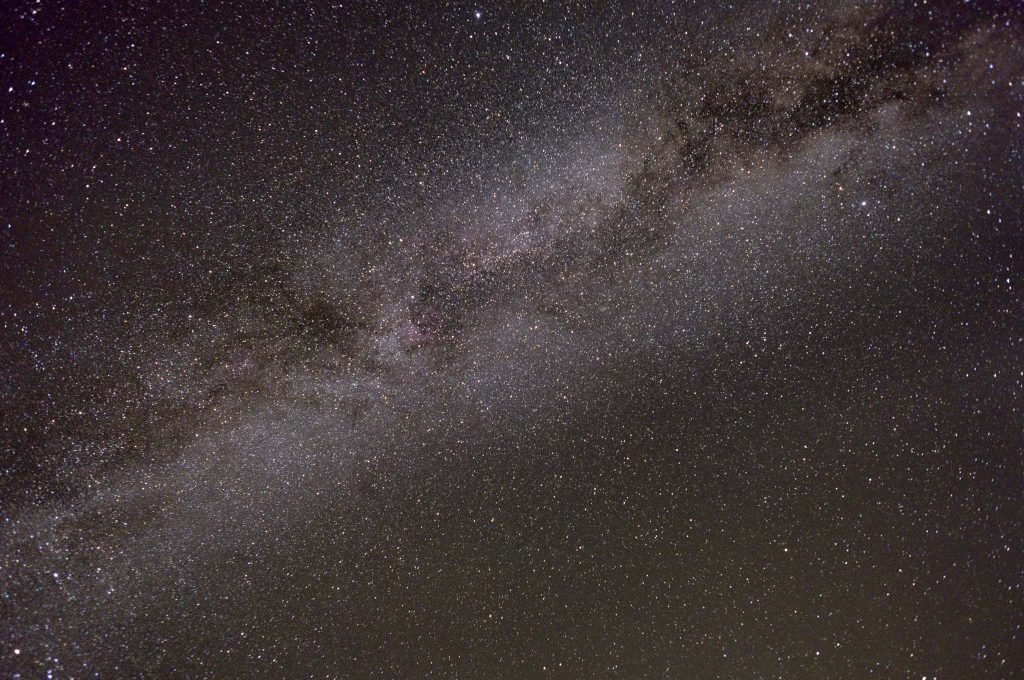
After finishing the star trail shooting, I also took some photos of the Milky Way, to stack later in Sequator using the “align stars” option. Usually I take between 6 and 10 photos for each stack. If there is some “land” in the frame, ground features will be blurry as result of the Earth’s movement.

Milky Way: stack of several photos.

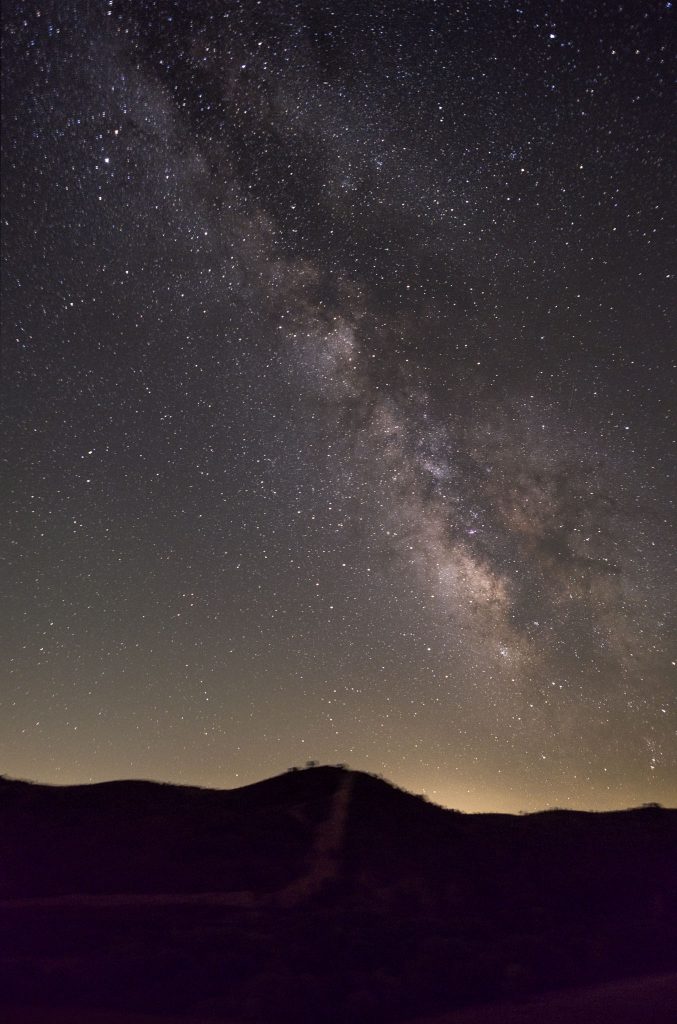
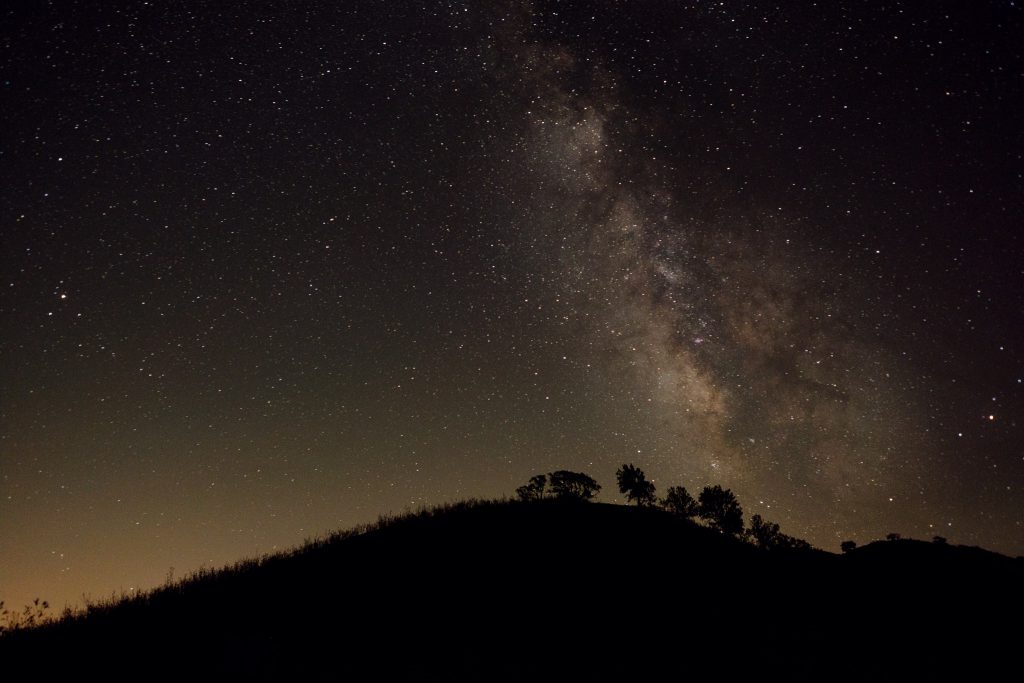
For comparison, the following photos are single exposures of the Milky Way over the surrounding countryside. These do not have the blurriness of the land features (such as trees), but have less light gathered, compared to the stacked ones. I like the results from both options.

Milky Way – single photo.

I always enjoy photographing the night sky, and look forward for the next opportunity to do so.

Afternoon at the beach

This week Portugal is going through record high temperatures, with many regions enduring values well above 40 degrees. The preamble to this period started last week, when I happened to be in the Alentejo coast, in the southwest part of the country. I had some free time in one afternoon, so I decided to visit one of my favourite beaches, Brejo Largo, a few km north of Almograve. I packed some food and water, grabbed my tripod, camera, and lens, and took off. The sky was clear and there was a light warm breeze.

After a 45 minute walk, I arrived at the beach. There were only a few other people, as it is July. Come August, the place will be a bit more crowded, but still fine. You can only reach this beach on foot, or driving through a rough track, which explains its relative isolation. I wanted to make some photos at sunset, so while waiting I simply rested on the sand and went for frequent swims. It is wonderful to combine beach and photography in the summer.

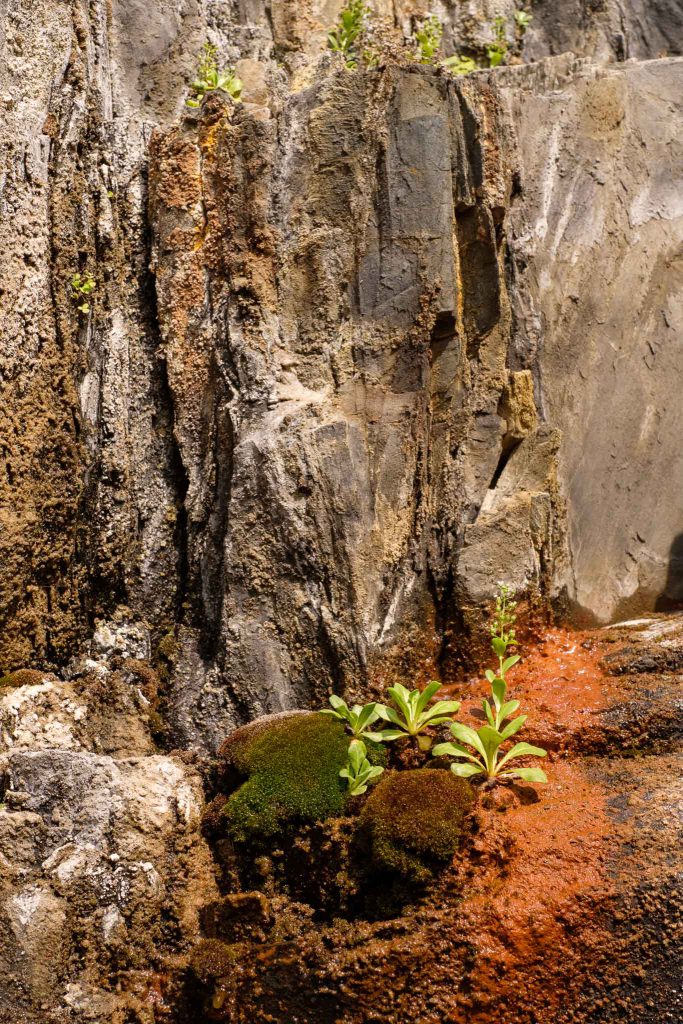
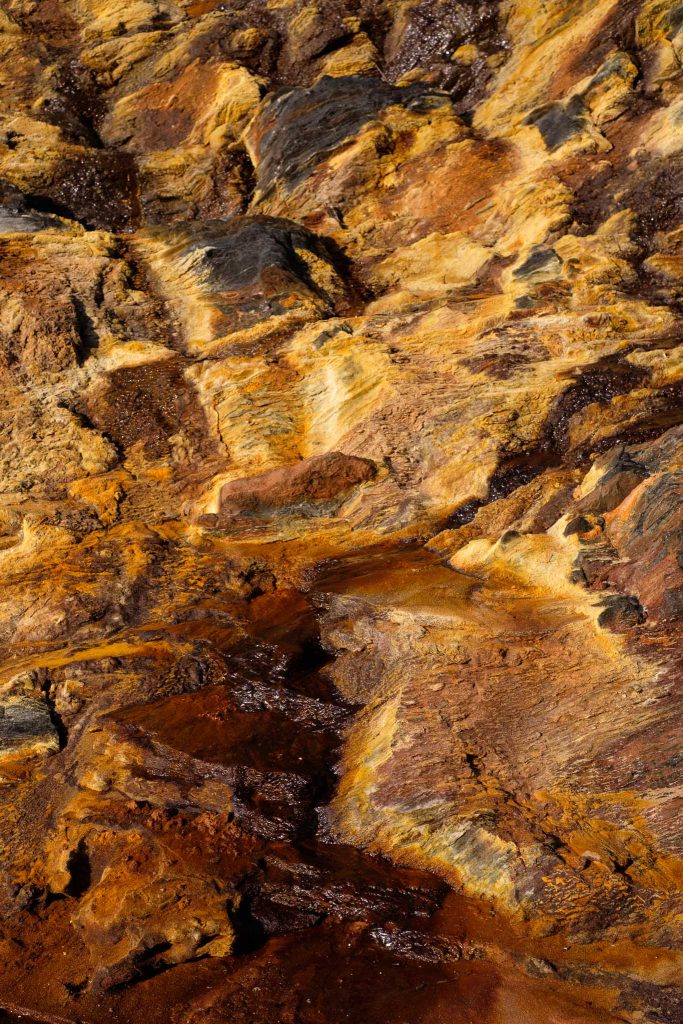
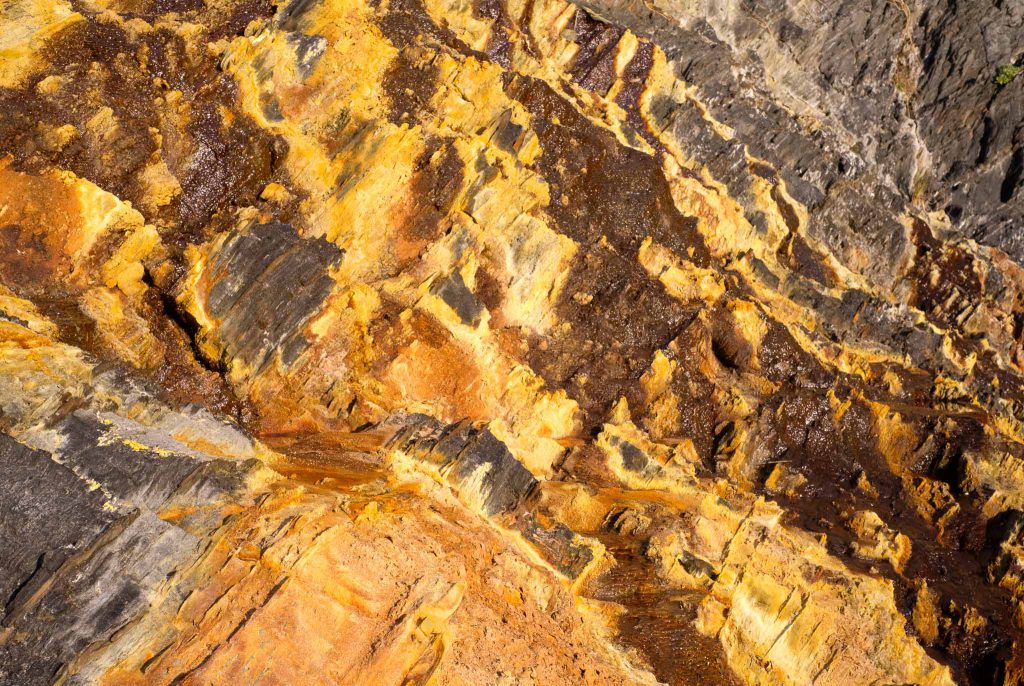
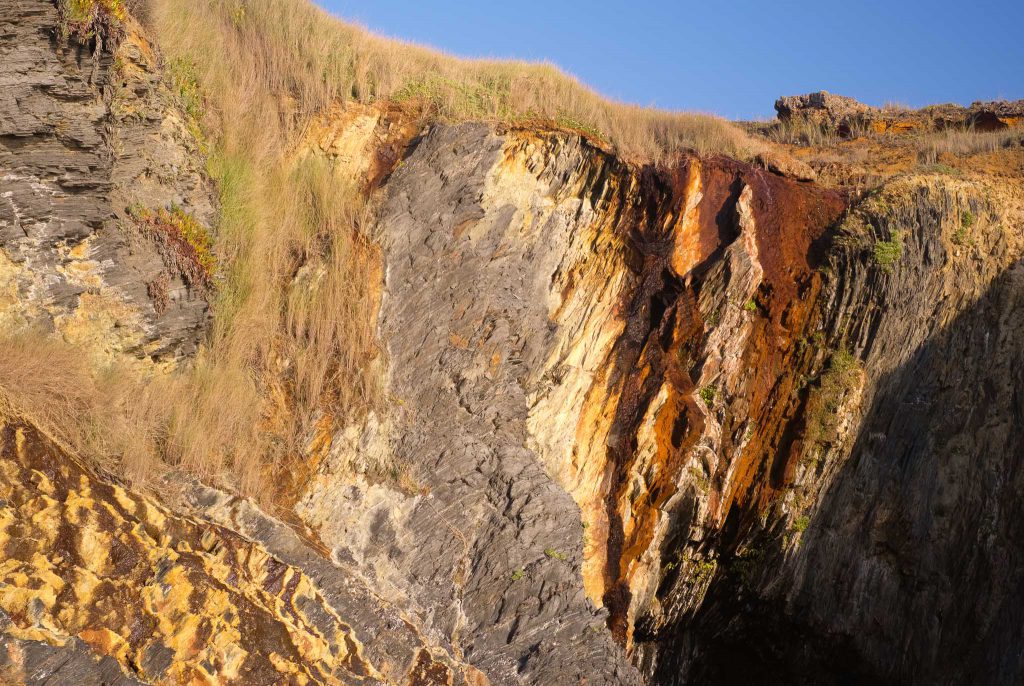
My first photos were of a cliff section that displays strong yellow, orange, and red rusty colours. These are the result of the iron rich water percolating through the rocks, in places where it infiltrates the surface. In places where there is some water trickling down the cliff, it is possible to find some plant life. For these photos I used a polarizing filter to cut down the reflection from the wet rock surfaces.

A trickle of water.
Rusty.
Colours and textures.
Cliffs.

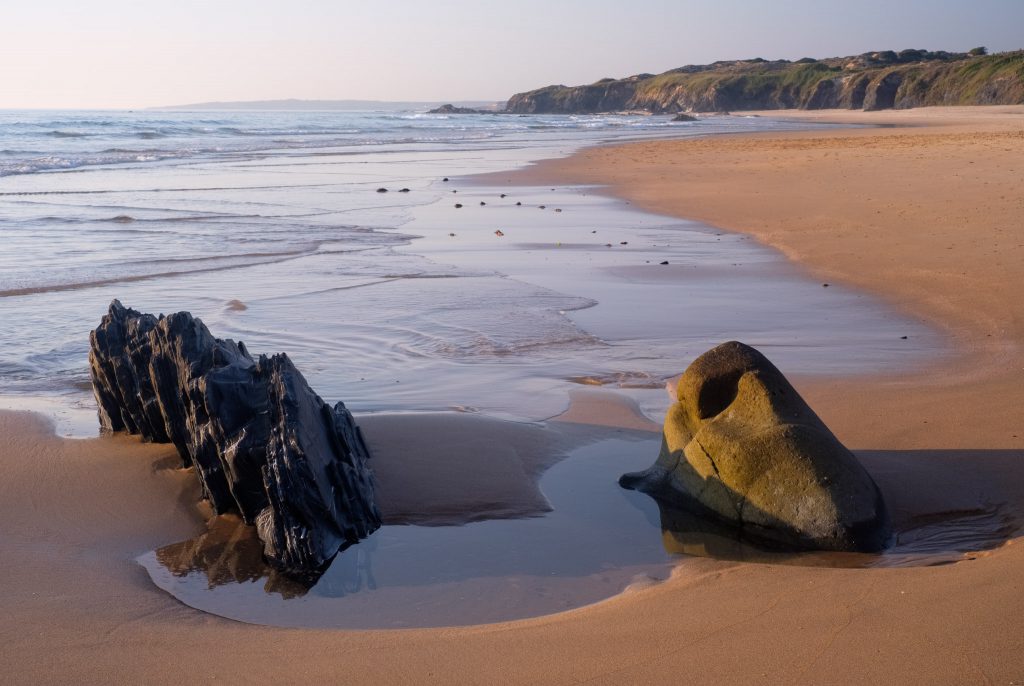
During the next hour or so I made some photos of the deserted beach at low tide. The sense of isolation was complete, with the peacefulness of the place emanating from the quiet waves that covered the sand.

Paradise.
Soft water.
Receding.
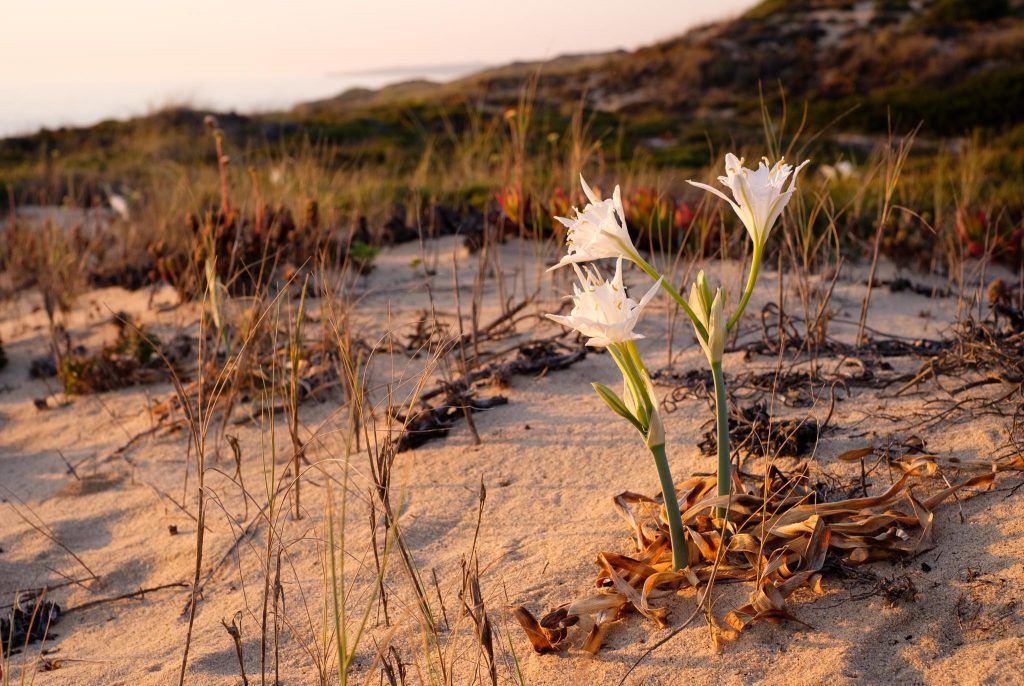
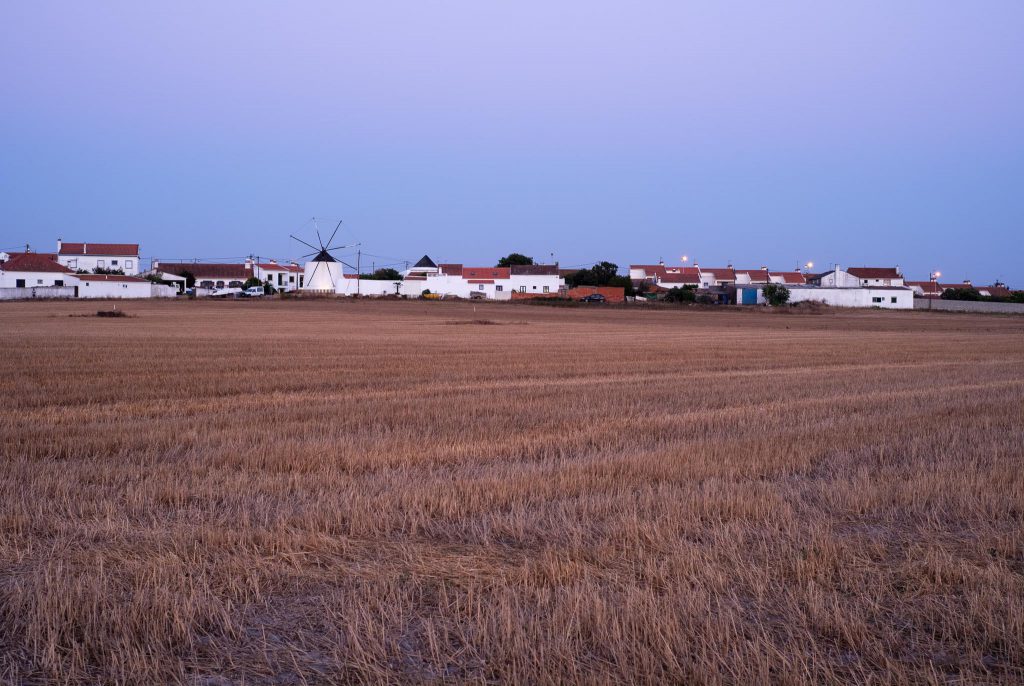
As the sun was setting, I made my way to the top of the cliff. There I noticed a large amount of white flowers in bloom, which was a surprise. When I had arrived a few hours earlier, they were not blooming; given that rain has been scarce for months, they must survive merely on the humidity that occurs during evenings and nights. Before arriving at home in Longueira, I made a final image of the village at dusk.

Dune flowers.
Back in Longueira by dusk.

Two different mornings

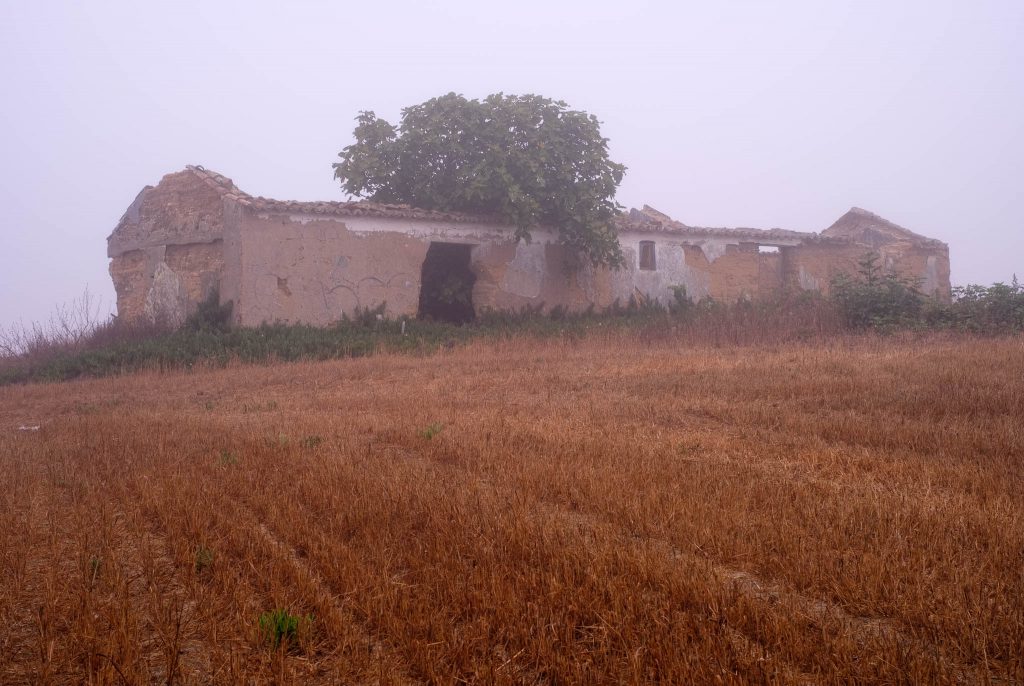
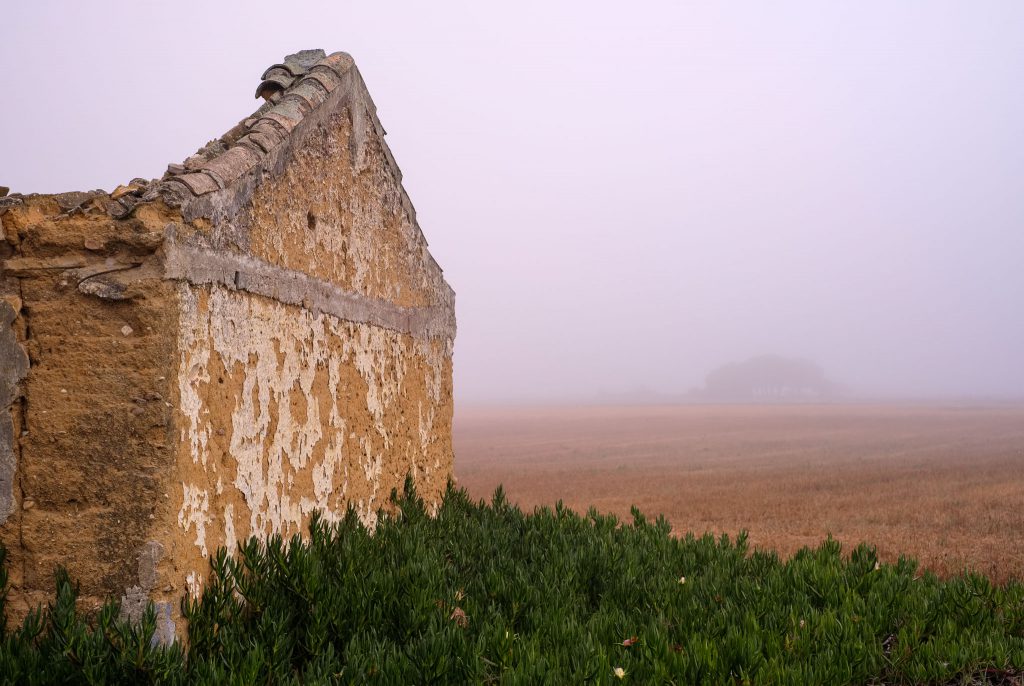
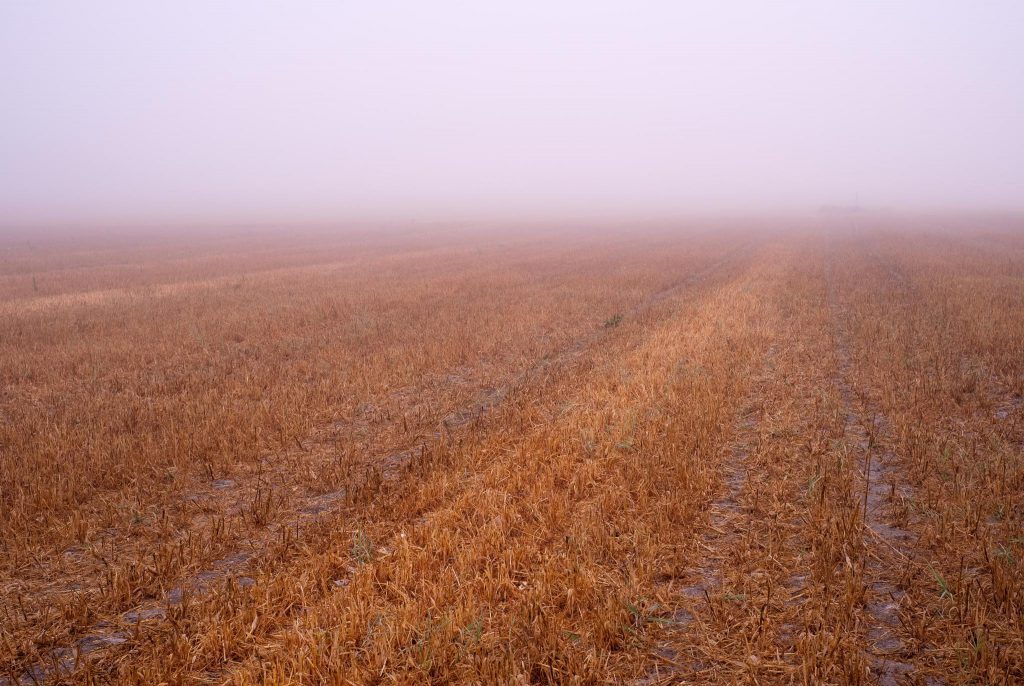
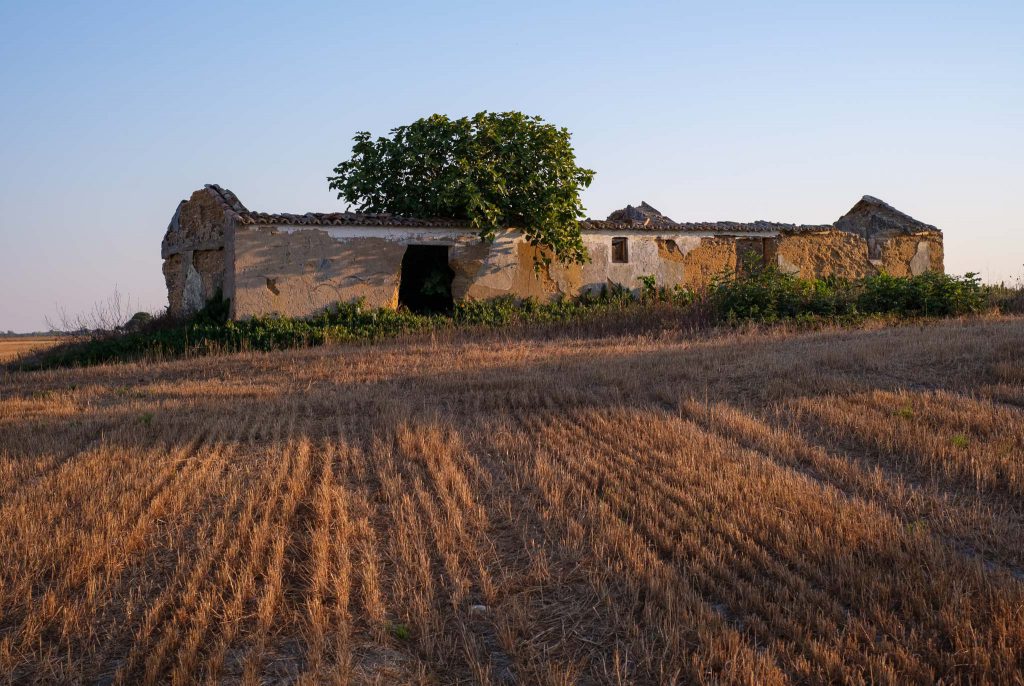
Last week I spent a few days in the small village of Longueira, in the Alentejo coast of southwest Portugal. In the summer, the occurrence of fog during the morning is common, and it makes for some interesting photo opportunities. Such is he case of this abandoned rural house, that is in ruins. After returning from an early morning run, I grabbed my tripod, camera and lens, and went out to make some photos. The house lies in the middle of a hay field, and in clear days it is possible to see the ocean a few km away. The fog imparts a different feel to the landscape.

Old house in fog.
Low visibility.
Field in fog.

The following morning the sky was clear, and I went back to this location to make a few more photos. It is interesting to notice how a change in the weather can transform a scene.

Old house and clear sky.

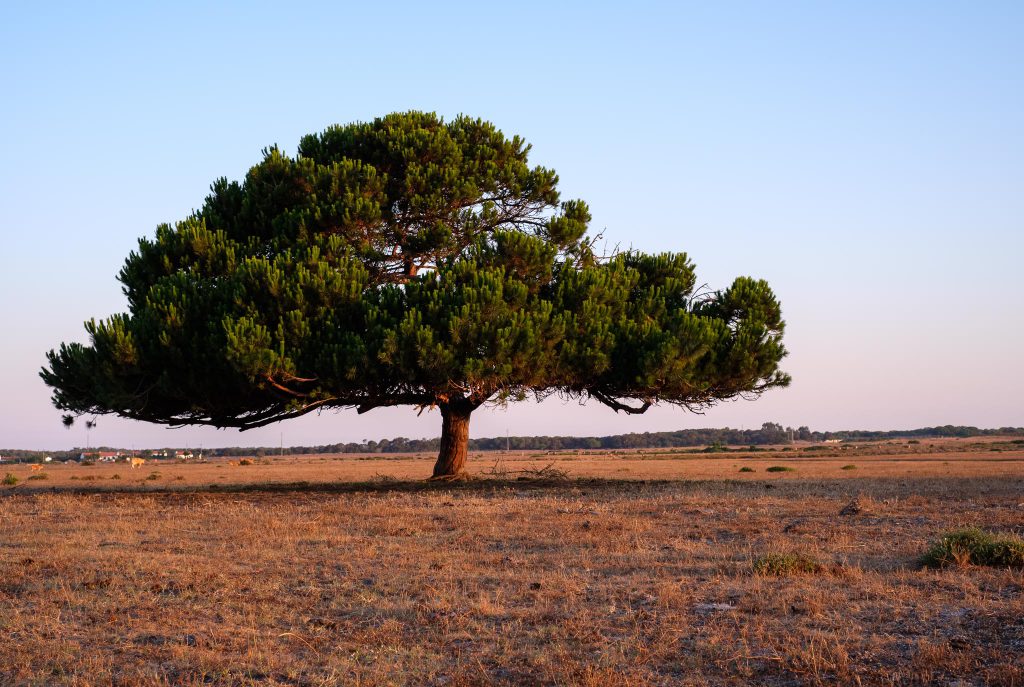
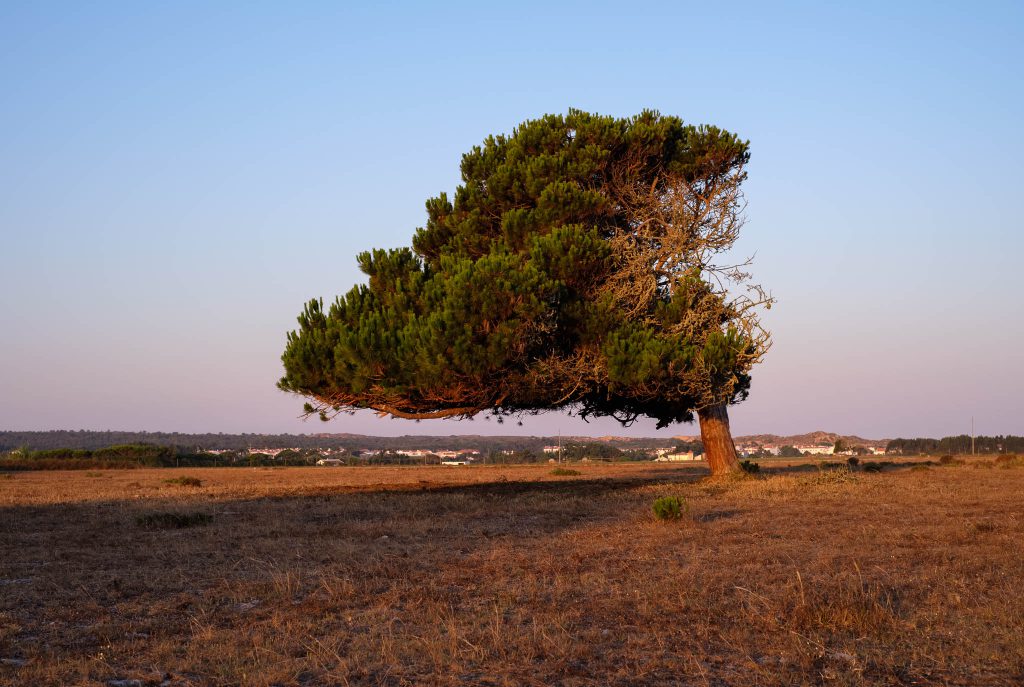
A bit further along the road, there is a lone pine tree that has been standing in the field for a long time. Walking around the subject to photograph it from different view points can be a nice experiment; in this case, photographing the tree from the side shows how the salty wind has prevented the tree from developing a full canopy. A good metaphor on why it is important to analyze a subject from all angles, otherwise you may not see the entire picture.

Tree photographed from the front.
Tree photographed from the side.

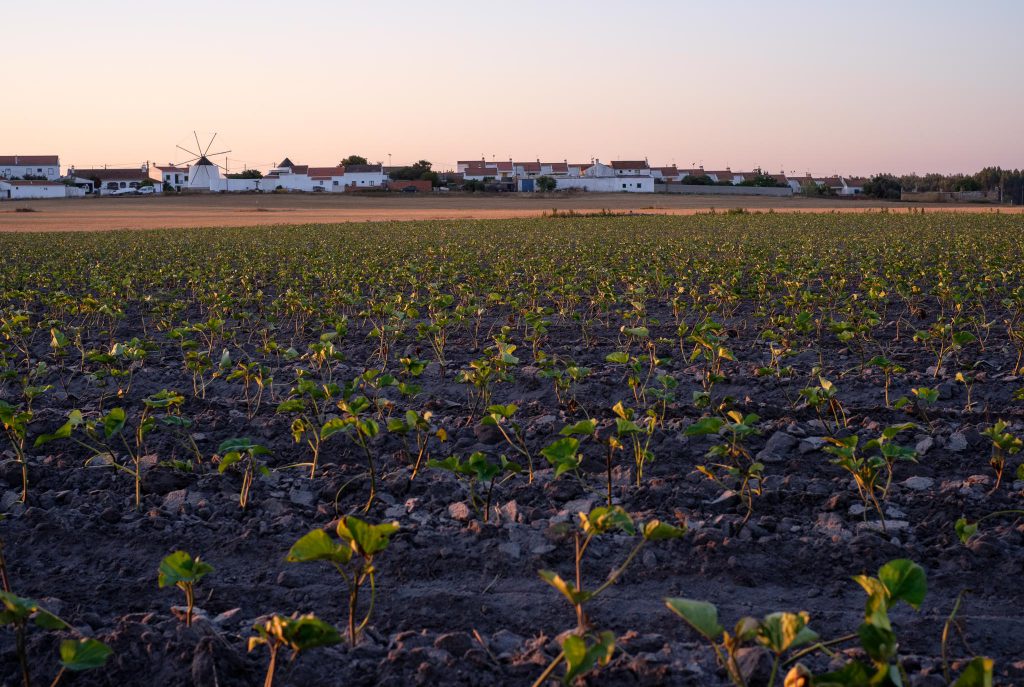
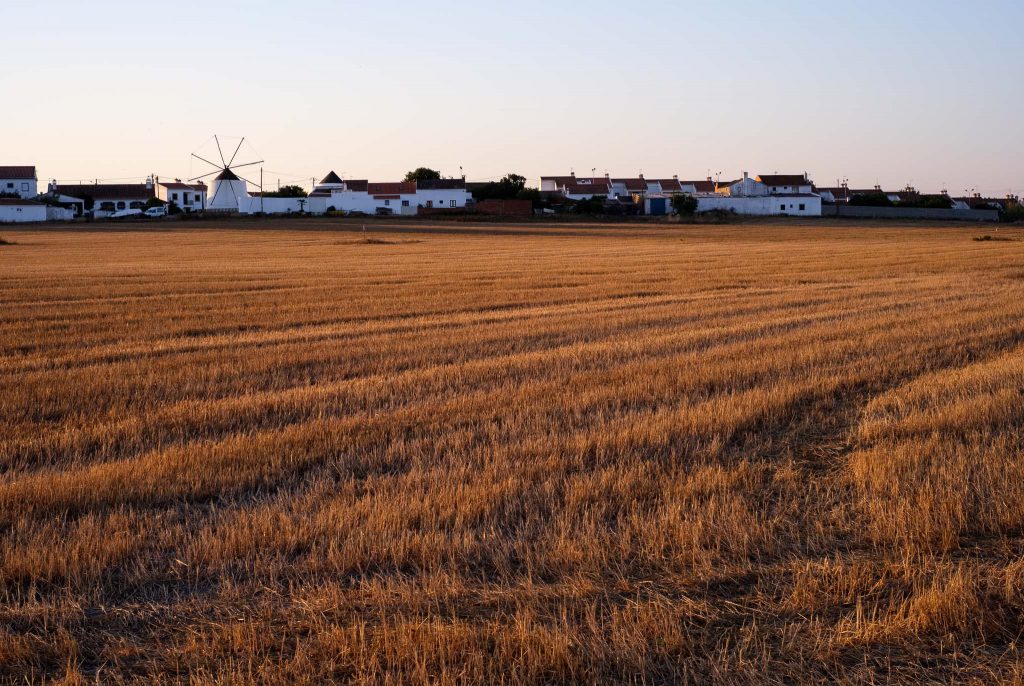
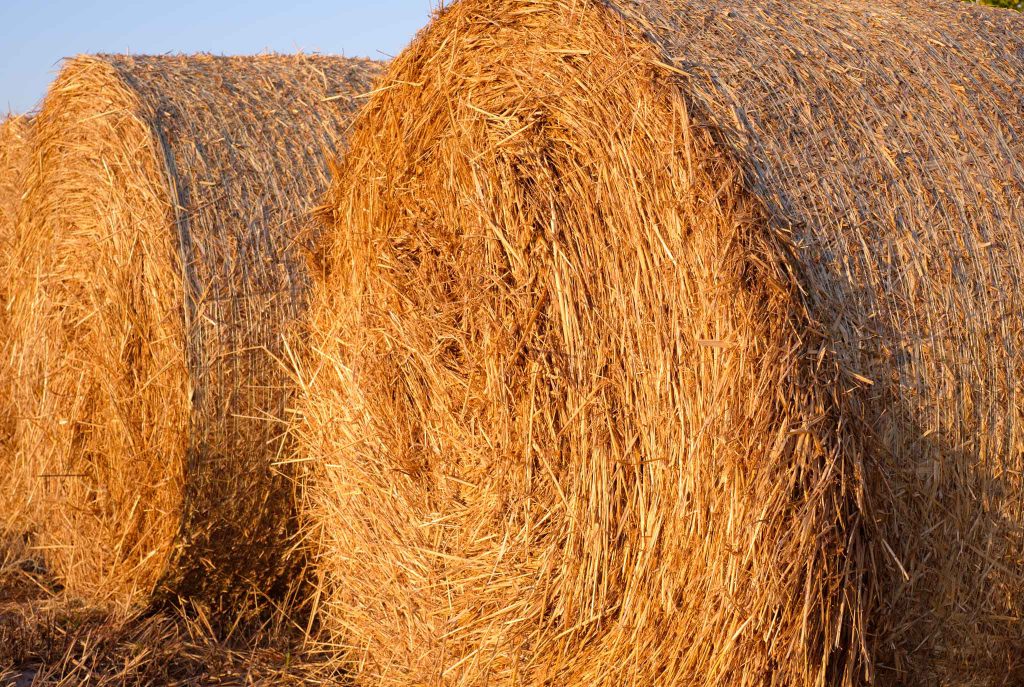
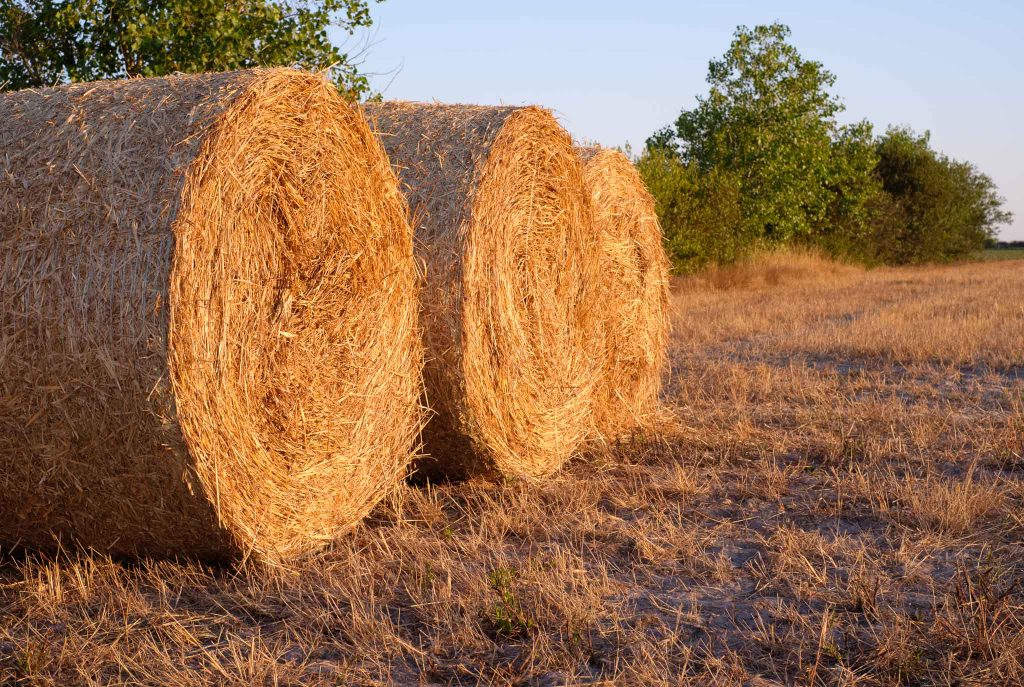
Some of the nearby fields have been planted with sweet potatoes, which will be harvested in October. Other parts of the fields are showing the stalks which have remained after the hay has been cut, to be stored in the typical bales.

Sunny sunrise over planted field.
Golden fields.
Hay.
Bales.

Rural landscapes in the Summer

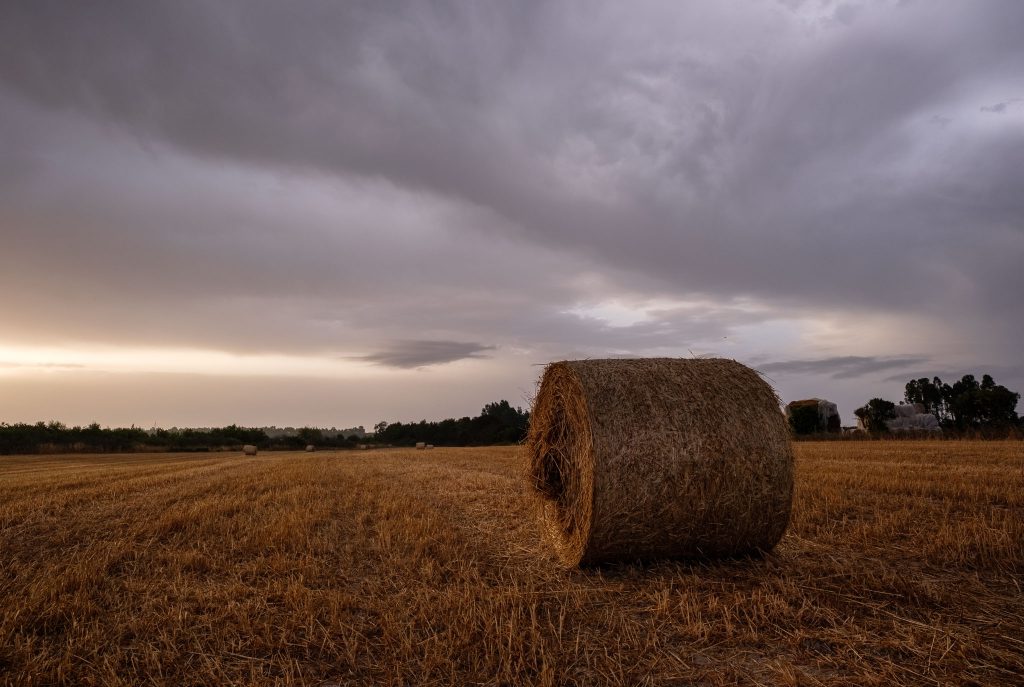
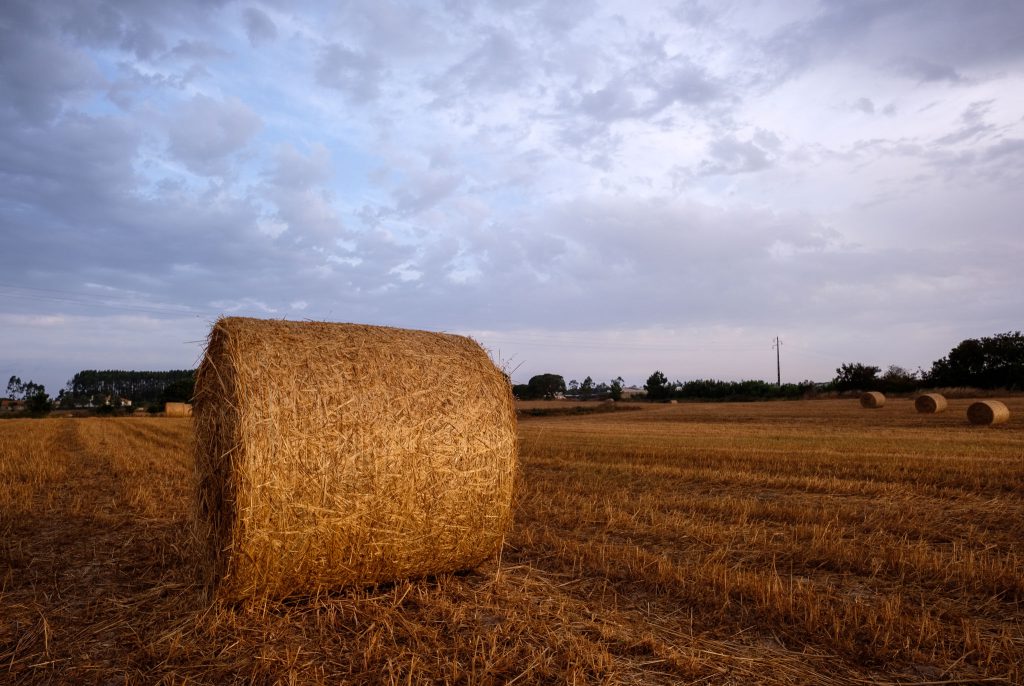
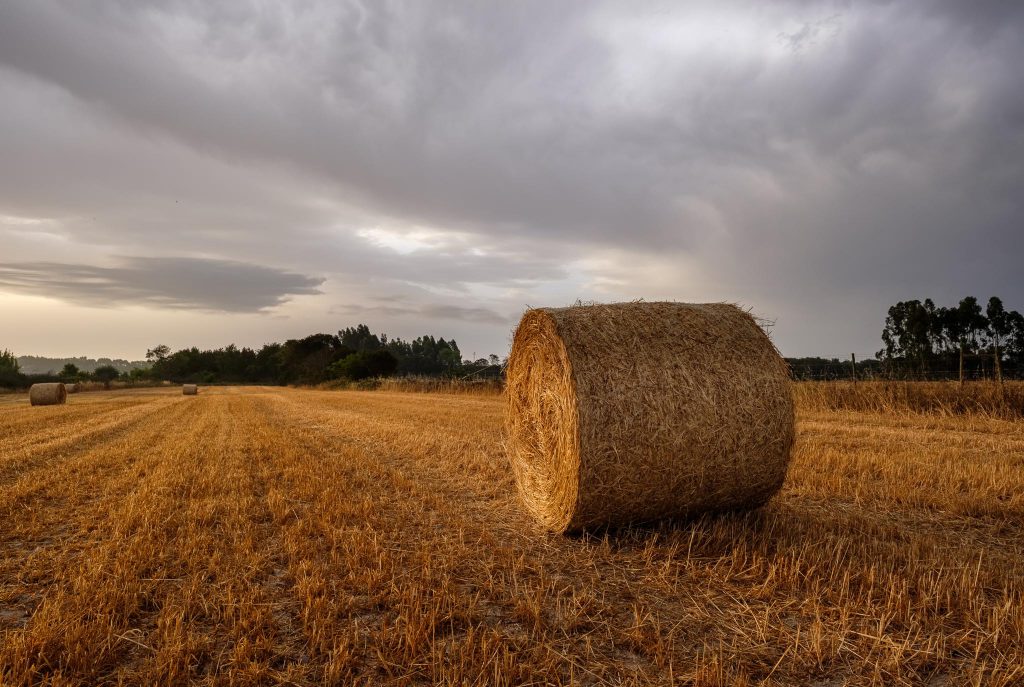
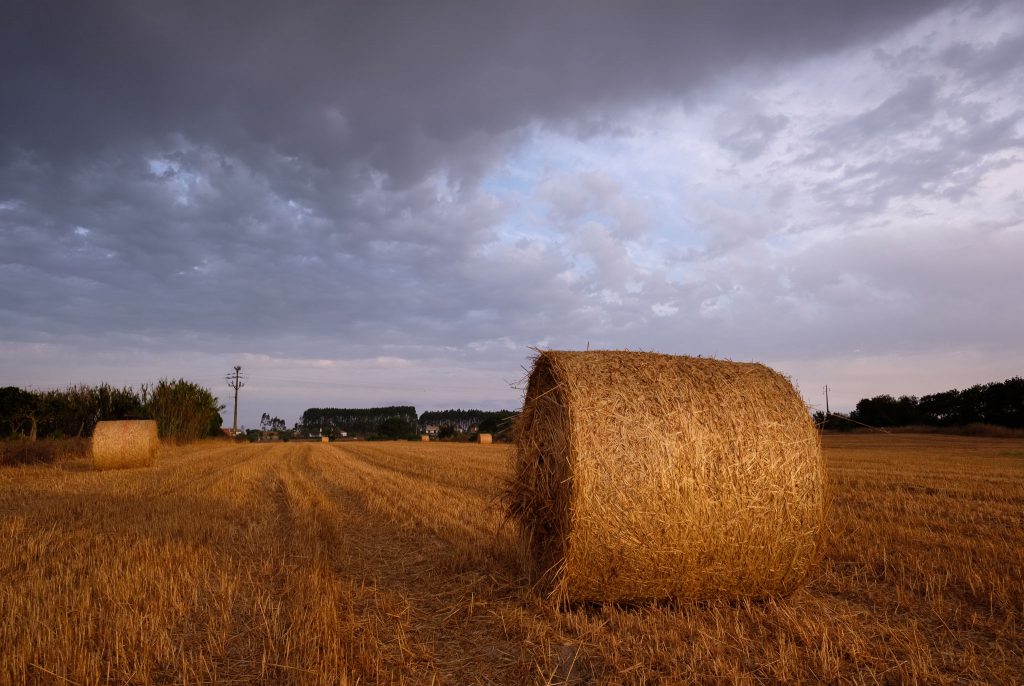
One of my favourite photographic subjects are rural fields with hay bales. At the end of Spring, farmers start to harvest cereals and hay, the latter to store as cattle feed for the following months. This is a centuries old seasonal activity, still important for the economy of several parts of the country. In previous visits to Longueira, I noticed that some fields already had the typical bales. Every year I go to familiar locations to photograph the bales, so avoiding repetition in the resulting photos can be a challenge.

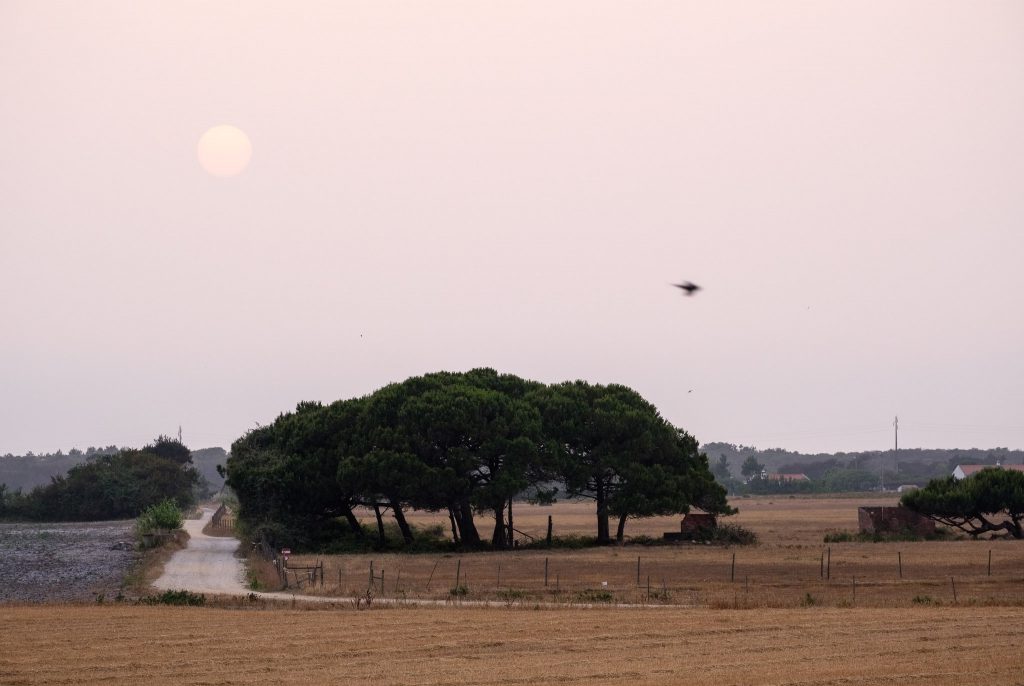
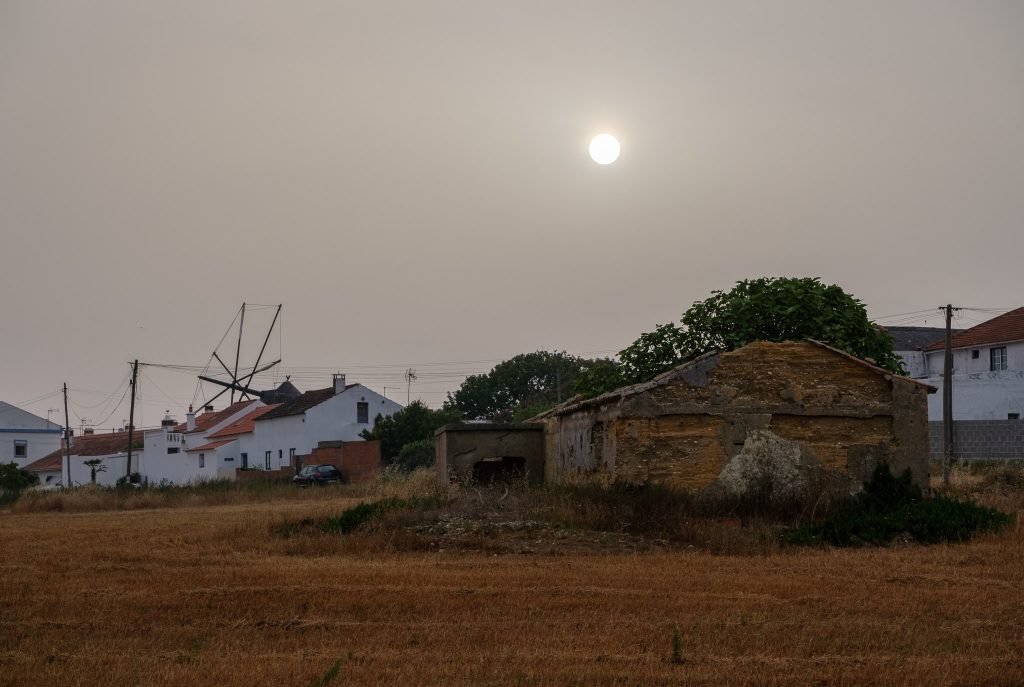
The photos I am showing here were made last week, in a small field near Longueira. The weather had been quite variable, thanks to the presence of Saharan dust brought in by the wind. This made for unique weather and light conditions. For example, for a few days, the Sun was pale and obscured; the presence of high levels of dust in the atmosphere also created rain showers and thunderstorms.

Dusty sunset near Longueira.
Dusty sunrise in Longueira.

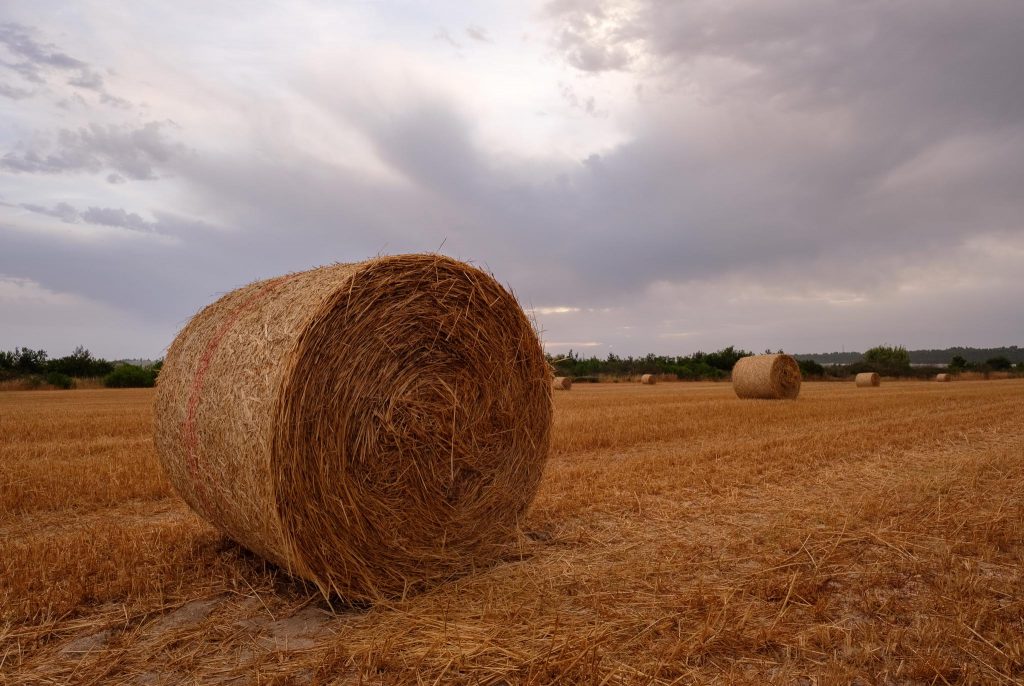
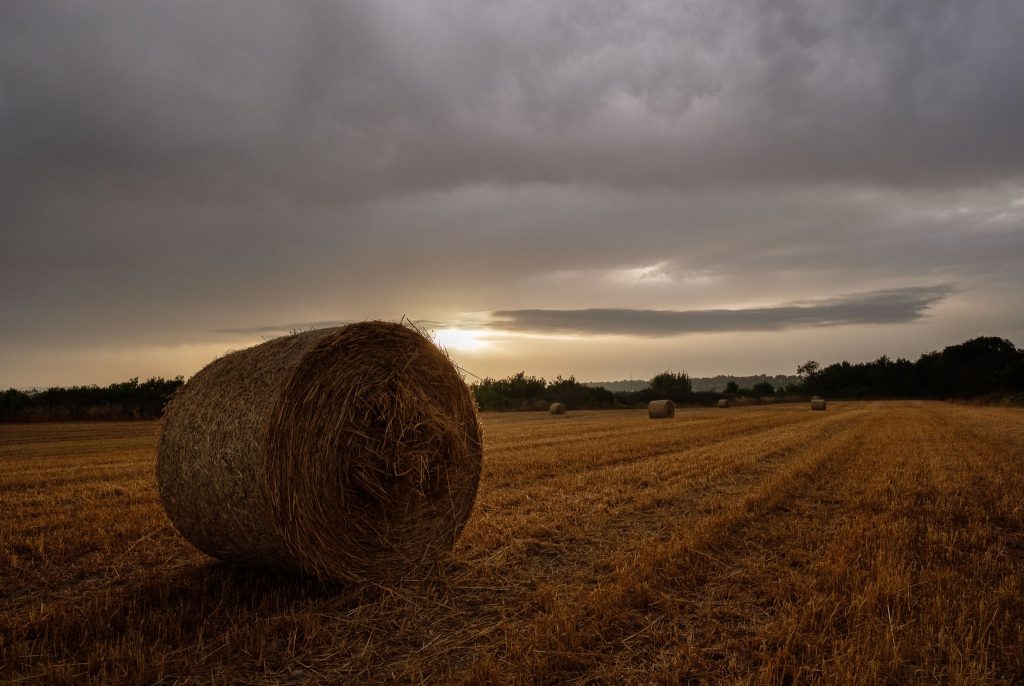
The dust gradually cleared out after a couple of days, and I decided to go out one morning to photograph a nearby field. In the Summer, this entails waking up very early, well before 6 am, but at least the location was only a couple of km away. I grabbed my tripod, plus two of my Fuji cameras and lenses. I had my Fujinon 14mm wide angle lens, and the Fujinon 35mm standard lens. Before sunrise, the sky was covered with stormy clouds, but I started to make a few test shots, using the bales as the main foreground subject. I was walking around between the ends of the field, making photos towards the East and the West; it is important to look in all directions, as the light can change rather quickly.

Bales and clouds.

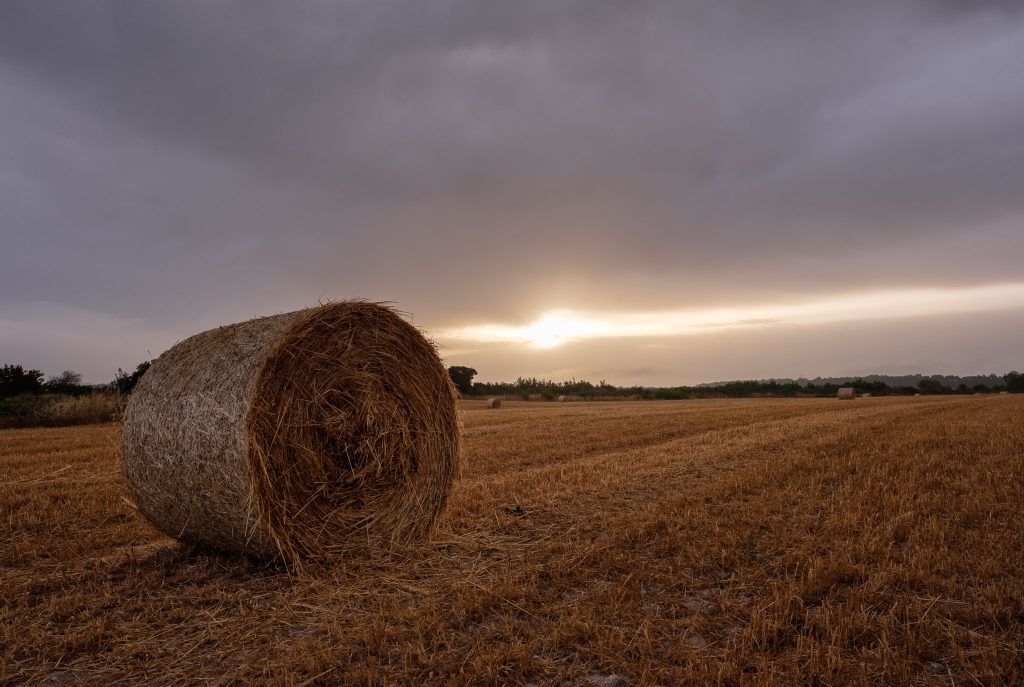
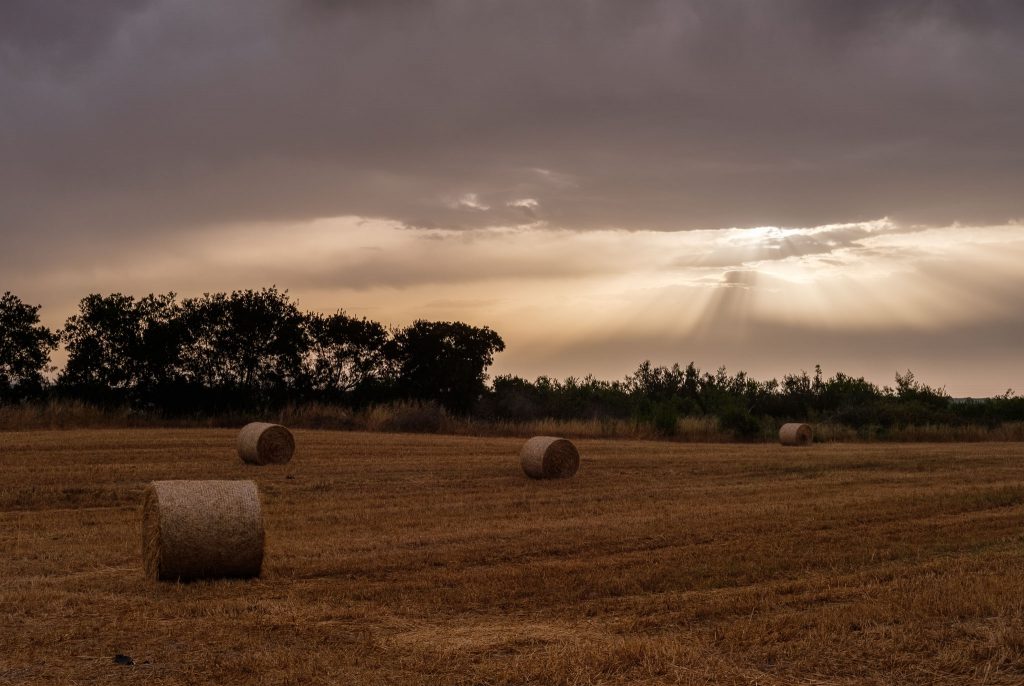
For a brief period, there was a break in the dark sky, and light illuminated the landscape in a golden glow. This period only lasted for a few minutes, so I had to photograph quickly.

A break in the clouds.
A touch of light.
Golden colours.
East…
…and West.

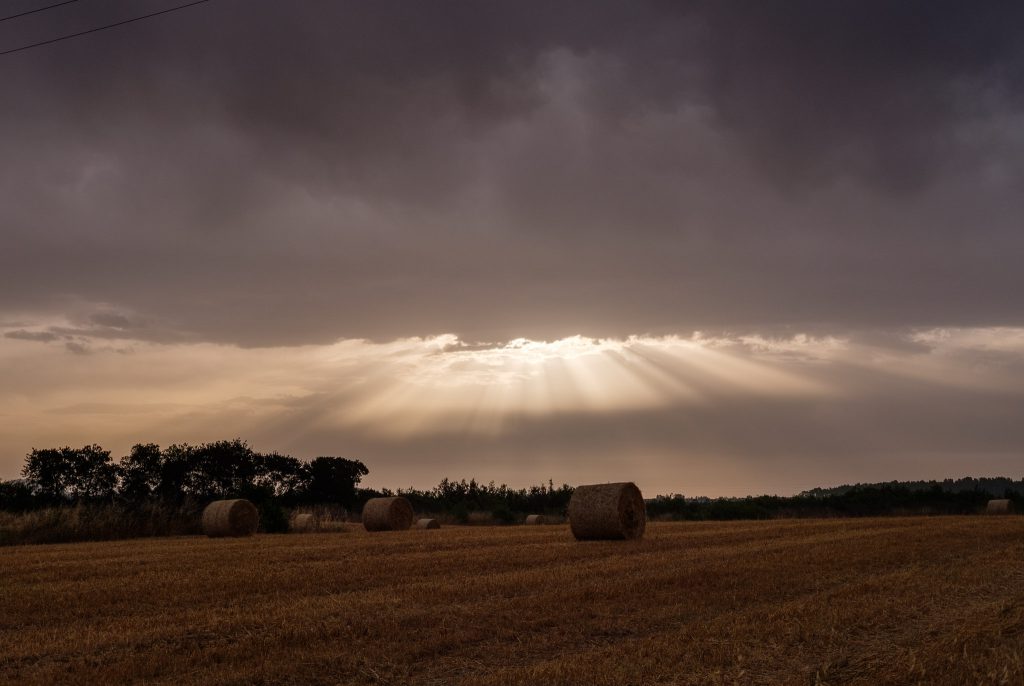
After that, the clouds covered the Sun again, but there was still an opportunity to photograph the filtered rays, an effect that can add a bit of drama to the photos.

Dark and light.
Light from above.
Luminous.

I am happy with the photos I got, thanks to the interesting weather and light, which conveyed a different mood to a familiar and common subject.

White storks in the early morning

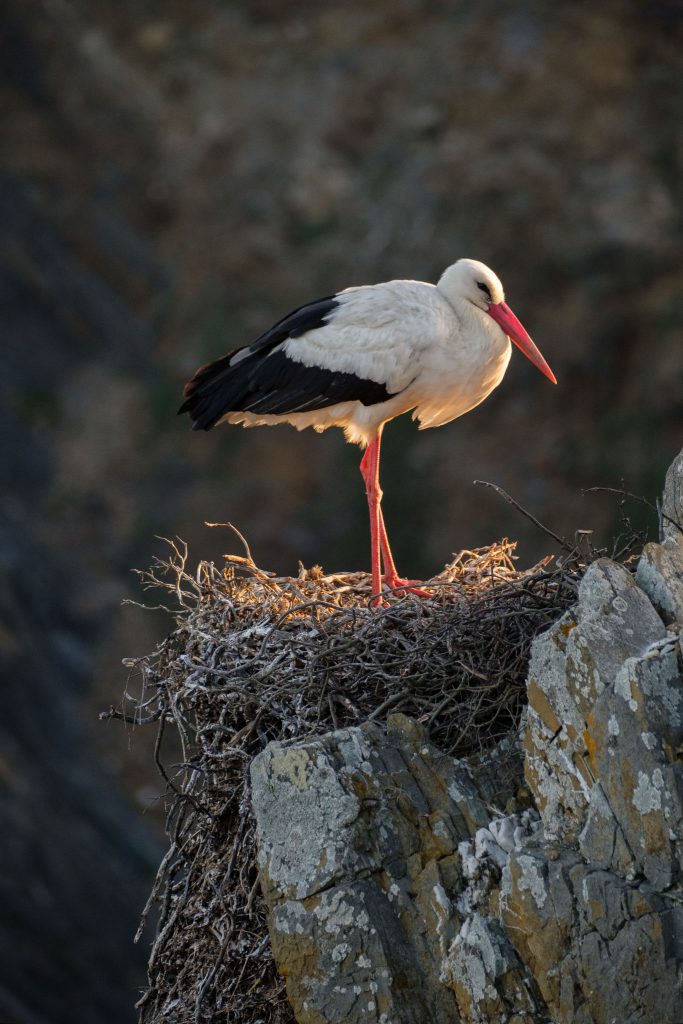
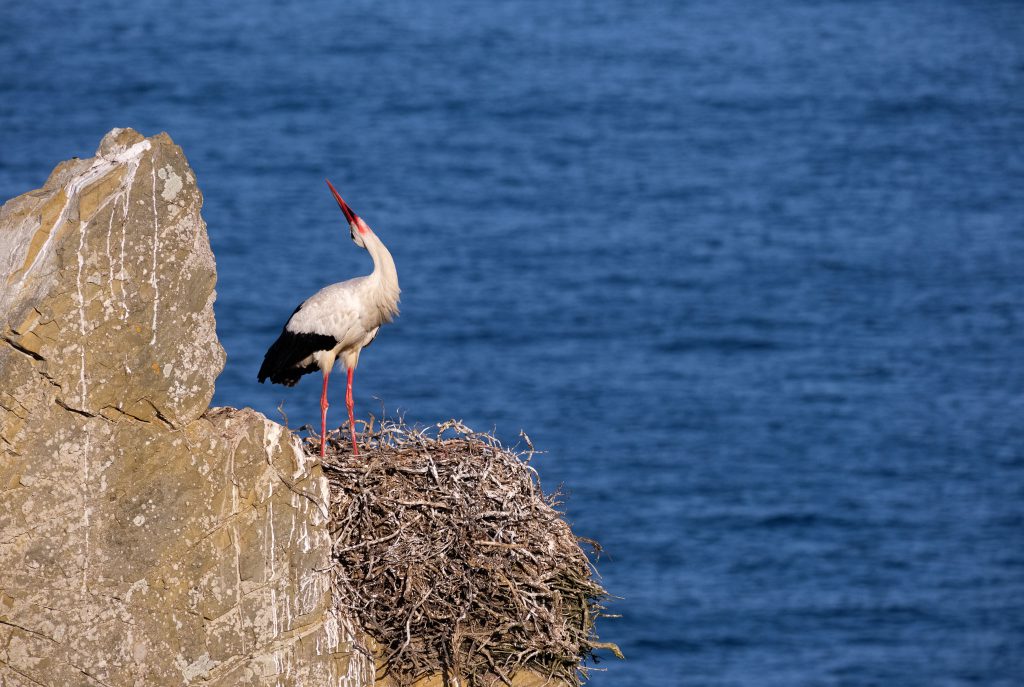
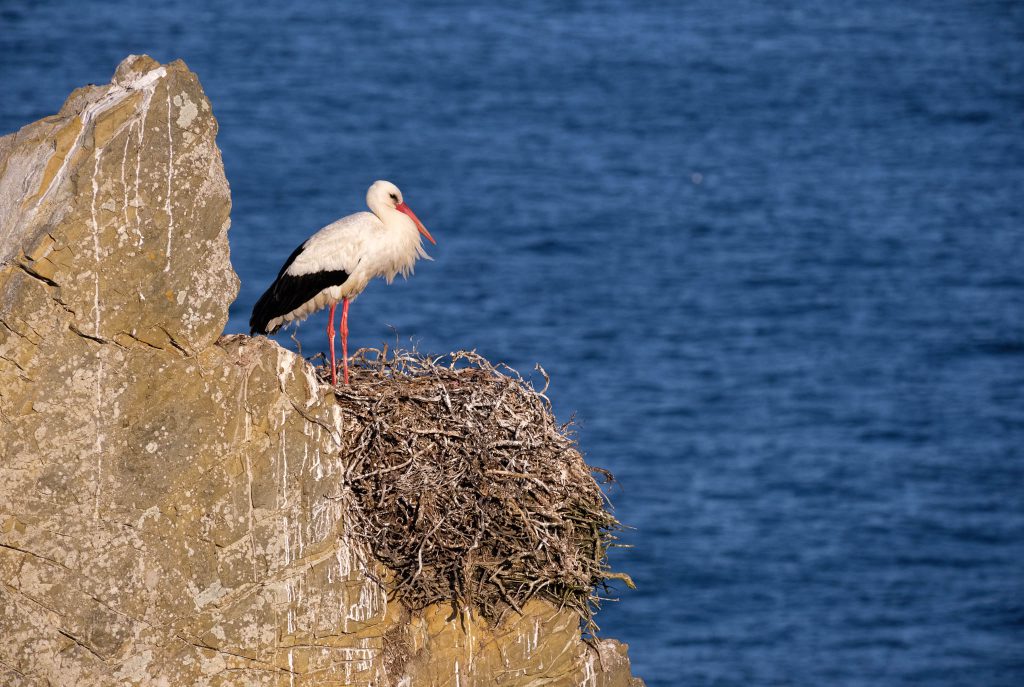
About 1 month ago I wrote about the white storks of the Southwest Alentejo Natural Park, describing my first attempt of photographing them this year.

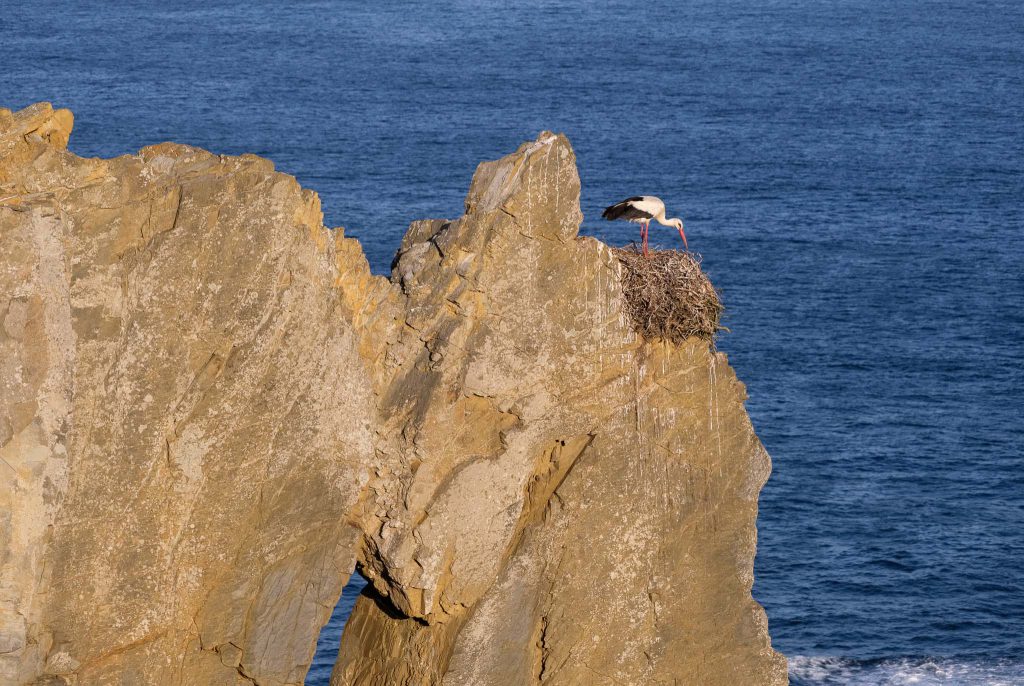
In fact, every year this unique species returns to this coast, reusing previous nesting places. In April, my visit was during the late afternoon and sunset time; now, in May, I have returned before sunrise, hoping to photograph the birds under a different light and with different behaviors. Thus, I arrived before sunrise at Cabo Sardão, just past Almograve and Cavaleiro villages. Parking the car near the lighthouse, I grabbed my gear and walked towards the edge of the cliffs. I had with me the Fujinon 70-300mm zoom lens, mounted on the Fujifilm X-T3 camera, plus a tripod.

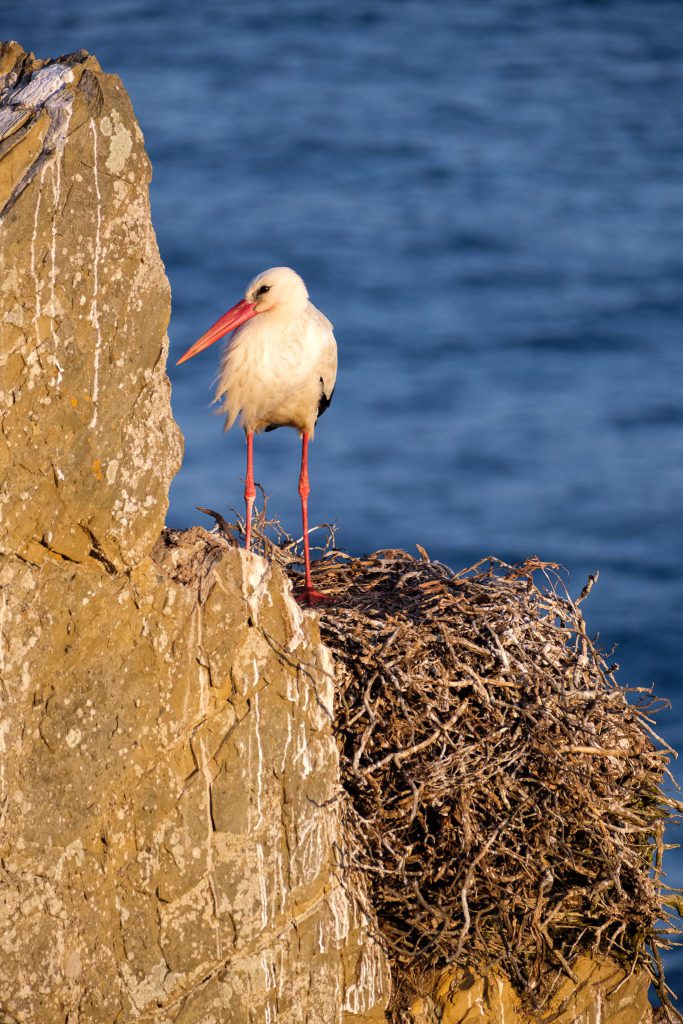
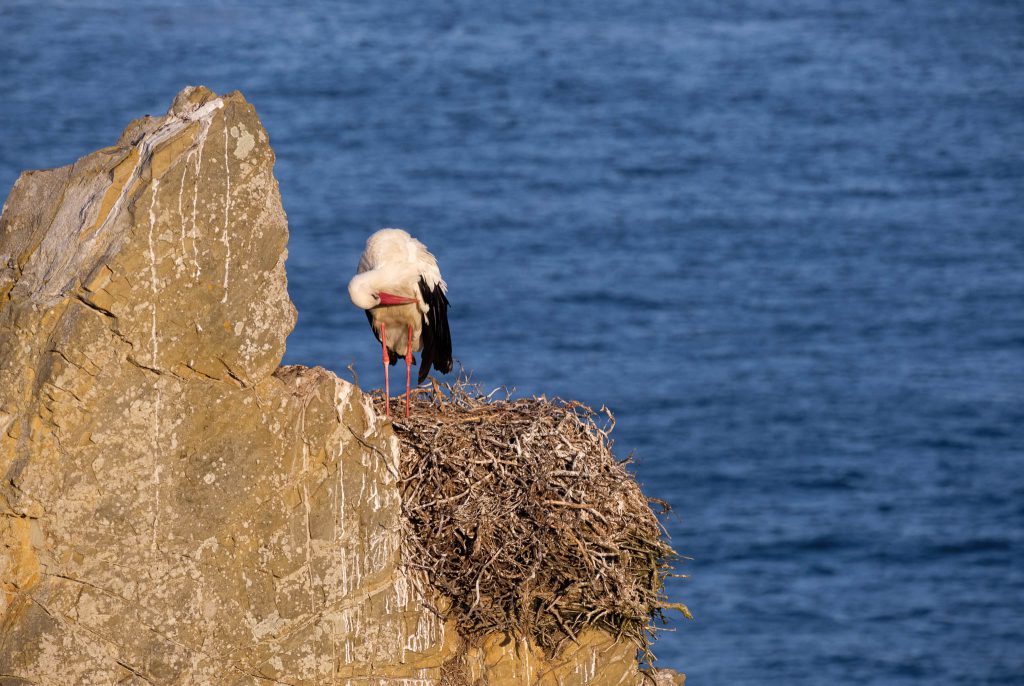
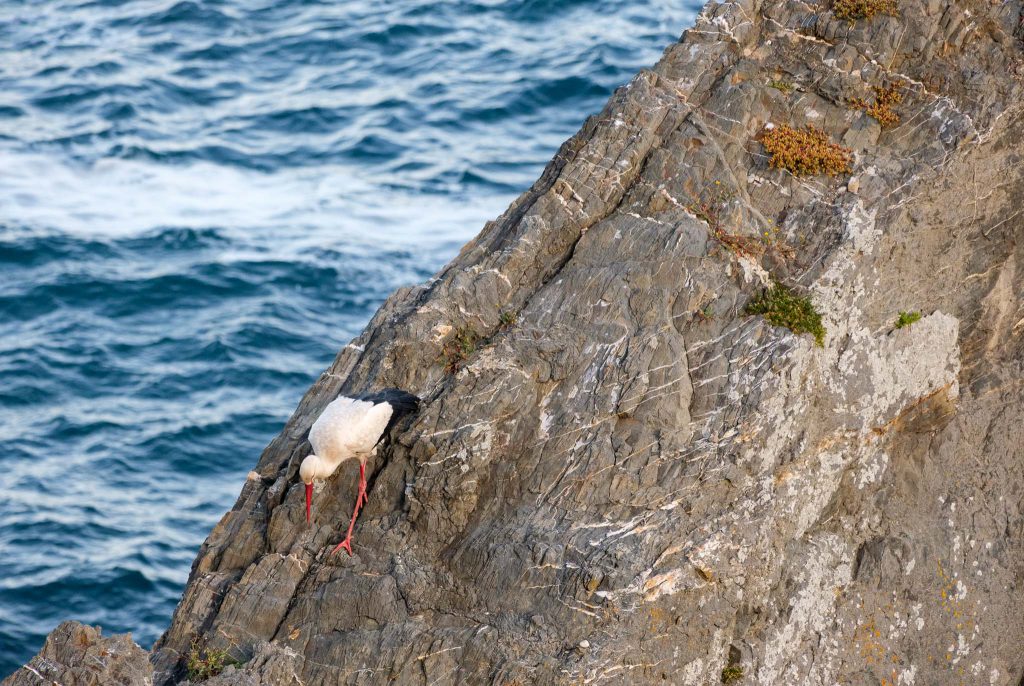
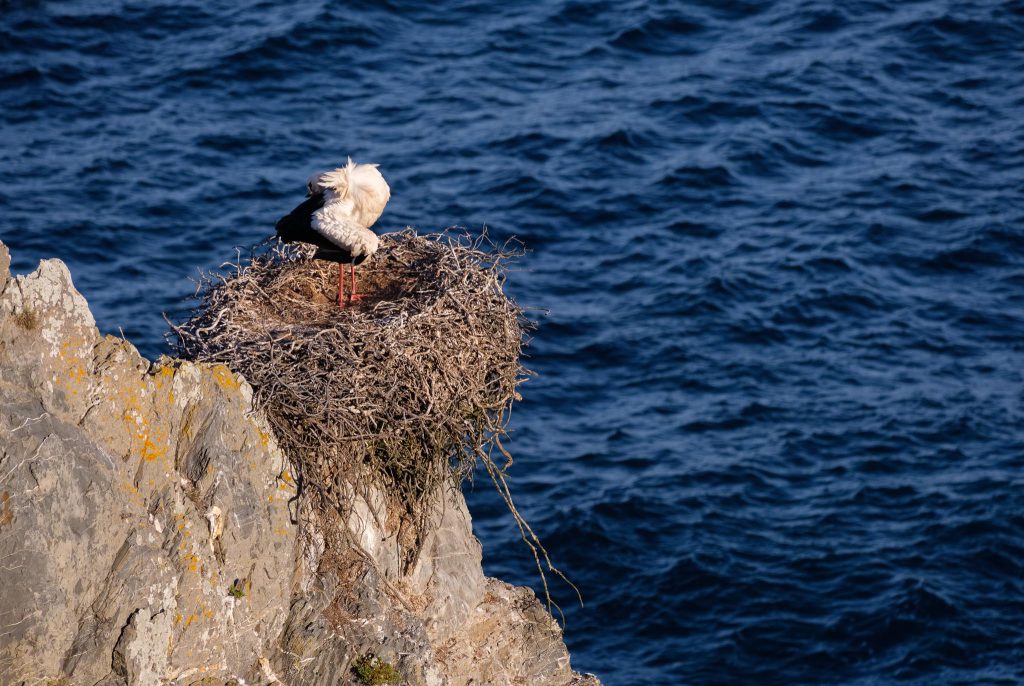
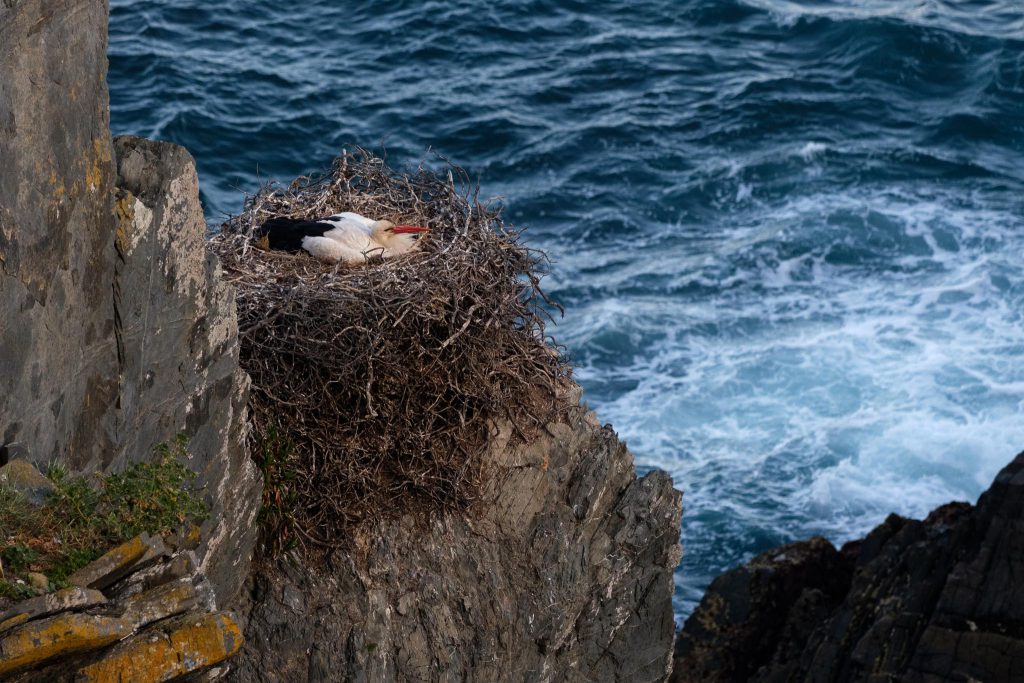
From previous visits, I knew that several nests had been occupied, namely in a tall sea stack with several ledges. In fact, there were 3 nests built in 3 different ledges, and they were all occupied with 1 stork per nest. The sun had just risen, and the mates had gone away to fetch food for their partners and little ones. I spent the following hour or so making photos of the different storks; for convenience, I have named them Storks 1 to 3, starting from the highest nest. The weather was nice, sunny with a light breeze, so it was safe to approach the edge of the cliff. Seems like grooming the feathers and taking a small walk are popular activities.

Stork 1 warming under the first rays of morning sunshine.
Stork 1.
Stork 1 grooming the feathers.
Stork 2 taking a morning walk.
Stork 2 grooming the feathers.
General view and setting of Stork’s 1 nest.

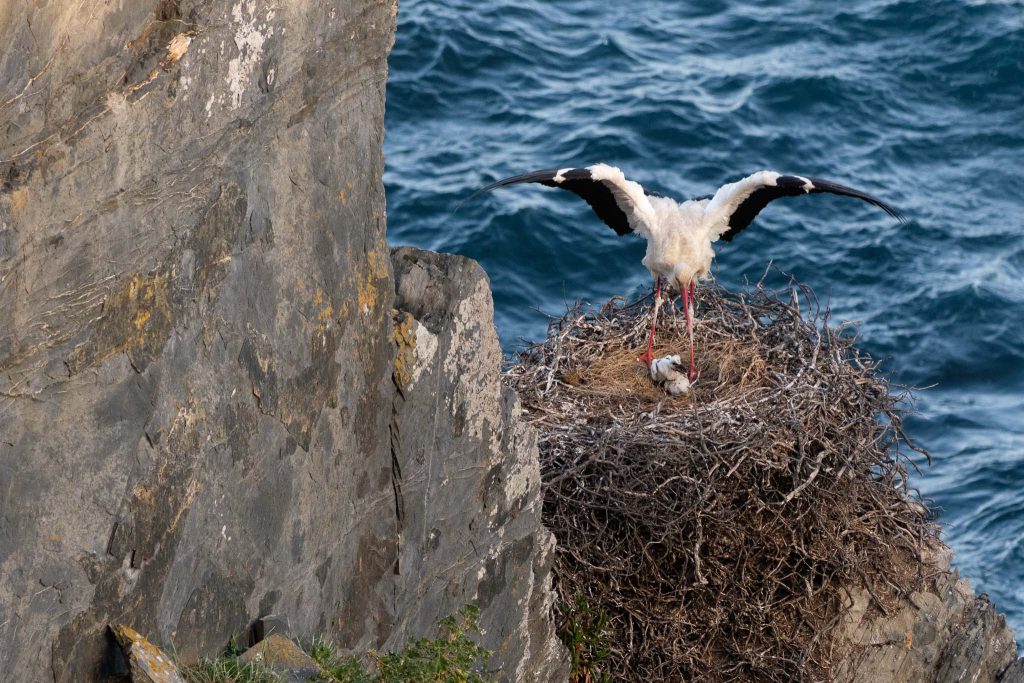
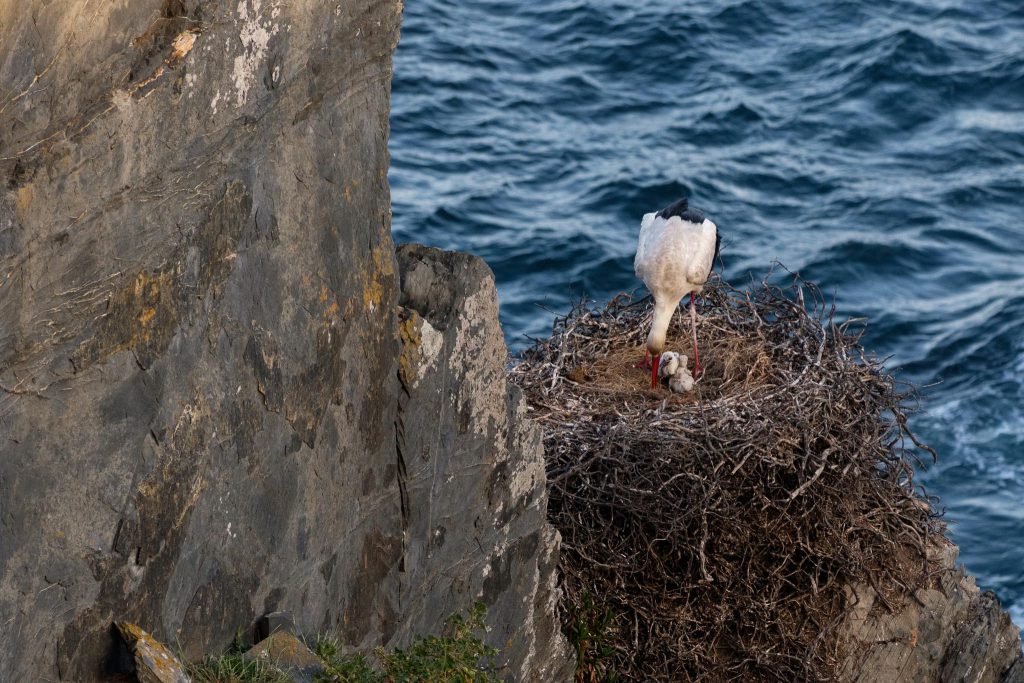
As the sun rose on the horizon, it progressively illuminated the 3 nests. After a while, I noticed Stork 3 starting to move, and to my surprise there were 2 chicks under it. I quickly adjusted the camera and lens, and made a few shots. The whole action lasted a few seconds, and pretty soon the bird was lying again over the baby storks, for protection and warmth.

Stork 3 checking its babies.
Stork 3 protecting its babies.
Stork 1 bill – clattering.
Stork 1 warming under the sun.

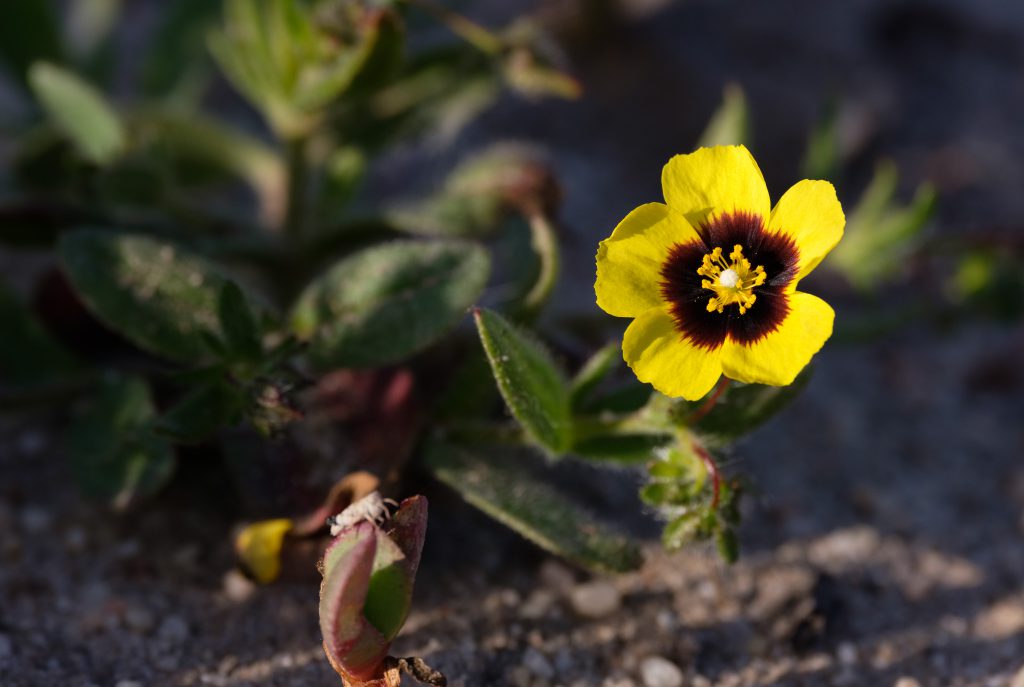
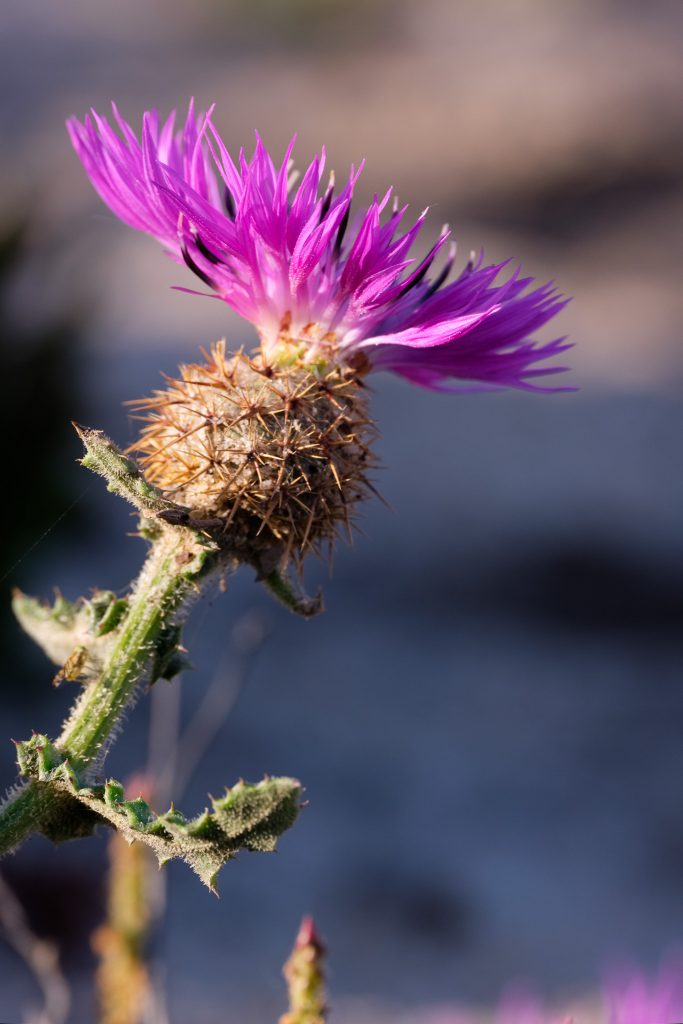
It was nice to be able to witness the birds at the beginning of their day. After a while, I walked back to the car, making a couple of stops to photograph some wild flowers along the way.

Small yellow flower.
Pink flower.

Dawn by the river

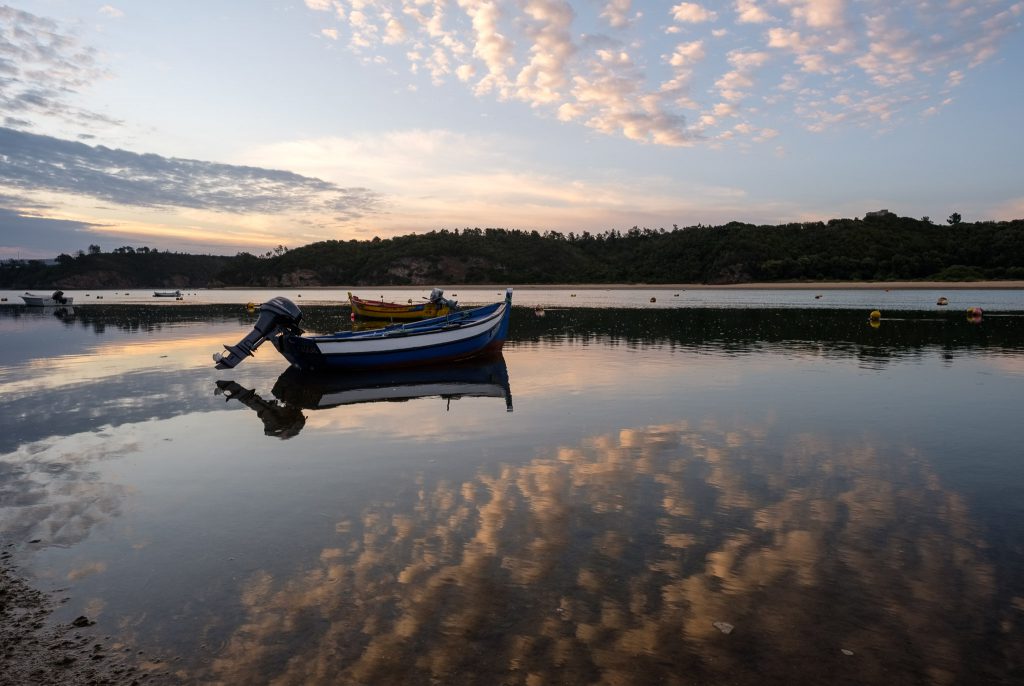
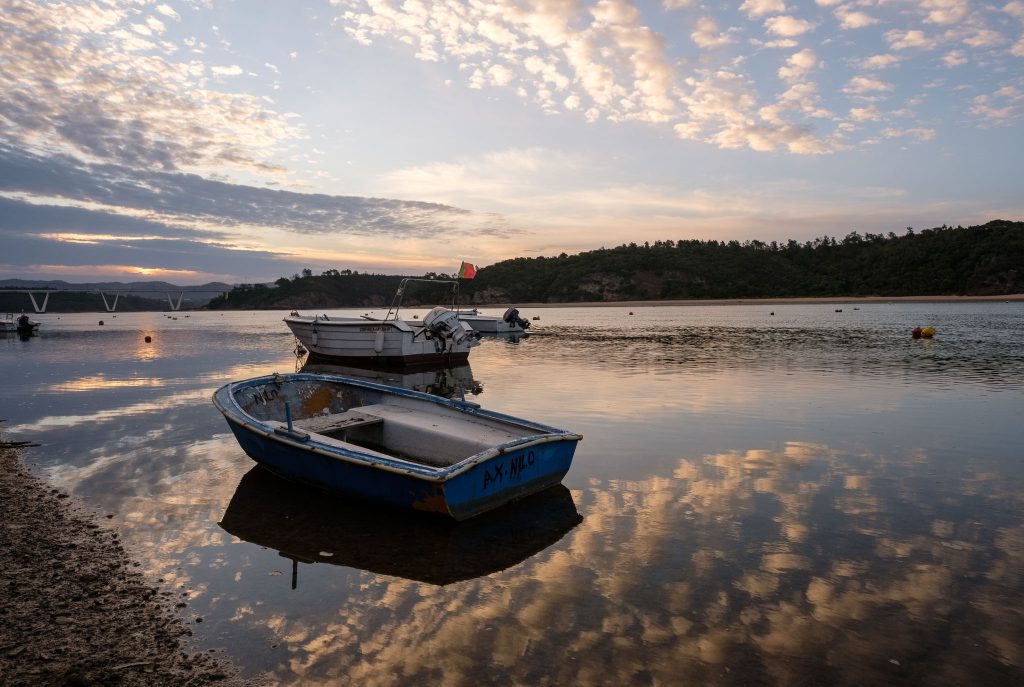
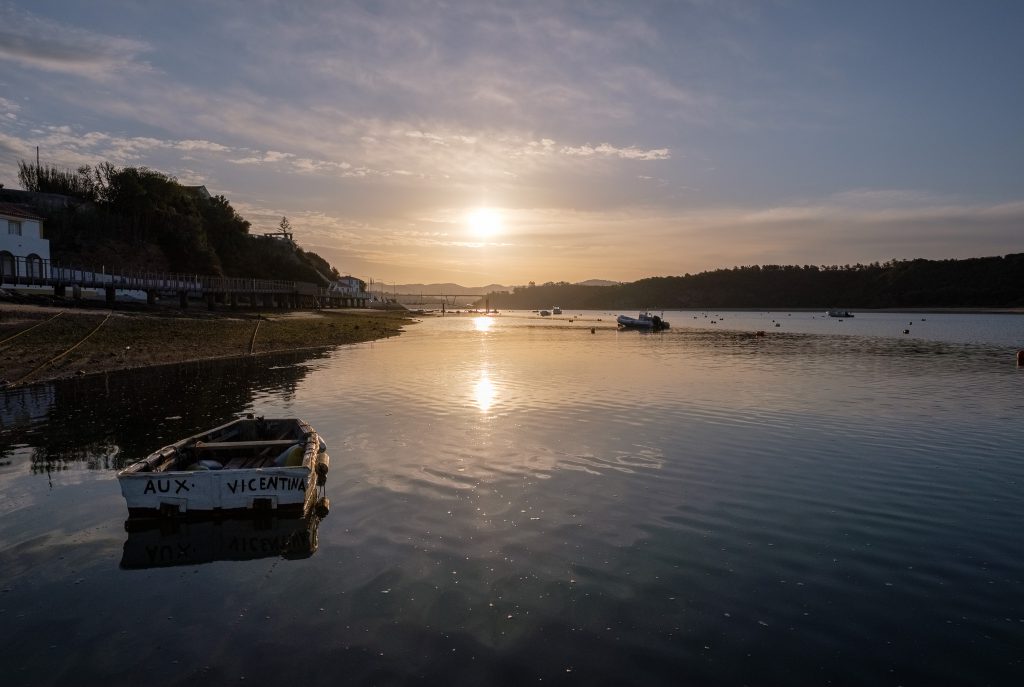
Sorry, could not resist the reference to a famous Neil Young song… the river in this case being the Mira, in Vila Nova de Milfontes, where it reaches the Atlantic ocean. If you are familiar with this blog, you will know that I have photographed in this region of Portugal’s southwest coast many times before. I never tire of visiting and photographing this well – preserved piece on Nature, and last week I had the chance of spending a few days there. As the days are longer, it is not easy to get up before dawn at 5am to be on location well on time. Even though I am quite familiar with the place, I still like to arrive early and explore a little bit, looking for some new aspect or feature that might produce a different photo.

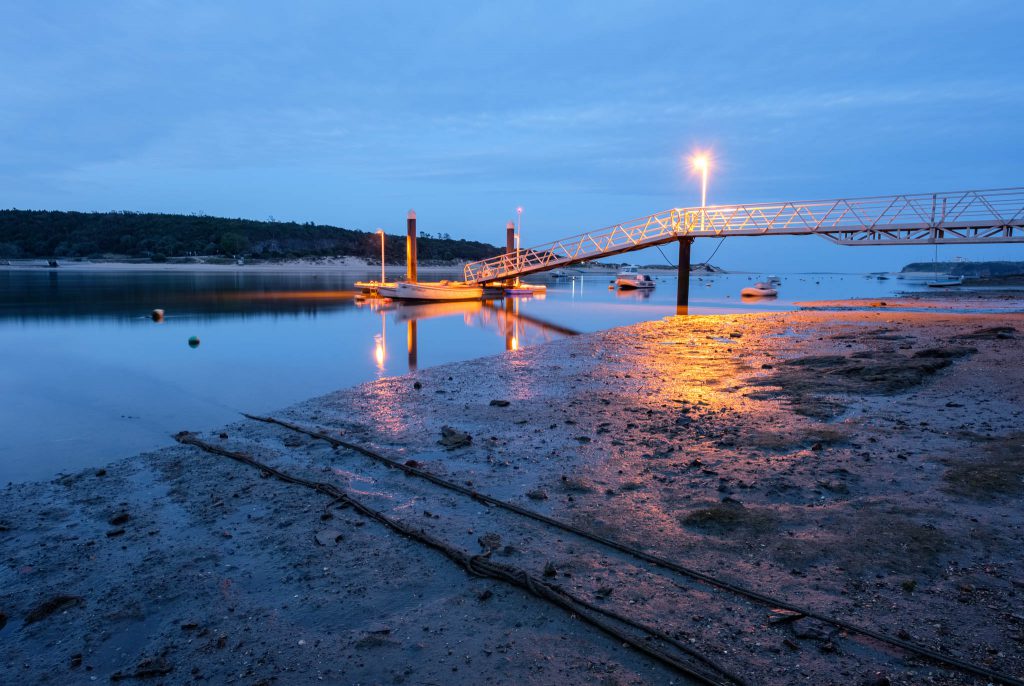
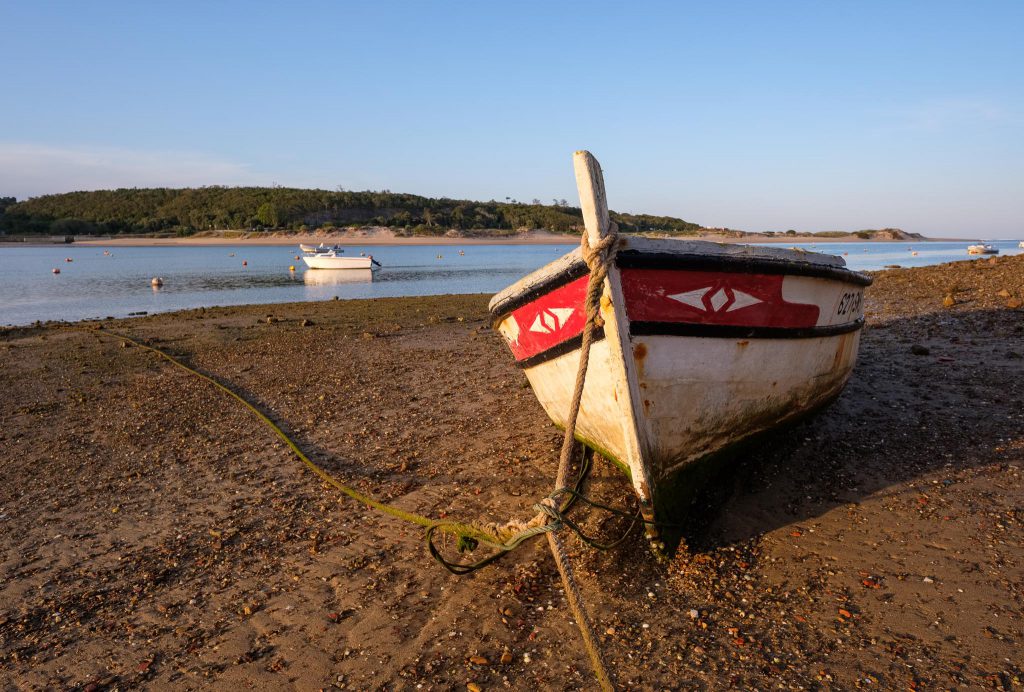
I planned this outing to coincide with the low tide, which exposes the river bank, and makes access to the water line somewhat easier. I walked down to the small pier, being careful to avoid slipping or burying my feet in the soft and squishy mud. This made for an overall slow photography process, but that was fine, I normally take my time composing. I had with me my trusty Fujinon 14mm wide – angle lens, plus my Fujinon 70 – 300mm zoom. My first shots were examples of the so called “blue hour”, those minutes before sunrise, where the light is still transitioning from night to day.
River Mira blues.

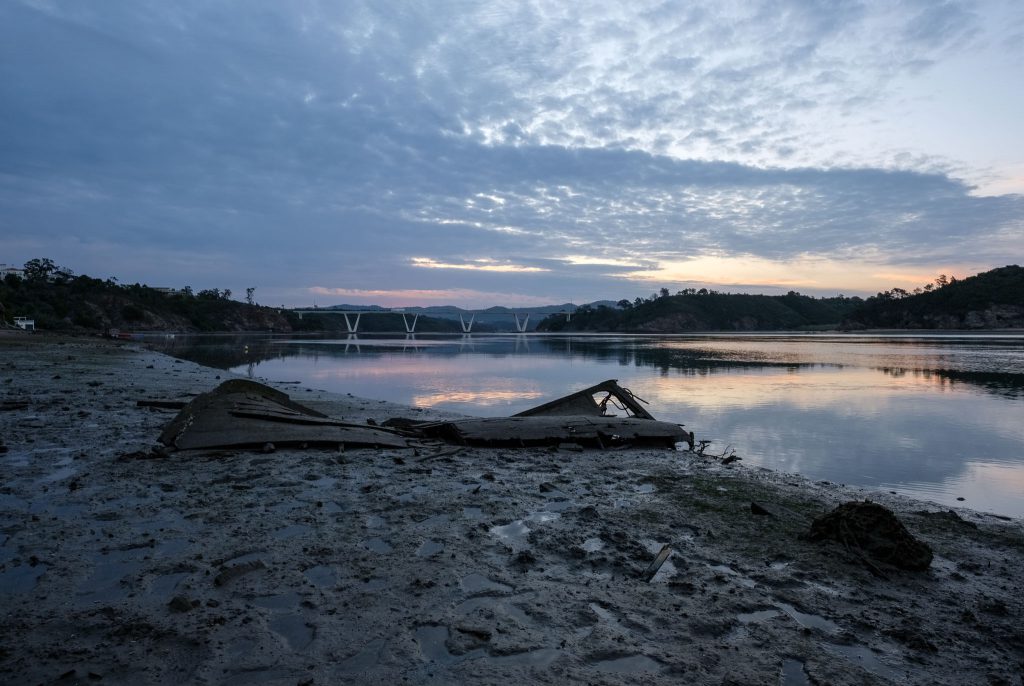
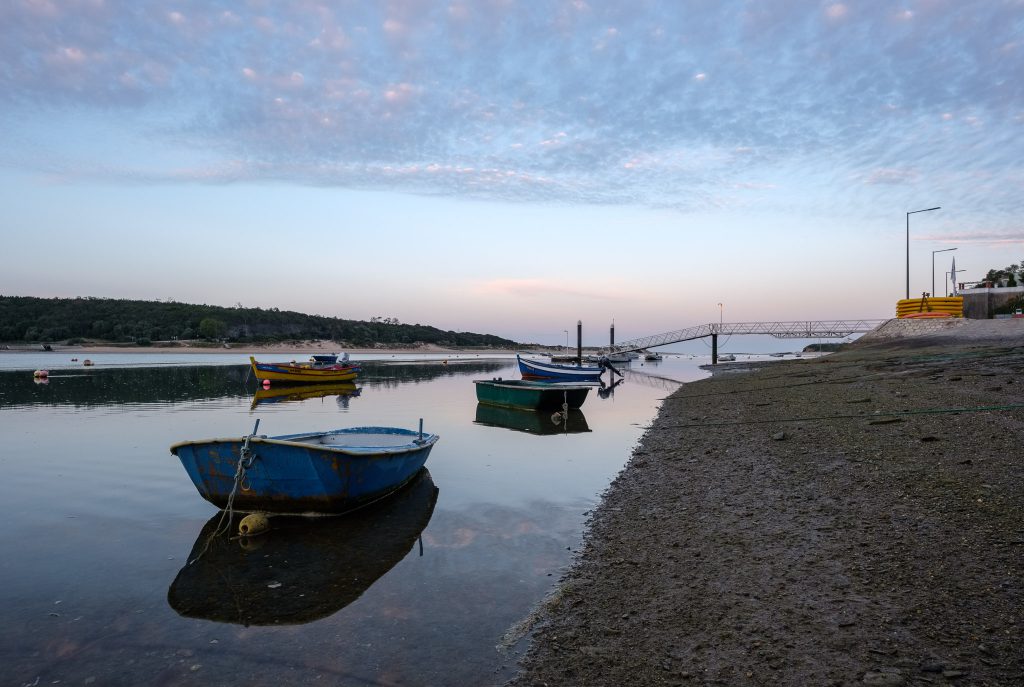
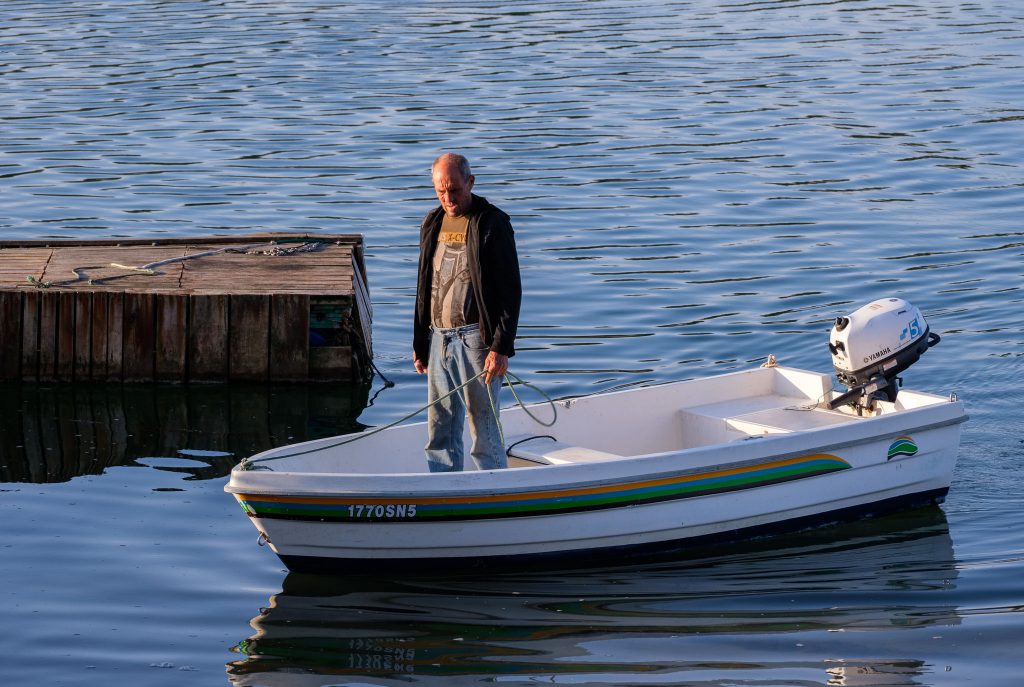
I made several photos using the small fishing boats as points of interest. The low tide had even exposed an old wooden boat rotting in the mud.

In the mud.

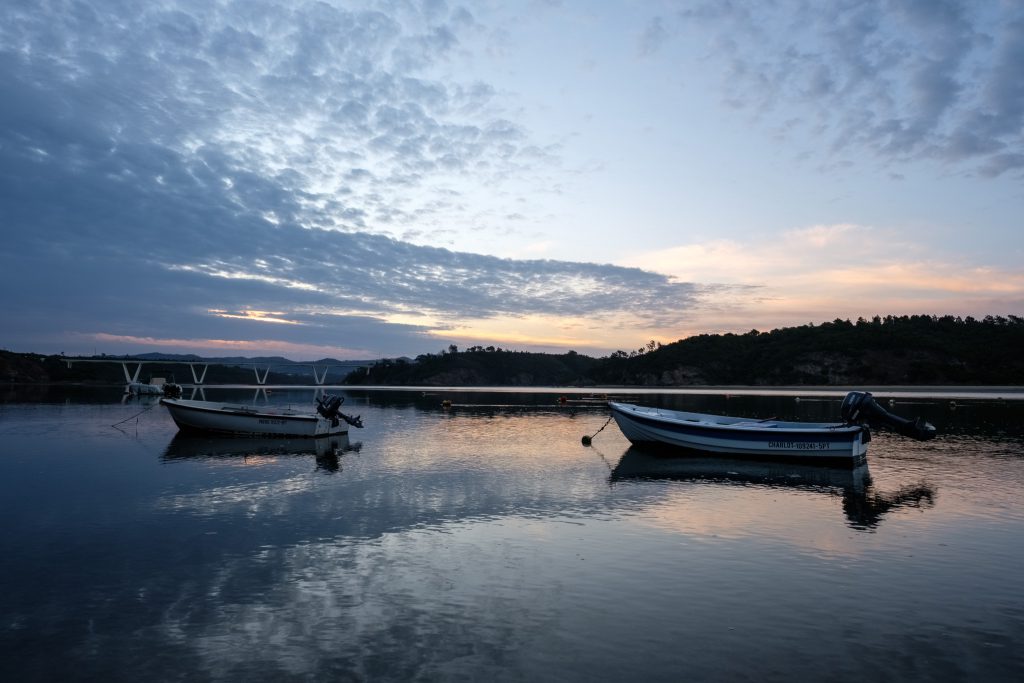
The hints of the first morning light were coming over the distant hills, and pretty soon the sky was acquiring warmer tones. There were some clouds in the sky, which were reflected in the quiet water below.

First light.
Morning quiet.
Tranquility reflected.
Floating.
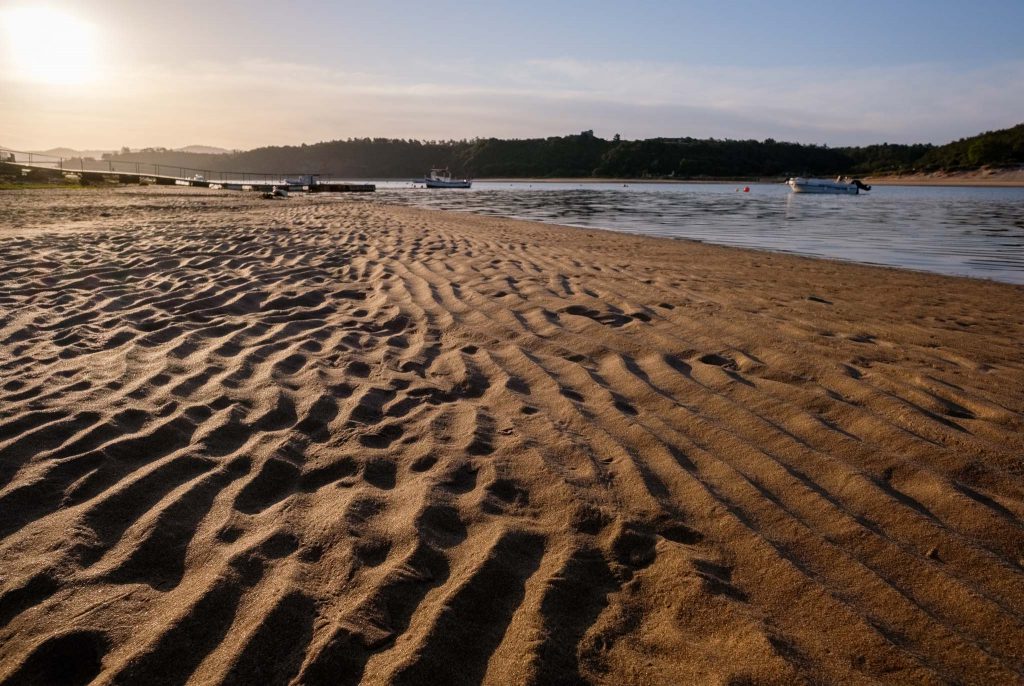
After a while I walked a short distance along the bank, arriving at a small beach, where the low tide had exposed some nice sand ripples. With the low angle of the sunlight, they made a very interesting subject.
Waiting for the tide.
Here comes the sun.
Sand ripples.

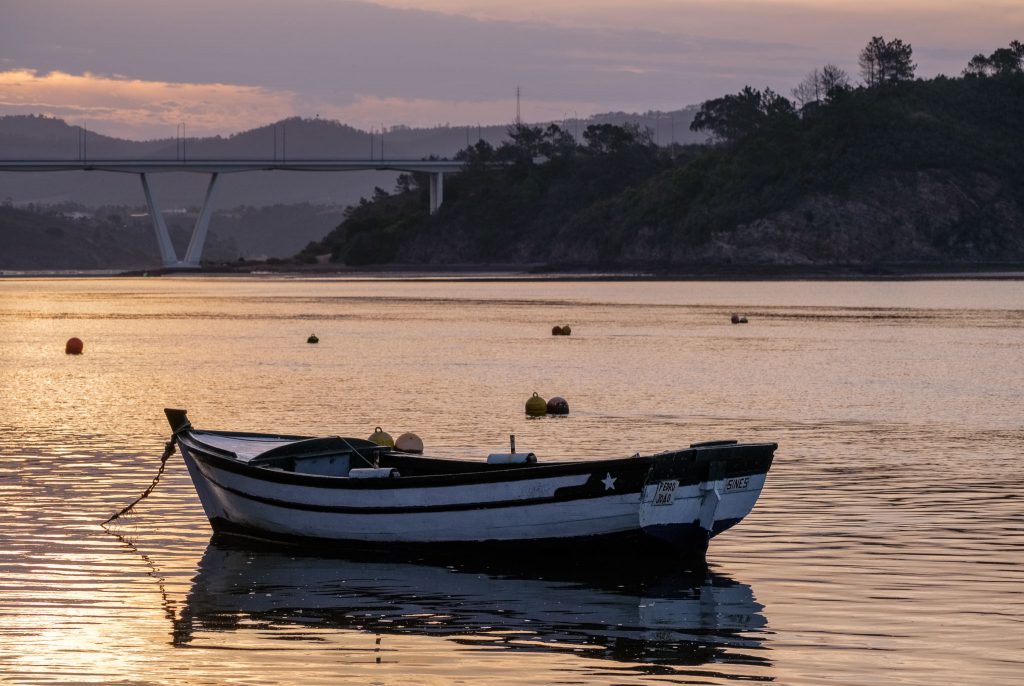
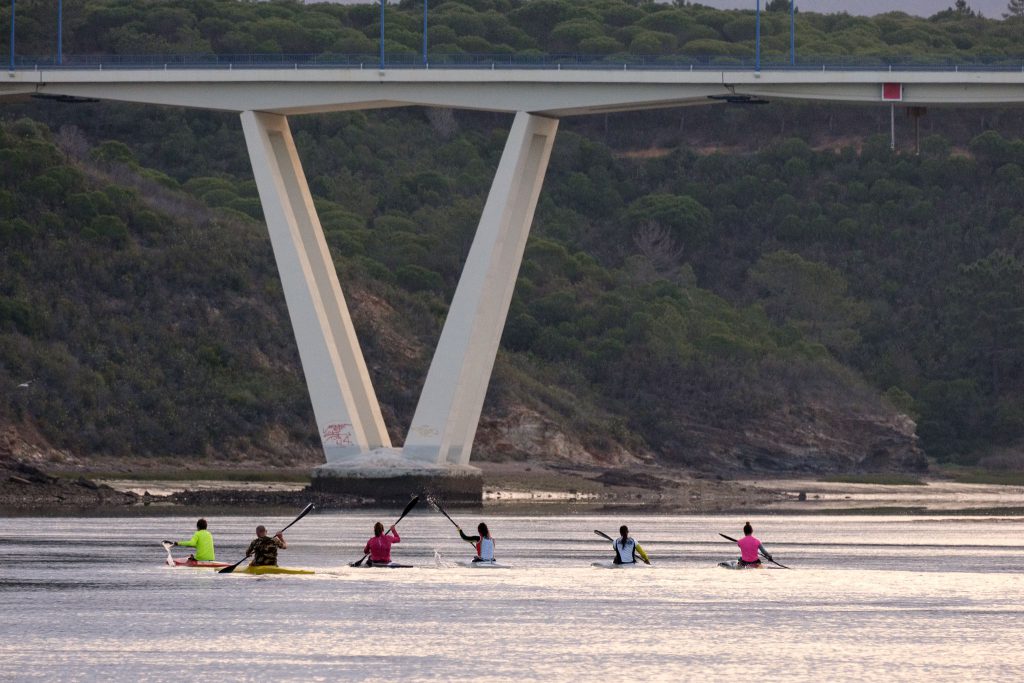
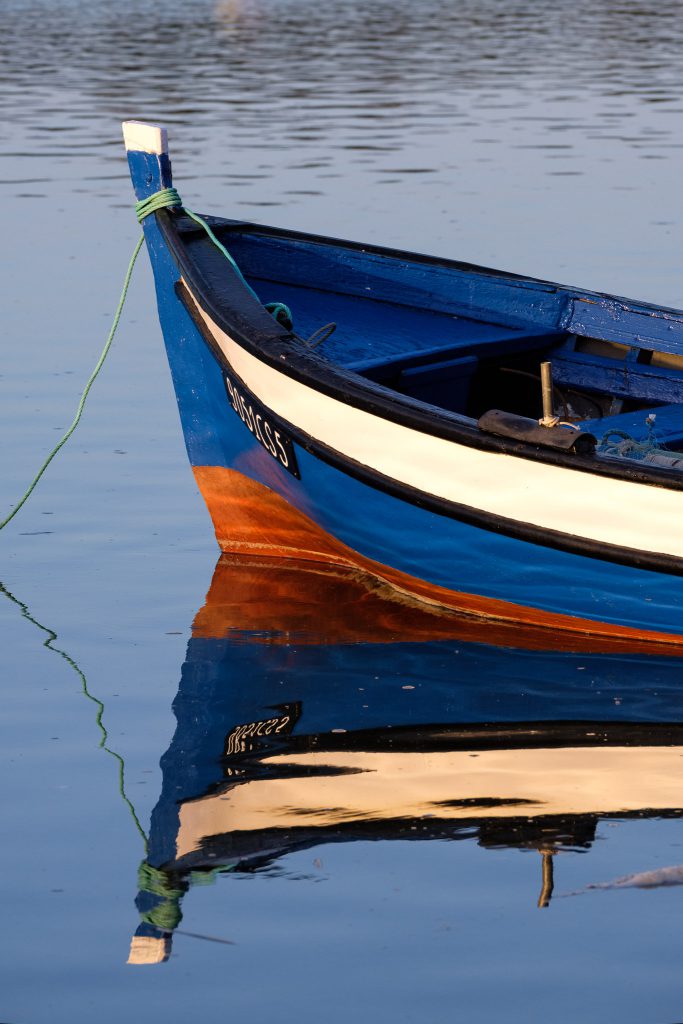
As I was walking around, I noticed the kayaking team leaving the nautical club for their morning practice, and I made a few photos of them in the distance. This is where my telephoto zoom (70 – 300mm) was very useful. The zoom was also useful to isolate the reflections of a colorful boat in the river, and to photograph another boat floating in the golden water.

Golden river.
Early morning practice.
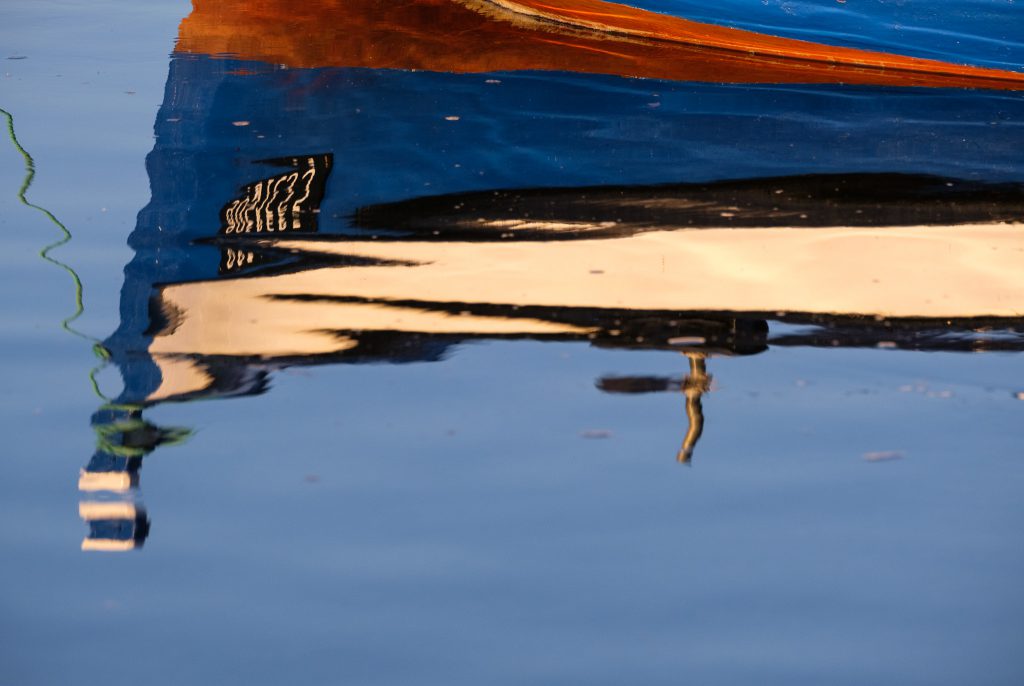
Reflection.
Reflection.
Arriving.

After spending the early part of the morning photographing along the river bank, it was time to drive back home for a well deserved breakfast.

Up in the air over Coruche

One of the activities that I have always wanted to try was to fly in a hot air balloon. After a few cancellations due to bad weather conditions, a few days ago I embarked on such an adventure. There are several companies that provide this type of activity in Portugal, selling tickets for flights over various areas of the country. I bought a ticket with the company Windpassenger for a 1 hour flight over the town of Coruche, which is located about 100 km to the East of Lisbon, in the river Tejo plain. This type of activity starts very early, before dawn, and the participants had to assemble at 6 am on a Sunday.

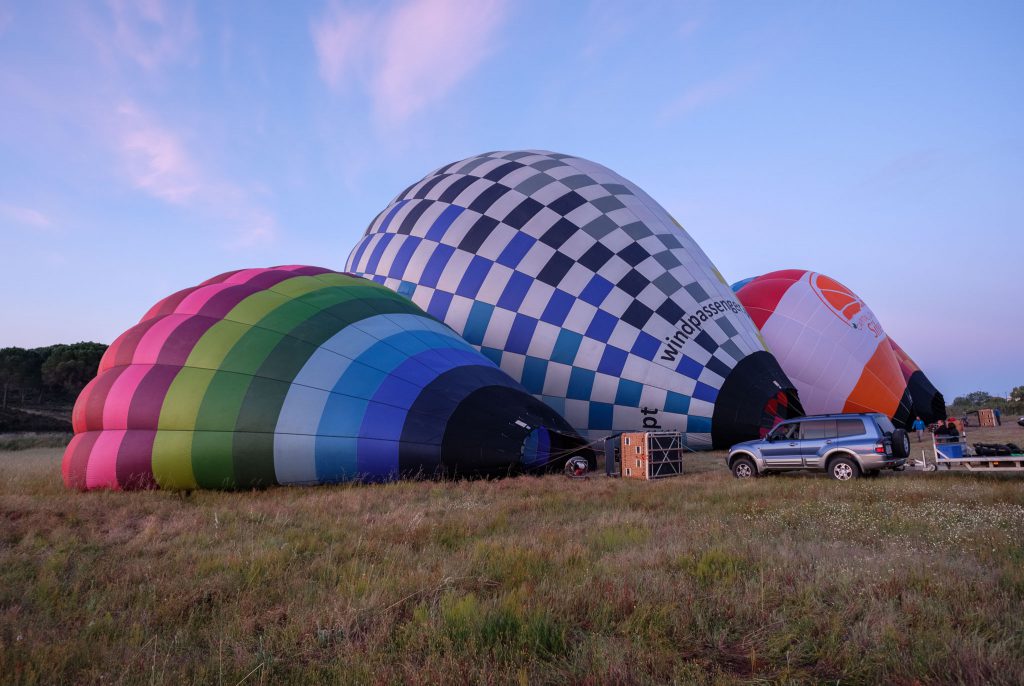
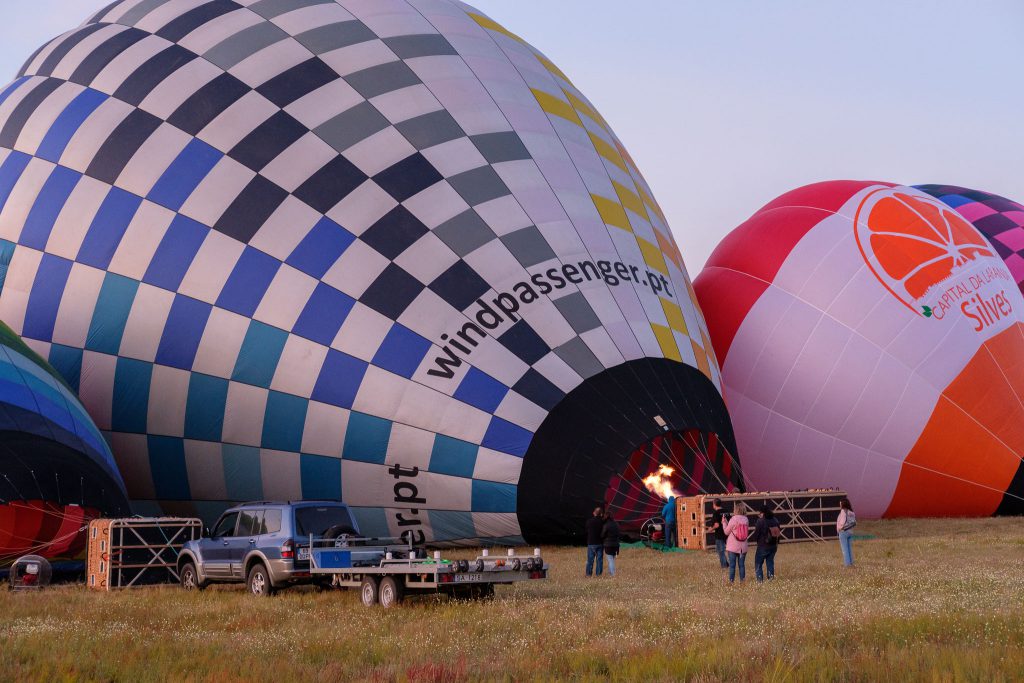
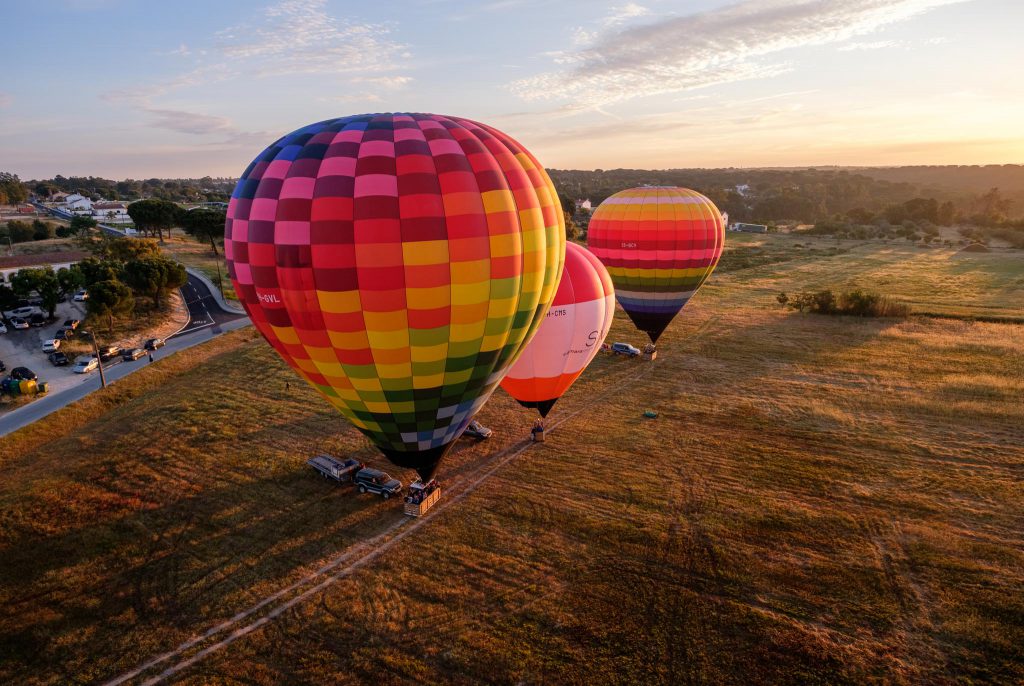
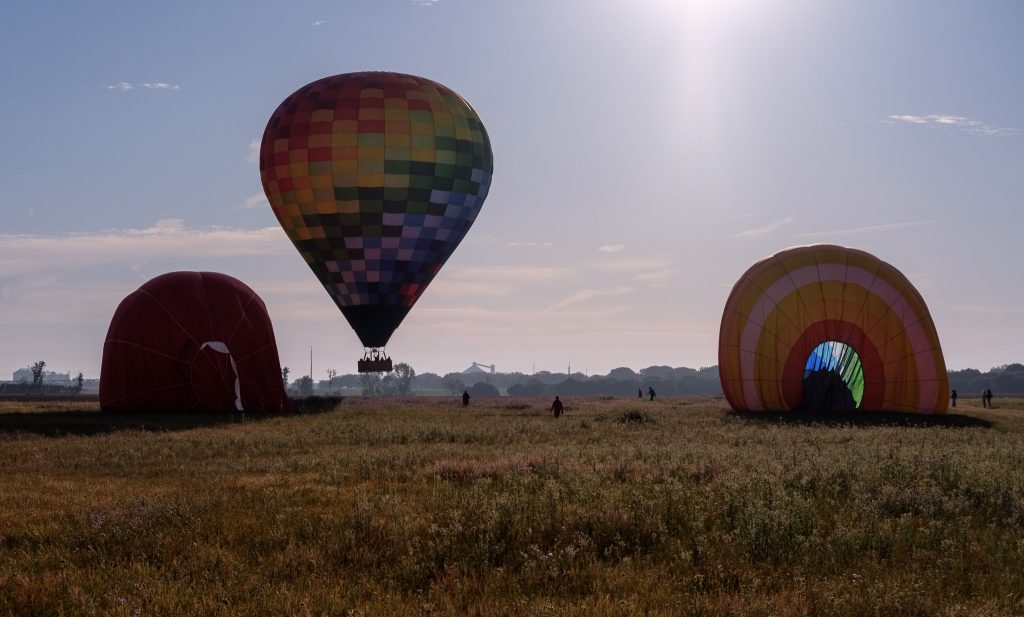
Arriving at the location, I saw 4 balloons that were getting ready for the flight. The air was being heated with large torches to fill up the large balloons, which is a slow process. I took the opportunity to walk around and make a few initial photos. For this trip, I had with me my normal kit of 2 cameras and 2 prime lenses, a wide-angle 14mm and a standard 35mm, which offered enough flexibility. The wide angle lens was a good choice to include the large balloons in the frame, and the standard lens was used for the more general views.

Preparations before takeoff.
Filling up the balloon with hot air.

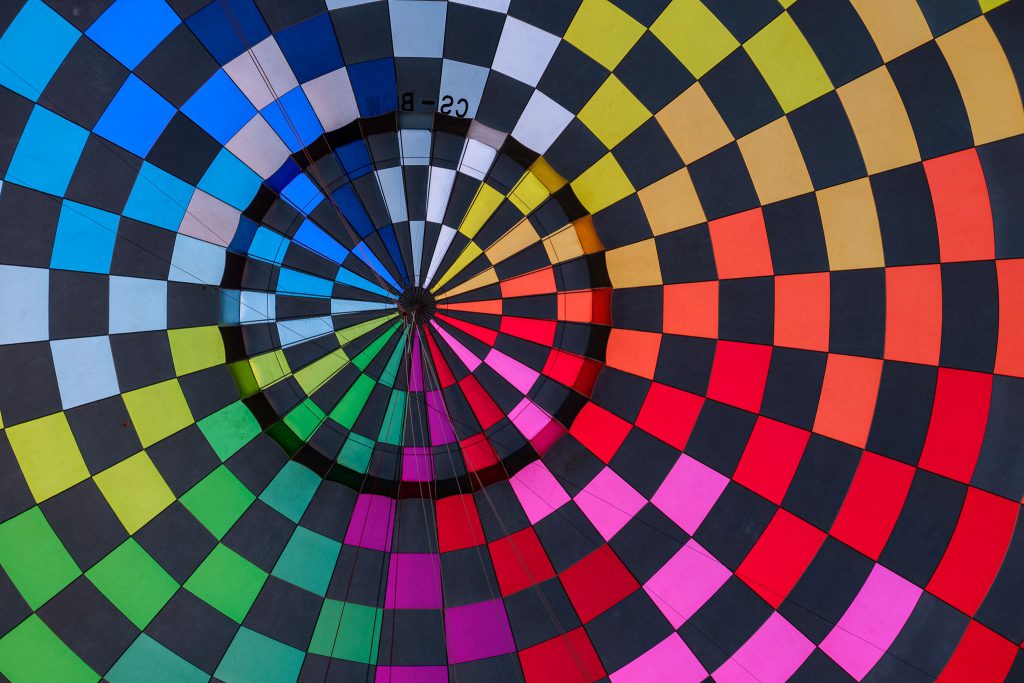
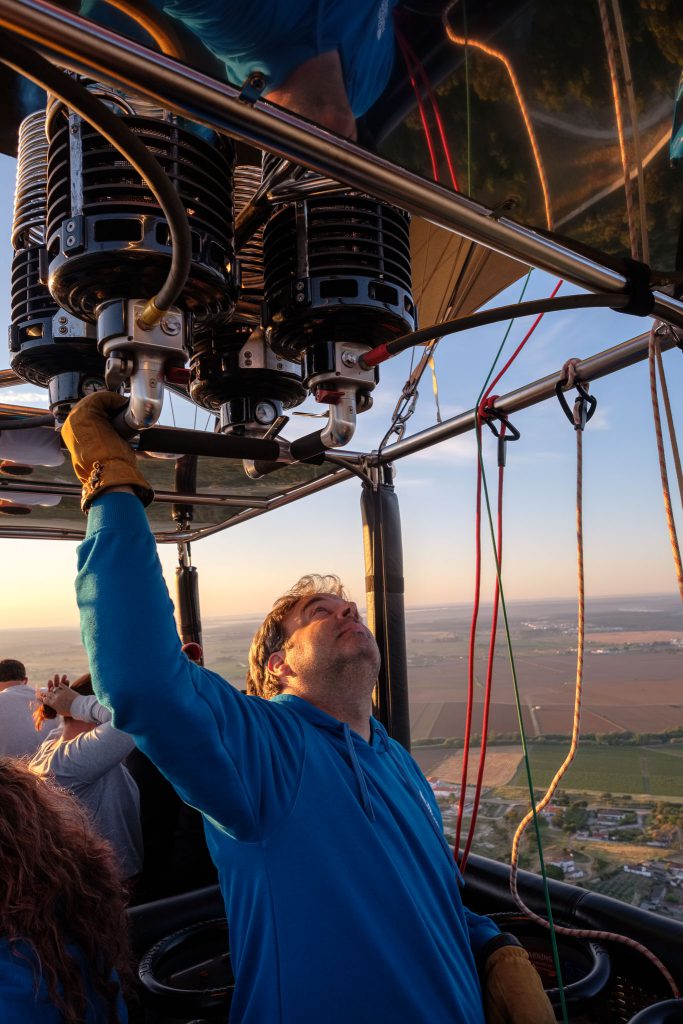
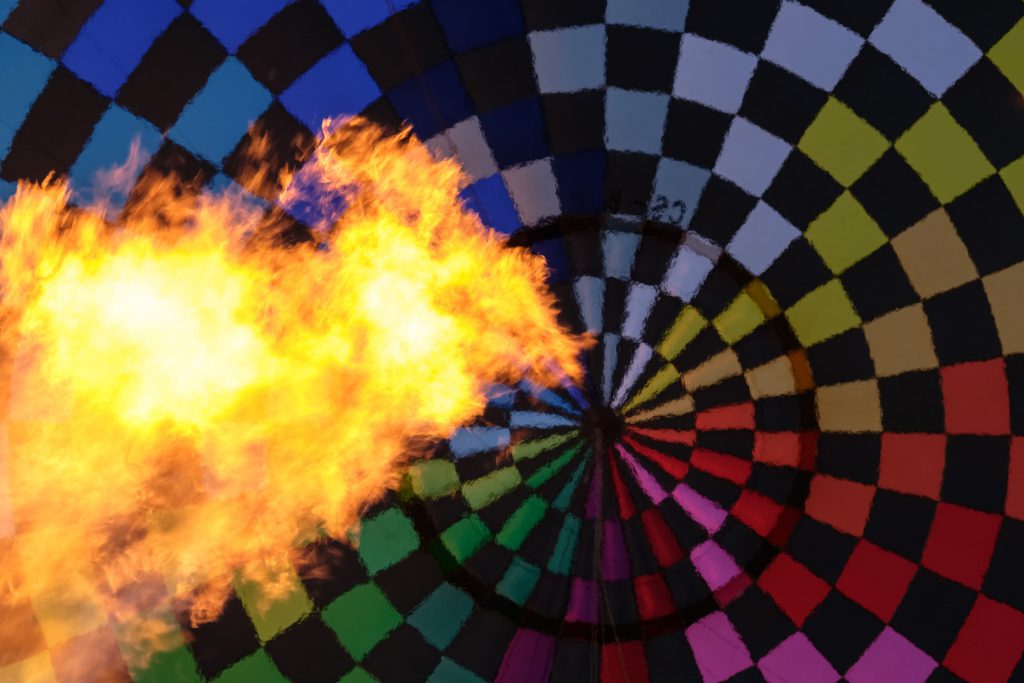
The balloon I was in was the first to take off, allowing me to make some photos during the initial ascent. We went up at sunrise, so the light was quite nice. The interior of the balloon reminded me of a kaleidoscope, with all the various colors. Our pilot, Guido, occasionally had to engage the gas burners, to control the altitude. For a brief moment, the flames and the heat could be felt.

Going up at sunrise.
The balloon’s colorful interior.
Guido piloting the balloon.
Hot air shimmering.

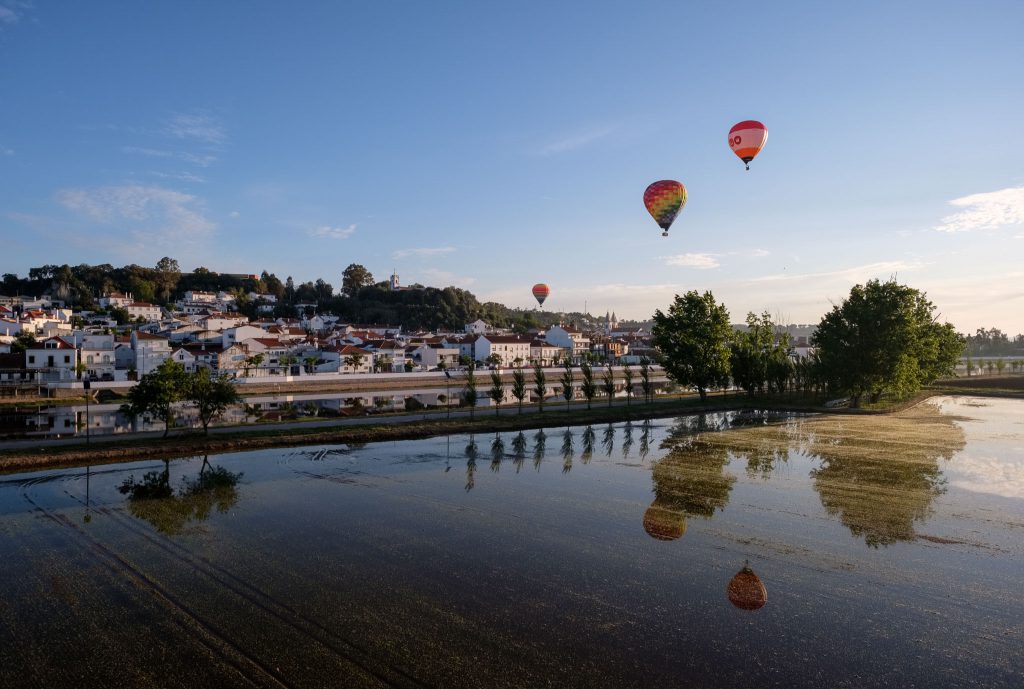
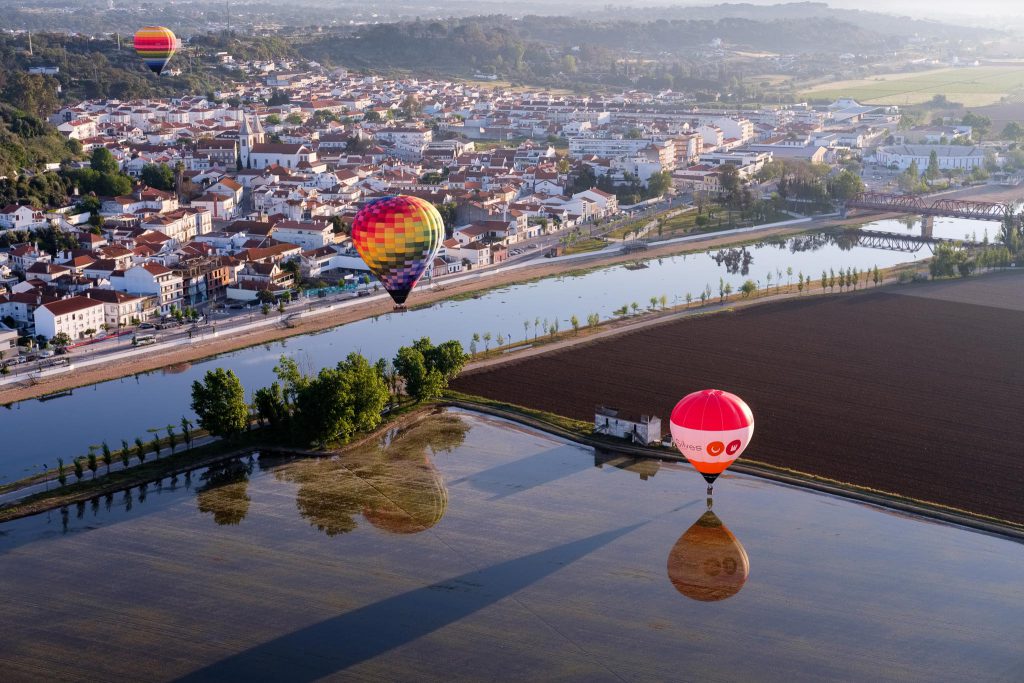
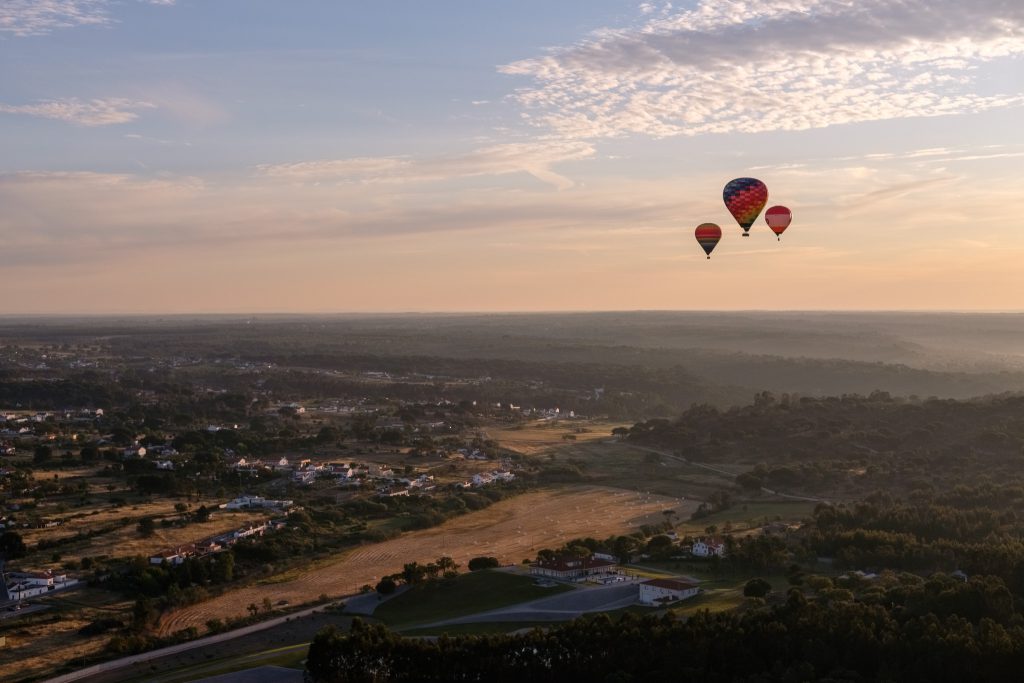
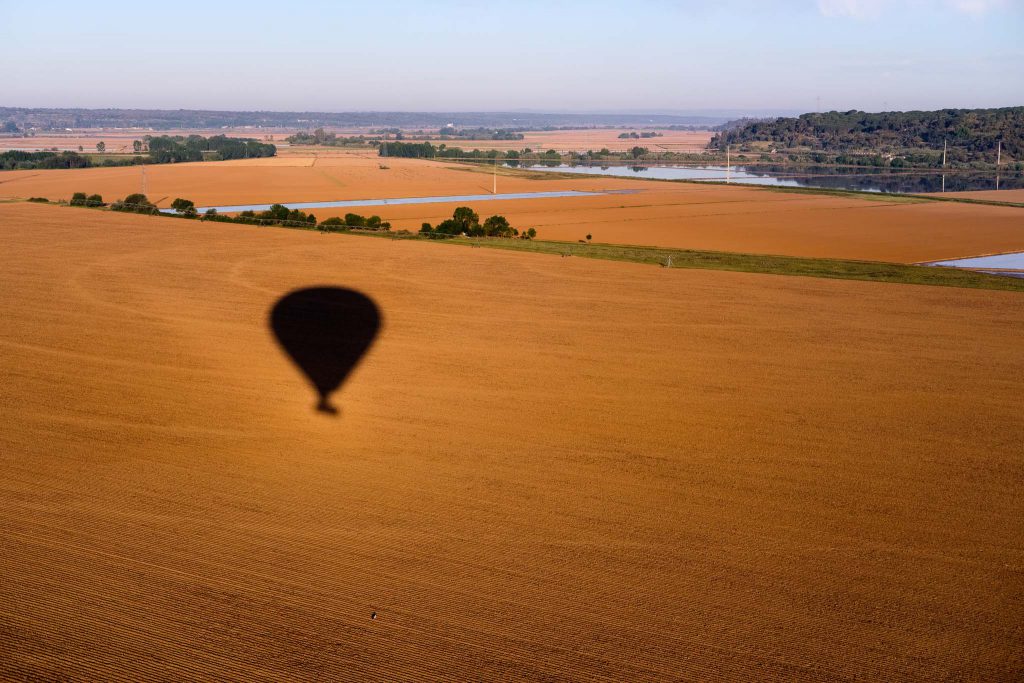
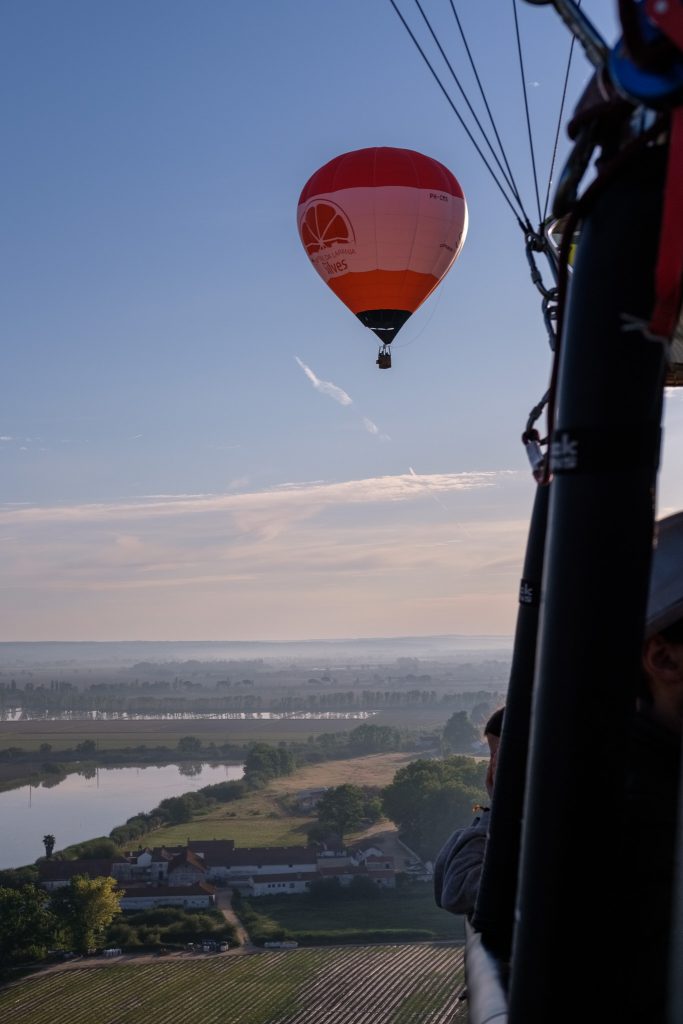
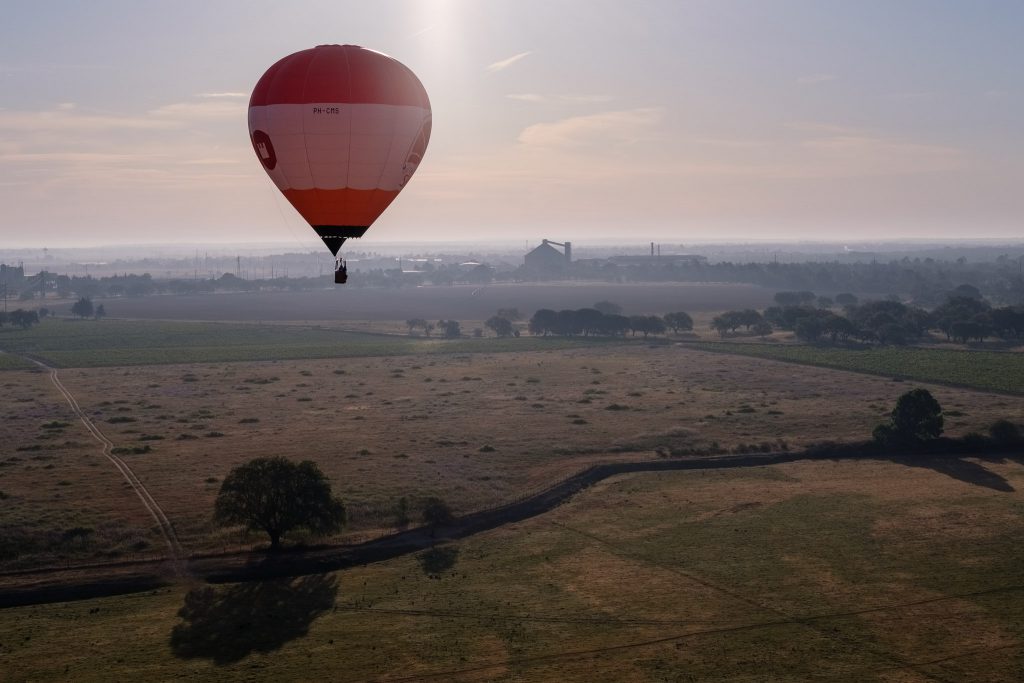
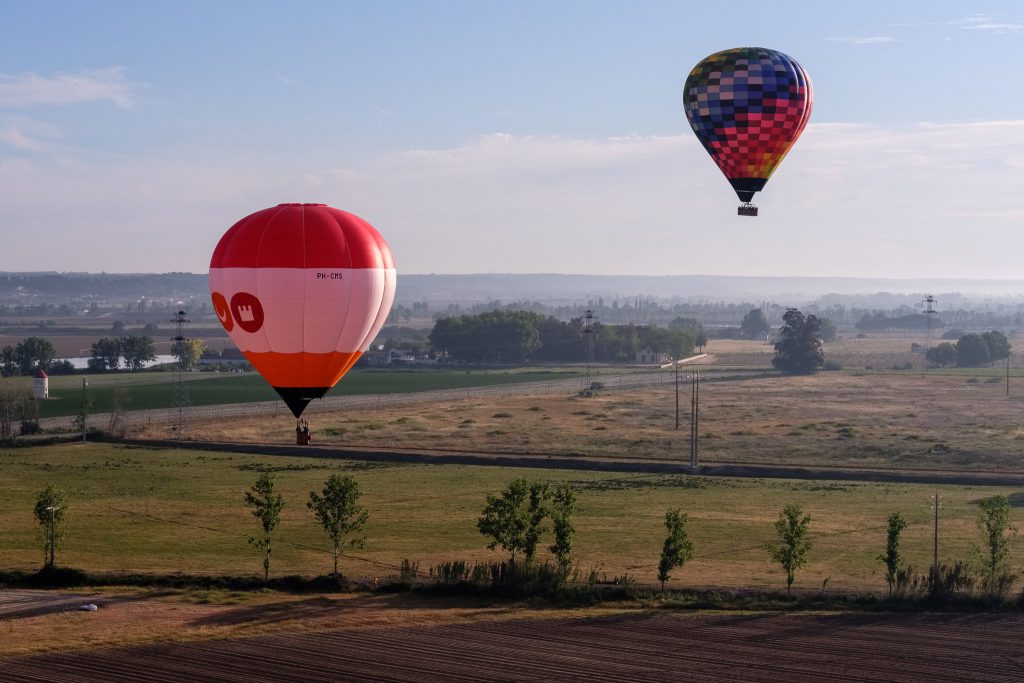
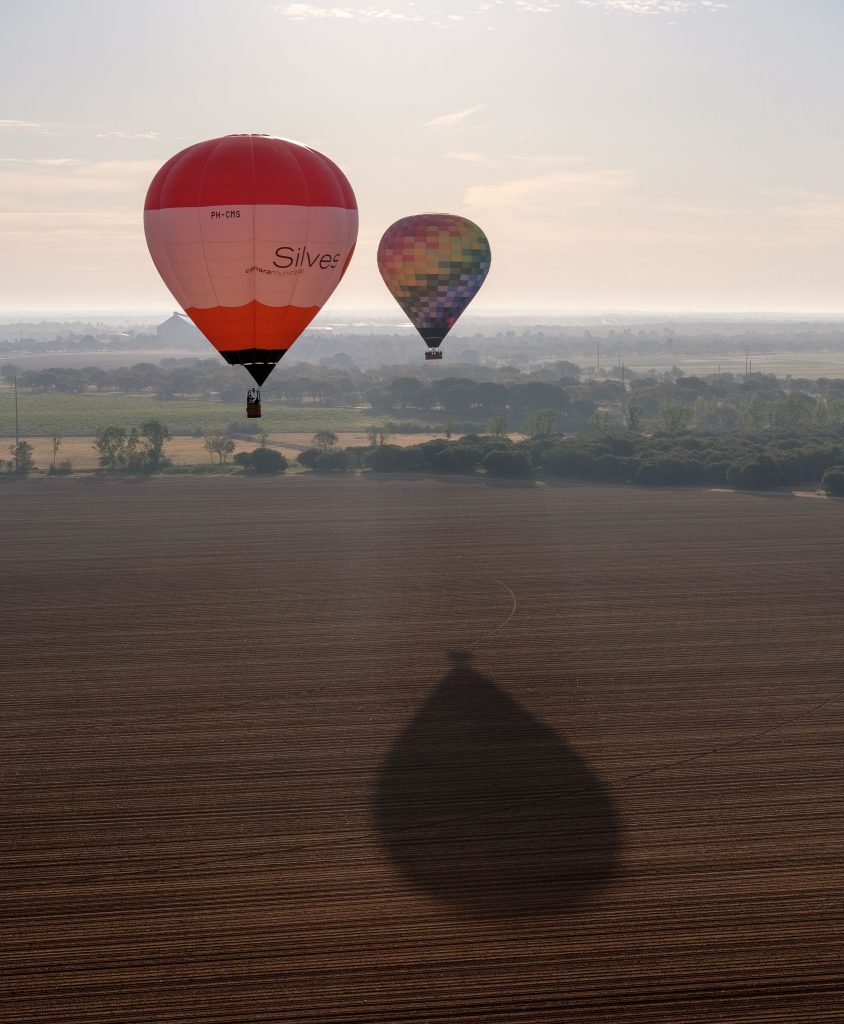
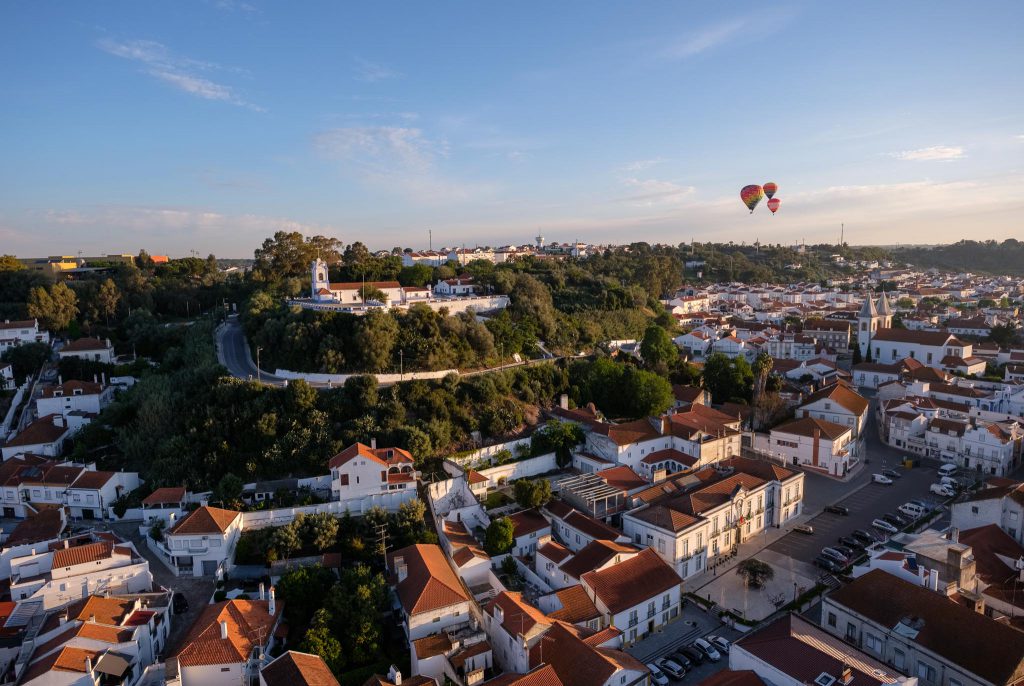
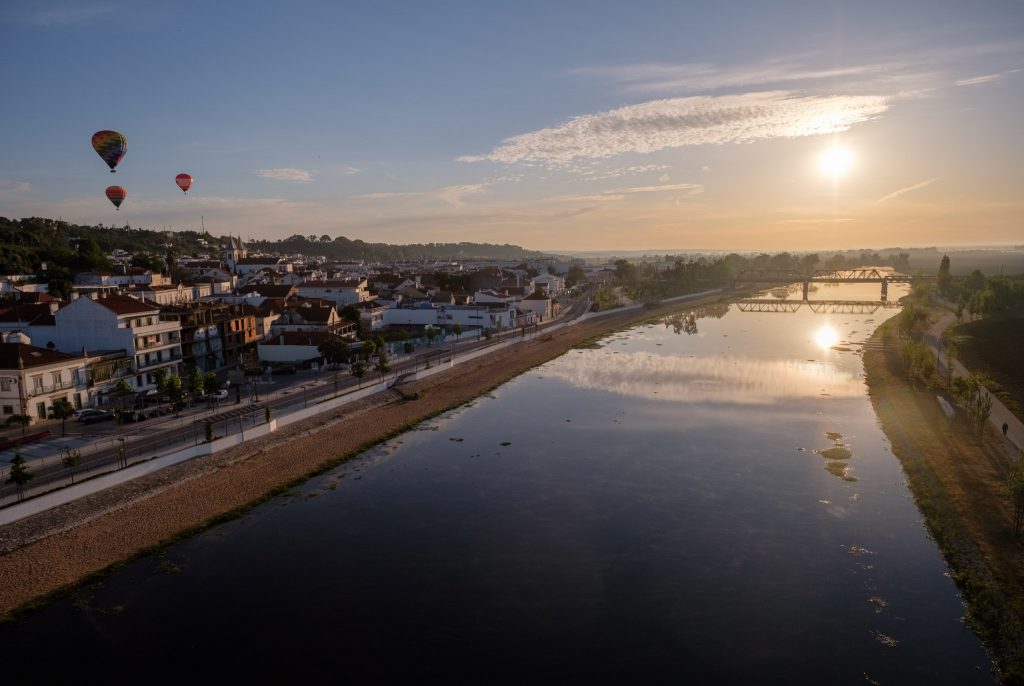
The morning was very still, with no wind, and our course took us over the village of Coruche and the surrounding fields. This is an area of rice crops in the flat lands that surround the river Sorraia, a tributary of the Tejo. The dominant feeling among the passengers was one of tranquility, as the balloon quietly floated in the atmosphere. The visibility was good, thanks to the clear skies.

Flying over Coruche.
Coruche from above, with the Sorraia river below.
Tranquility.
In formation.
Over the landscape.
Shadow on the plain.

Unfortunately, 1 hour passes quickly, and soon Guido started to look for a place to land. There are supporting teams on the ground to assist in this phase of the flight, communicating with walkie-talkies. Once the location was chosen, the balloons slowly begun their descent.

Up in the air.
Flying quietly.
Birds’ eye view.
Looking for a place to land.
Landing.

After an uneventful landing, the passengers had the opportunity to celebrate their first balloon flight with a glass of champagne, to follow the tradition. Flying in a hot air balloon is no doubt a wonderful experience, and I have especially enjoyed the quietness and the sensation of being part of Nature. Of course it is also an excellent opportunity to make unique photos. At closing, I would like to endorse Windpassenger and their staff for their friendly and professional behavior.